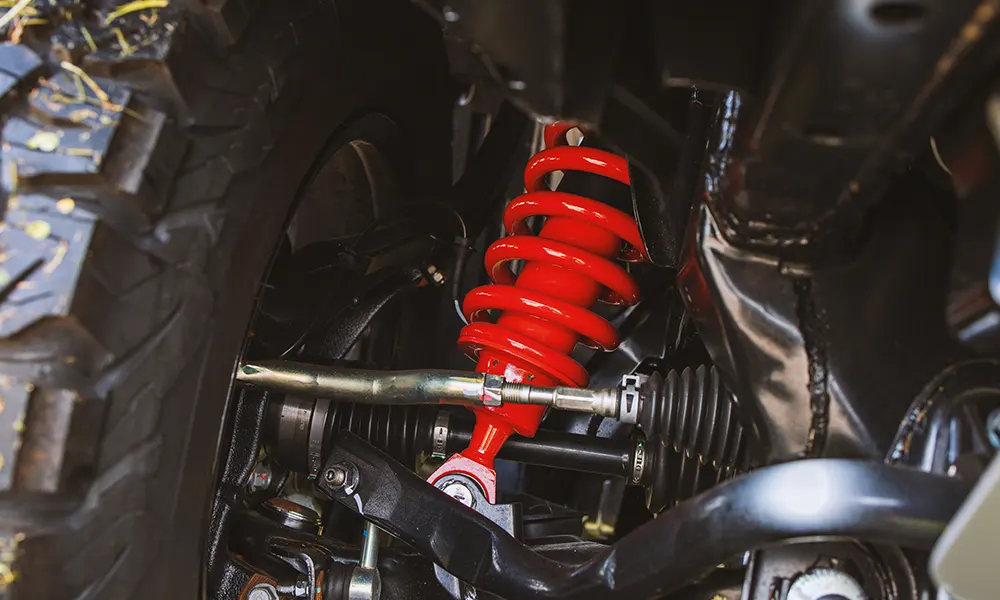
Shock absorbers wear out so gradually that most drivers adjust to the worsening ride without realising how much grip and control they have lost.
This guide explains the warning signs of worn shock absorbers, the simple bounce test you can do yourself, and why tired shocks are a safety issue, not just a comfort one.
Here is what we will cover:
- The warning signs of worn shocks
- The bounce test you can do yourself
- How worn shocks affect braking and grip
- What worn shocks do to your tyres
- When shocks need replacing
What are the Warning Signs of Worn Shock Absorbers?
The warning signs of worn shock absorbers are excessive bouncing after bumps, nose-diving under braking, body roll in corners, uneven or cupped tyre wear, and a generally floaty, unsettled ride.
The floaty ride is usually the everyday tell, the sense that the car keeps moving after the road has stopped giving it a reason to. The other signs tend to confirm what that feeling is already suggesting.
| Sign | What you notice | Why |
| Bouncing | Keeps bouncing after a bump | Shock not damping |
| Nose dive | Front dips under hard braking | Poor weight control |
| Body roll | Leans in corners | Weak damping |
| Tyre cupping | Scalloped wear | Tyre bouncing |
Because worn shocks chew through tyres, it is worth having the rubber and alignment looked at too, and a tyre and alignment service will spot the uneven wear that tired shocks leave behind.
If you also hear a hum or growl from the wheels rather than just feel the float, our guide to wheel bearing failure signs covers that separate suspension noise and how to tell the two apart.
Why Does the Car Nose-Dive?
Worn shocks fail to control weight transfer under braking, so the front of the car dips harder than it should when you stop. That extra pitch is a clear sign the damping is no longer doing its job.
What Does Cupped Tyre Wear Look Like?
Cupping shows up as scalloped patches around the tyre, caused by the tyre bouncing instead of staying planted. Once you know the pattern, it is easy to spot and it points straight back to the shocks.
How Do You Do the Bounce Test?
To do the bounce test, push down hard on one corner of the car and release: a healthy shock settles in one or two movements, while a worn shock keeps bouncing, which is a quick first indication it needs checking.
It is a simple, no-tools check that anyone can do in the driveway. It is not the final word, but it is a good first pointer before a proper look. Our guide on why a car bounces on bumps goes further into what a bouncy ride is telling you.
What Does a Healthy Result Look Like?
A healthy shock settles the corner in one or two movements after you release it. If it stops promptly and sits still, the damping on that corner is likely doing its job.
Is the Bounce Test Definitive?
It is a useful indicator rather than a definitive test. A worn shock can sometimes pass a rough push test, so the result is best confirmed on a hoist where the shocks can be inspected properly.
Are Worn Shock Absorbers a Safety Risk?
Yes, worn shock absorbers are a safety risk because they increase stopping distance, reduce tyre grip on bumpy roads, and let the car wander, all of which matter most in an emergency.
This is the part that gets overlooked when shocks are treated as a comfort item. They are part of how the car brakes and stays planted, so tired ones cost you exactly when you need control. For anything safety-related, our Brisbane mechanics can check the suspension and tell you where it stands.
How Do Shocks Affect Braking?
Shocks keep the tyres pressed to the road so they can grip, especially over uneven surfaces. When they are worn, the tyres skip and lose contact, and stopping distances stretch out as a result.
Can Worn Shocks Ruin Tyres?
Yes, they cause cupping and uneven wear, which shortens tyre life and reduces grip. Bad shock absorbers effectively wear two things at once, the shocks themselves and the tyres they are meant to keep planted.
When Should You Replace Shock Absorbers?
You should replace shock absorbers when they fail the bounce test, show fluid leaks, or the ride and handling have clearly deteriorated, and they are usually replaced in pairs to keep the car balanced.
Knowing when to replace shocks comes down to these triggers rather than a fixed schedule. When they are due, you can book a suspension check in Brisbane and have the diagnosis confirmed before any work goes ahead.
For a closer look at the specific triggers that mean replacement rather than monitoring, our guide on when shock absorbers need replacing breaks each of them down in more detail.
Why Replace in Pairs?
Replacing in pairs keeps left-to-right damping balanced, so the car handles predictably. A new shock on one side and a worn one on the other makes the car pull and behave unevenly under braking.
Do Leaking Shocks Always Need Doing?
A leaking shock has lost fluid and, with it, its damping ability, so yes, it needs replacing. The visible leak is a clear sign the shock can no longer control the spring properly.
Conclusion
Worn shocks creep up gradually but quietly cost you grip, braking and tyres, and a quick check restores both safety and comfort. Because the decline is so slow, a second opinion often reveals just how much control has slipped away.
If your ride has gone floaty or your tyres are wearing oddly, the team at Car One Automotive can check the shocks for you.
Frequently Asked Questions
What Are the Signs of Worn Shock Absorbers?
Excessive bouncing after bumps, the nose dipping sharply under braking, extra body roll in corners, uneven or cupped tyre wear, and a floaty, unsettled ride. Any one of these is worth a check, because worn shocks rarely improve and tend to affect braking and grip.
How Do I Test My Shock Absorbers?
Push down hard on one corner of the car and let go. A healthy shock settles in one or two movements, while a worn one keeps bouncing afterwards. It is a useful rough guide, but a proper hoist inspection confirms whether they are due.
Are Worn Shocks a Safety Problem?
Yes. Worn shocks increase your stopping distance, reduce grip on bumpy roads, and let the car wander and float, all of which matter most in an emergency or on rough surfaces. That is why they are worth checking and replacing once they are past their best.
Do Shock Absorbers Need Replacing in Pairs?
Usually yes. Replacing shocks in pairs, either both fronts or both rears, keeps the left-to-right damping balanced so the car handles predictably. Fitting just one can leave the car pulling or sitting unevenly, which is why axle pairs are the standard, sensible approach.
Can Worn Shocks Damage My Tyres?
Yes. Worn shocks let the tyre bounce and lose contact with the road, which causes cupped or uneven wear across the tread. That shortens tyre life and reduces grip, so replacing tired shocks protects your tyres as well as your handling and braking.