A wheel bearing usually announces itself with a low hum or growl that rises with speed, and it is one of those noises that only gets louder.
This guide explains the warning signs of wheel bearing failure, how to tell which wheel it is, and why a failing bearing is a genuine safety risk you should not put off.
Here is what we will cover:
- The warning signs of a failing wheel bearing
- How to tell which wheel it is
- Why a failing bearing is dangerous
- How it is diagnosed and replaced
- Whether it will fail a roadworthy
What are the Warning Signs of a Failing Wheel Bearing?
The warning signs of a failing wheel bearing are a humming or growling noise that rises with speed, a noise that changes when you turn, play or looseness in the wheel, and sometimes vibration through the steering.
The key tell is a noise that changes as you turn, because that is what separates a bearing from other road noise. A humming noise that grows with speed and shifts through corners is the classic pattern.
| Sign | What you notice | Points to |
|---|---|---|
| Humming/growling | Rises with speed | Worn bearing |
| Noise changes turning | Louder one way | Side of the bad bearing |
| Wheel play | Rocking looseness | Failing bearing |
| Vibration | Through steering | Advanced wear |
A floaty ride or bouncing points somewhere else, and if you are hearing other noises as well, our guide to worn shock absorber signs covers that separate suspension issue.
Why Does the Noise Change When Turning?
Turning shifts the car’s weight onto one side, loading the worn bearing more heavily, which makes it louder. That is why a bearing noise rises and falls as you steer left and right, unlike steady tyre noise.
What Does Wheel Play Feel Like?
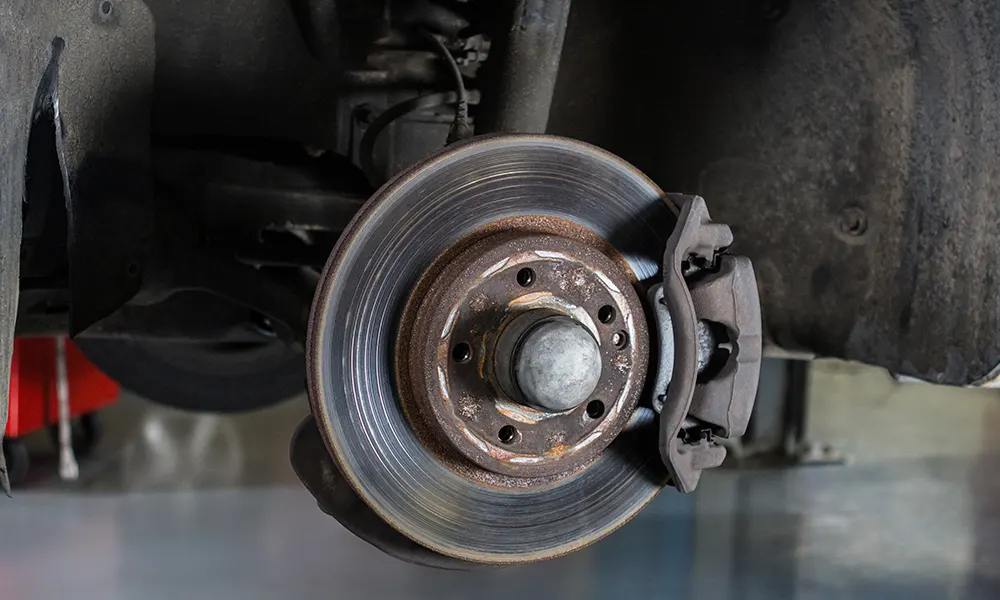
Wheel play shows up when you rock the wheel and feel looseness that should not be there. With the wheel off the ground, a failing bearing lets it move in a way a healthy one does not, which is a clear sign.
How Do You Tell Which Wheel Bearing Is Failing?
You can often tell which wheel bearing is failing by noticing whether the noise worsens when turning left or right, since loading the car onto the opposite side increases the noise from the bad bearing, though a hoist check confirms it.
This left-right turn test is a useful first pointer, and a spin on a hoist confirms it. Growling and vibration that build over time are the wear progressing. Our guide on why a car bounces on bumps covers a related suspension symptom worth knowing apart from a bearing.
The Left-Right Turn Test
If the noise gets louder turning one way, the failing bearing is usually on the opposite side, because that is the side being loaded. It is not foolproof, but it points you in the right direction before a proper check.
Why Confirm on a Hoist?
A hoist check confirms it by letting the mechanic spin and rock each wheel individually to feel and hear the roughness. If vibration and looseness also show up alongside steering issues, our guide to hard steering causes and fixes covers the related front-end problems.
Is a Failing Wheel Bearing Dangerous?
Yes, a failing wheel bearing is dangerous because, left long enough, it can seize or allow the wheel to develop excessive play, affecting handling and braking, which is also a roadworthy failure.
This is why a bearing is not a noise to live with. In a severe case it can seize, which is a serious safety risk, and long before that the play affects how the car handles. A roadworthy safety certificate requires the bearings to be sound, so a failing one will not pass.
For anything safety-related like this, our Brisbane mechanics can check the bearings promptly and tell you whether they need replacing.
Can a Wheel Bearing Seize?
In severe cases a wheel bearing can seize, which is a serious safety risk at speed. It rarely happens without warning, which is exactly why the early hum should not be ignored until it reaches that point.
Will It Fail a Roadworthy?
Yes, a failing wheel bearing is a roadworthy failure, because excessive play and noise mean the wheel is no longer secure and true. It has to be replaced for the car to pass the safety inspection.
How is a Wheel Bearing Replaced?
A failing wheel bearing is replaced by removing the hub assembly, pressing in or fitting the new bearing, and torquing everything to specification, after which the wheel spins silently and the play is gone.
It is a defined job with a clear result: once done, the noise and looseness are gone. Usually only the failed bearing is replaced, and it is often a same-day repair. When it is due, you can book a suspension check in Brisbane and have the bearing replacement confirmed before any work.
Is It Done per Wheel?
Yes, usually only the failed bearing is replaced rather than all of them. Bearings do not all wear at the same rate, so there is no need to replace a healthy one alongside the faulty one.
How Long Does It Take?
It is often a same-day job, depending on the car and the hub design. The bearing replacement itself is a well-defined task, so most vehicles are back on the road quickly once the part is on hand.
Conclusion
A humming wheel bearing only gets worse and carries a real safety risk, so catching it early keeps the repair simple. Because it seldom improves on its own, the sensible move is to have the noise checked before it turns into play or a seize.
If you can hear a hum that changes through corners, the team at Car One Automotive can check the bearings for you.
Frequently Asked Questions
What Are the Signs of a Failing Wheel Bearing?
A humming or growling noise that rises with road speed, a noise that changes as you turn left or right, play or looseness felt in the wheel, and sometimes a vibration through the steering. Any of these is worth checking, as a bearing rarely recovers.
How Do I Know Which Wheel Bearing Is Bad?
Notice whether the noise gets worse turning left or right, because loading the opposite side puts more weight on the failing bearing and increases the sound. That gives a strong clue, and a hoist check with the wheel spun and rocked by hand confirms which one it is.
Is It Dangerous to Drive With a Bad Wheel Bearing?
Yes. Left long enough, a failing wheel bearing can seize or allow excessive wheel play, which affects handling and braking and, in a worst case, can lock a wheel. It is also a roadworthy failure, so it should be checked and replaced without delay.
How Long Can You Drive on a Failing Wheel Bearing?
Not long once it has become noisy, as the noise means the bearing is already wearing and it will only get worse. Continuing to drive risks it seizing, so the safest course is to have it checked and replaced promptly rather than waiting to see.
How Is a Wheel Bearing Replaced?
By removing the hub assembly, pressing out the old bearing and fitting the new one, then reassembling and torquing everything to the manufacturer’s specification. Once done correctly, the wheel spins silently with no play, and the humming noise and any vibration are gone.