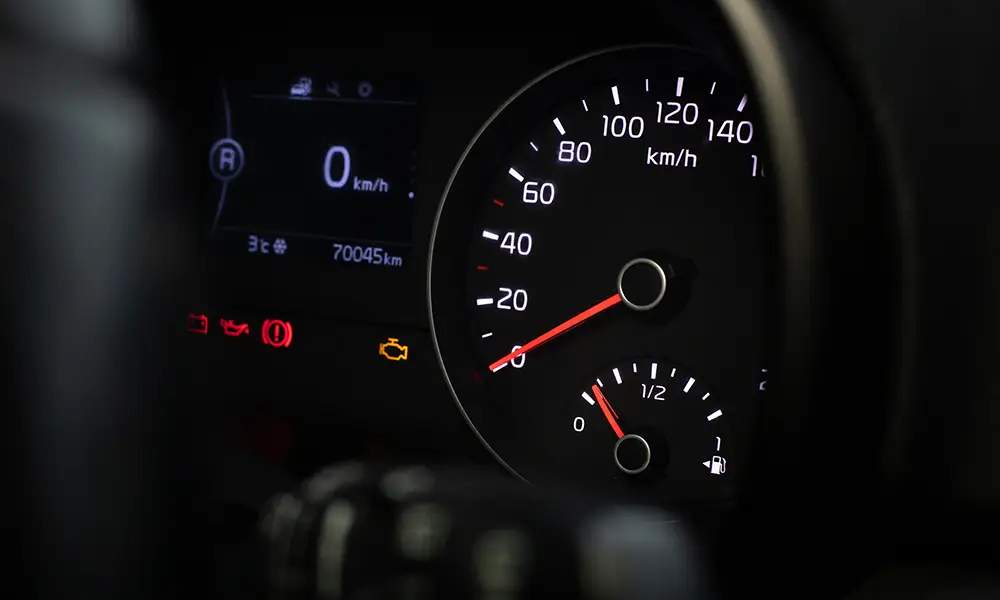
Watching the fuel gauge sink faster than it used to is unsettling. A fuel gauge dropping fast usually means one of two things, either the gauge itself is misreading or the car is quietly burning more fuel than it did before.
This guide explains why your fuel gauge is dropping fast, how to tell a sensor fault from genuine economy loss, the common causes in order, and how each is fixed.
Here is what we will cover:
- Whether it is the gauge or real fuel use
- The simple causes to check first
- The engine causes behind poor economy
- How your driving habits play a part
- How each cause is fixed
Why Is My Fuel Gauge Dropping Fast?
A fuel gauge dropping fast is either a faulty fuel level sensor giving a false reading, or a genuine increase in fuel use caused by under-inflated tyres, a dirty air filter, a failing oxygen sensor, worn injectors, or heavier driving.
The first job is working out which of those two camps you are in, because the fixes are completely different. A sensor problem is a gauge fault, so the car is fine and the needle is lying to you. Real fuel use means the tank truly is emptying quicker, and that points to something mechanical or a change in how the car is being driven. Before spending a cent, it pays to build the good everyday habits set out in these everyday car maintenance tips, which make a sudden change in fuel use far easier to notice before it grows into a bigger and more expensive problem.
The table below sorts the usual suspects into gauge faults and genuine fuel use, so you can see where to start looking.
| Cause | Type | Fix |
|---|---|---|
| Faulty fuel sensor | Gauge fault | Replace sender |
| Low tyre pressure | Real use | Inflate tyres |
| Dirty air filter | Real use | Replace filter |
| Failing oxygen sensor | Real use | Replace sensor |
| Worn injectors | Real use | Service/replace |
| Heavy driving / load | Real use | Adjust habits |
Is It a Faulty Gauge or Real Fuel Use?
A faulty fuel sensor tends to make the needle jump around, stick, or drop in sudden steps rather than move smoothly. If the gauge reads full one minute and half a tank the next, or the low-fuel light behaves oddly, the sending unit inside the tank is the more likely culprit rather than the engine.
How Do I Measure Real Economy?
The reliable test is a fill-to-fill calculation. Fill the tank, note the odometer, drive as you normally would, then fill again and record the litres used against the kilometres travelled. That gives you real litres per hundred kilometres, which tells you whether the car is genuinely thirsty or the gauge is simply misbehaving.
What Simple Causes Should You Check First?
The simple causes to check first are under-inflated tyres, a clogged air filter, and roof racks or heavy loads, because these are common, cheap to fix, and can noticeably raise fuel use without any warning light.
It makes sense to rule out the easy, inexpensive things before anyone starts talking about sensors or injectors, since soft tyres and a blocked filter are the two most common reasons a car suddenly starts using more fuel than usual, and both are quick to sort. If your tread or pressures also look low, a quick tyre and pressure check will confirm whether the tyres are quietly dragging your economy down before you go looking any deeper into the engine.
Weight and drag matter too. A roof box, a loaded trailer, or a boot packed full of gear all force the engine to work harder, and that shows up at the pump.
How Much Does Tyre Pressure Matter?
More than most drivers expect. Under-inflated tyres increase rolling resistance, so the engine burns extra fuel just to keep the car rolling, and checking your pressures against the placard in the driver’s door jamb is one of the cheapest ways to protect your economy. It is a quick job, and this easy DIY car maintenance guide shows how to fold it into a simple monthly routine alongside your other basic checks so nothing slips through the cracks.
Do Roof Racks Affect Fuel Use?
Yes. Roof racks and roof boxes add aerodynamic drag, and that drag grows quickly at highway speed. If you only need them now and then, taking them off between trips is an easy way to claw back some of the fuel they cost you.
What Engine Causes Worsen Fuel Economy?
The engine causes that worsen fuel economy include a failing oxygen sensor, dirty or worn fuel injectors, faulty spark plugs, and other faults that trigger the check engine light, all of which upset the fuel-air mixture.
When the simple checks come up clean, attention turns to the engine, and most of these faults share one trait: they throw off the balance of fuel and air the engine relies on to run efficiently, so it quietly uses more than it should. A worn oxygen sensor is one of the most common offenders here, with dirty injectors close behind, and these are the faults behind most cases of sudden poor fuel economy once the easy stuff is ruled out. If a warning light is on it is worth reading what a check engine light means before you assume the worst, because that light very often points straight at the fault which is costing you the extra fuel.
Confirming an engine-related cause almost always means plugging the car in and letting the computer do the talking, and a diagnostic scan reads the stored fault codes and points to the exact sensor or circuit at fault, which saves guessing and replacing good parts on a hunch.
Can a Sensor Cause High Fuel Use?
Yes, and the oxygen sensor is the classic example. It tells the engine how much fuel to add, so when it fails the engine often runs rich and drinks more than it needs. A failing sensor also tends to set a check engine light, which is your cue to have it read properly.
Does the Check Engine Light Relate?
Often, yes. Many of the faults that hurt economy, from oxygen sensors to misfires, will also switch on the check engine light. If the light is on and your fuel use has climbed at the same time, the two are very likely connected and worth checking together.
How Is High Fuel Use Fixed?
High fuel use is fixed by addressing the specific cause, inflating tyres, replacing a dirty air filter, fixing a faulty sensor or injectors, or adjusting driving habits, with a diagnostic scan pinpointing engine-related causes.
By now the question of why is my car using so much fuel usually has a clear answer, and the repair is simply a matter of acting on the cause your checks have confirmed. It normally pays to start with the cheapest likely cause and work up. Tyres and filters are quick and cheap, so they come first, while sensor and injector work costs more, which is exactly why it should follow a proper diagnosis rather than a guess. Booking a service in Brisbane is the simplest way to have the tyres, filters and engine sensors all checked and sorted in a single visit.
What’s the Cheapest Likely Fix?
If soft tyres or a clogged air filter are behind it, you are at the cheapest end of the scale. Both are simple jobs, and correcting them often restores economy on their own without anyone touching anything deeper inside the engine.
When Is a Diagnostic Needed?
A diagnostic is worth it whenever a sensor, injector, or check engine light is involved. These faults hide inside the engine’s electronics, so reading the codes is the only reliable way to confirm the cause before any parts are ordered or replaced.
Conclusion
A fast-dropping gauge nearly always comes down to one of two things: a sensor that is misreading, or a handful of very fixable causes behind higher fuel use. Checking the simple items first, your tyres, filter and load, solves it cheaply more often than not, and a scan sorts the rest.
If your economy has slipped and you want it looked at properly, the team at Car One Automotive can help.
Frequently Asked Questions
Why Is My Fuel Gauge Dropping Fast?
It is usually one of two things. Either a faulty fuel level sensor is misreading the tank, or the car is using more fuel than before because of under-inflated tyres, a dirty air filter, a failing oxygen sensor, worn injectors, or heavier driving.
How Do I Know If It’s the Gauge or Real Fuel Use?
Work it out with a fill-to-fill calculation. Fill the tank, note the odometer, drive normally, then refill and record the litres and kilometres. If your fuel use is truly higher, it is real; if the needle jumps erratically, suspect the sensor instead.
Can Tyre Pressure Affect Fuel Economy?
Yes, and more than most people think. Under-inflated tyres increase rolling resistance, so the engine has to work harder and burns extra fuel to keep you moving. Checking and correcting your pressures against the door-jamb placard is one of the cheapest first steps.
What Engine Faults Increase Fuel Use?
A failing oxygen sensor, dirty or worn fuel injectors, and faulty spark plugs are the usual culprits. Each one upsets the balance of fuel and air the engine needs, so it runs less efficiently. These faults often show up as a check engine light too.
How Do I Fix Sudden Poor Fuel Economy?
Start by fixing the specific cause, and work from cheapest to dearest. Inflate the tyres, replace a dirty air filter, then address any faulty sensor or injectors and adjust heavy driving habits. A diagnostic scan is what pinpoints the engine-related causes accurately.