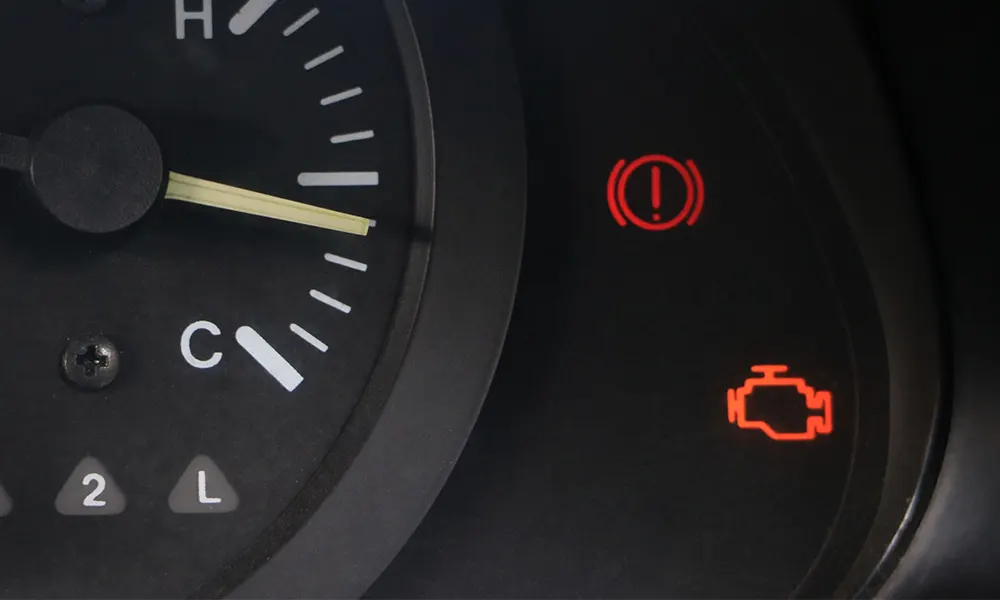
Few things on a dashboard cause as much instant worry as the check engine light, partly because it can mean almost anything from trivial to serious.
This guide explains the most common check engine light causes, how to tell an urgent fault from a minor one, and the right way to get it fixed, so you can act calmly instead of guessing.
Here is what we will cover:
- The most common check engine light causes
- Steady light versus flashing light, what each means
- Which causes are urgent and which can wait
- Why a diagnostic scan is the only reliable answer
- How the fault is fixed once it is found
What are the Most Common Check Engine Light Causes?
The most common check engine light causes are a loose or faulty fuel cap, a failing oxygen sensor, a misfire, a catalytic converter problem, or a mass airflow sensor fault, ranging from trivial to serious.
The good news is that not every cause is expensive. Some are a five-minute fix, while others need proper attention. The point is that the light itself does not tell you which, only that something has been flagged.
| Cause | Severity | Typical fix |
| Loose fuel cap | Low | Tighten or replace cap |
| Oxygen sensor | Medium | Replace sensor |
| Mass airflow sensor | Medium | Clean or replace |
| Misfire | Medium-high | Plugs, coils, diagnosis |
| Catalytic converter | High | Diagnose, replace if failed |
One of the common triggers on that list is a misfire, and our guide on how a misfire is diagnosed explains how a mechanic pins down exactly which cylinder is at fault.
Reassuringly, many of the milder faults are picked up during routine general car servicing long before they ever light up the dashboard, which is one more reason to keep to the schedule.
Can a Loose Fuel Cap Really Trigger It?
Yes, and it is the simplest and cheapest cause, so it is worth checking first. A cap that is loose or not sealing lets the fuel system lose pressure, which the car detects and flags. Tightening or replacing it often clears the fault.
Which Causes Are the Expensive Ones?
The catalytic converter and a persistent misfire sit at the costly end. A converter is expensive to replace, and a misfire left running can be what damages it, which is why the cheaper faults are worth catching early.
Steady Light or Flashing, What’s the Difference?
A steady check engine light usually means a non-urgent fault you should have checked soon, while a flashing light means a serious problem such as an active misfire, and you should stop driving and seek help promptly.
This distinction is the most important thing to understand, because it is the difference between booking a scan next week and pulling over now. A flashing light is the car asking you to stop.
Why Is a Flashing Light Urgent?
A flashing light usually points to an active misfire, and raw fuel passing into the exhaust can overheat and damage the catalytic converter quickly. Continuing to drive turns a moderate repair into an expensive one.
Can I Keep Driving With a Steady Light?
Gently and briefly, yes, but book a scan soon rather than ignoring it. If the car is also refusing to start or running oddly at times, our guide on why a car will not start covers the related faults worth ruling out.
Should I Worry About the Check Engine Light?
You should take the check engine light seriously but not panic, since the only way to know whether it is trivial or serious is a diagnostic scan that reads the fault code behind it.
The honest middle ground is the right one here: do not ignore it, but do not assume the worst either. Knowing what does the check engine light mean for your specific car comes down to reading the stored code. If you would rather have someone look at it straight away, our Brisbane mechanics can scan it and tell you where you stand.
What Happens if I Ignore It?
Small faults can grow into expensive ones, and in the meantime emissions and fuel economy often suffer. A light that could have been a cheap sensor can become a bigger bill if it is left long enough.
Does the Light Ever Reset Itself?
Sometimes, for example after a loose fuel cap is tightened, the light clears on its own after a few drives. Even then, the cause should be confirmed so you are not left guessing whether it was trivial.
How Do You Fix a Check Engine Light?
You fix a check engine light by running a diagnostic scan to read the fault code, interpreting it against the symptoms to find the real cause, then repairing that cause and clearing the code.
The order matters, because the code points to a system, not always the exact failed part. A scan reads it, a mechanic interprets it with the symptoms, and only then is the right repair made. For what that step costs, our guide on what an engine diagnostic costs sets out the typical pricing.
When you are ready to have it read properly, you can book a diagnostic scan in Brisbane and get a clear answer rather than a guess.
Why Not Just Clear the Code?
Clearing the code without fixing the cause simply means the light returns, usually within a few drives. The code is a symptom, so wiping it changes nothing about the underlying fault.
What Does the Repair Involve?
It ranges from a cheap sensor or a new fuel cap to a larger job such as a converter, depending on the cause. Whatever it is, the repair is quoted before any work so there are no surprises.
Conclusion
The check engine light is a prompt, not a verdict, and a quick scan turns uncertainty into a clear, costed plan. Acting calmly and getting the code read is almost always cheaper than worrying or guessing.
If your light is on and you want a straight answer, the team at Car One Automotive can help.
Frequently Asked Questions
What Are the Most Common Check Engine Light Causes?
A loose or faulty fuel cap, a failing oxygen sensor, a mass airflow sensor fault, an engine misfire, or a catalytic converter problem. These range from trivial and cheap through to serious and costly, which is why a scan is the only way to know for sure.
Is It Safe to Drive With the Check Engine Light On?
If it is steady and the car drives normally, you can drive gently and book a scan soon, though it should not be left indefinitely. A flashing light points to a serious fault like a misfire, so stop when safe and get it looked at promptly.
What Does a Flashing Check Engine Light Mean?
It usually means an active misfire, where unburnt fuel can quickly overheat and damage the catalytic converter, which is an expensive part. Stop driving when it is safe to do so, and have the car diagnosed as soon as possible rather than continuing on.
Can I Just Reset the Check Engine Light?
You can, but clearing the code without fixing the underlying cause just means the light returns, often within a few drives. The fault itself needs diagnosing and repairing first, and the code is then cleared to confirm the repair has worked and nothing else is stored.
How Do You Find Out Why the Light Is On?
A diagnostic scan reads the stored fault code, which points to a system rather than a single part. The mechanic then interprets it alongside the symptoms and live data, and does further testing where needed, to confirm the actual cause before quoting any repair.