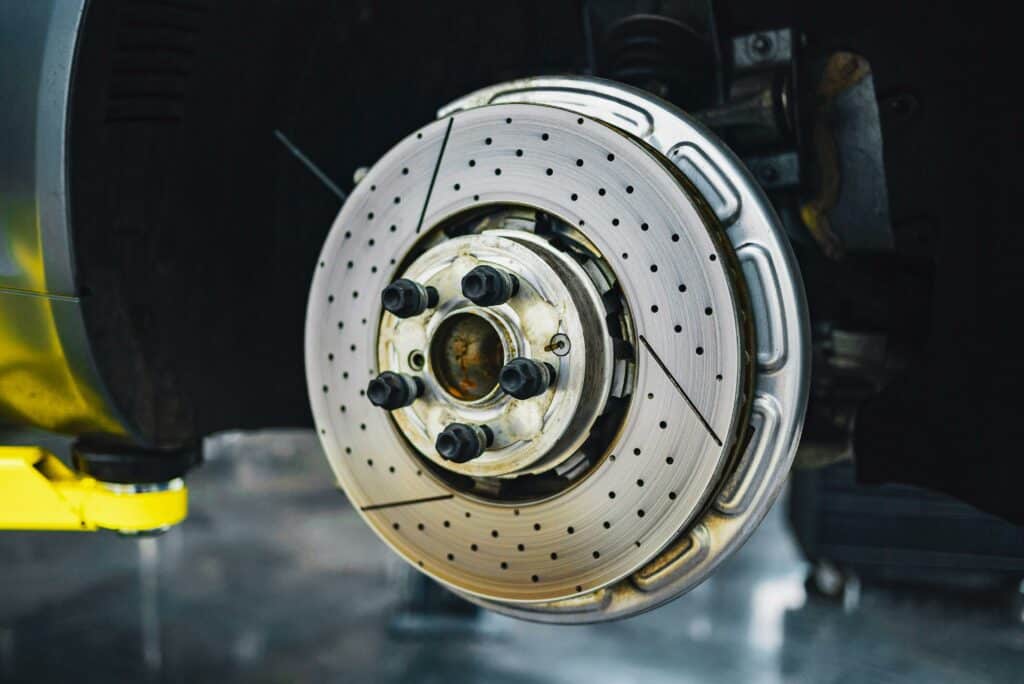
A car that pulls to one side, a hot wheel after a short drive or a burning smell are easy to dismiss but should not be.
This guide explains how to recognise a sticking brake caliper, why it happens, how risky it is and what the repair usually costs in Brisbane.
Here is what you will learn:
- The main symptoms of a sticking caliper
- Slide pins vs seized pistons
- Why driving on it is risky
- Typical Brisbane repair costs
- How humidity and old brake fluid contribute
What Are the Symptoms of a Sticking Brake Caliper?
Common symptoms include the car pulling to one side, one wheel much hotter than the others after driving, a burning smell, reduced fuel economy and one brake pad wearing faster than the rest. Sticking caliper symptoms usually build slowly, so they are easy to put down to something else. Here is what each one feels like from the driver’s seat:
- Pulling: the car drifts to one side when you brake, or even when you lift off
- Heat: one wheel is much hotter than the rest after a drive
- Smell: a sharp burning odour near one wheel after stopping
- Fuel use: the engine works harder against a dragging brake
- Pad wear: one pad is worn far more than the others at inspection
Never touch a hot wheel or rotor. If you want to check for heat, hold the back of your hand near the wheel rim, not the rotor, and keep a safe distance until the car has cooled.
The table below links each symptom to its likely cause and how urgent it is.
| Symptom | Likely Cause | Urgency |
| Car pulls to one side when braking | Seized piston or slide pin on one side | Book within days |
| One wheel much hotter after a drive | Pad dragging on the rotor | Book now; avoid long trips |
| Burning smell near one wheel | Overheated pad and rotor | Stop and let it cool; book now |
| One pad worn far more than the others | Slide pins binding | Fix at the next brake service |
Several of these signs can look like other faults, so they are worth checking together rather than one at a time. If any of these signs match your car, a visit for brake repairs in Brisbane starts with a check of the pads, rotors and caliper movement at each wheel, so the sticking corner is found before the damage spreads to the rest of the brake.
What Causes a Brake Caliper to Stick?
Calipers usually stick because slide pins corrode or lose lubrication, the piston seizes from corrosion inside the bore, a brake hose collapses internally, or the park brake mechanism binds. The brake caliper slide pins let the caliper float so both pads press evenly, and when they bind the pad stays against the rotor. A seized caliper piston is the heavier fault, because the piston cannot retract at all.
In plain words, slide pins are the sliding guides and the piston is the part that pushes the pad. Pins can usually be cleaned and greased, while a seized piston often needs a rebuild or a replacement caliper. A collapsed hose can also keep the brake applied.
In our workshop, a caliper that stuck because of dry slide pins was freed, cleaned and relubricated without a new caliper. The owner paid for a pin service instead of a replacement, and the pull and the hot wheel disappeared.
Moisture is the usual enemy inside the bore. Old fluid holds water that corrodes the cylinder wall and piston, and a brake fluid flush on schedule explains why brake fluid needs changing, which keeps that corrosion from starting in the first place and protects the seals.
Is It Dangerous to Drive With a Sticking Brake Caliper?
Yes, a sticking caliper can make the car pull under braking, overheat the brake and fluid, warp or crack the rotor and, in severe cases, cause brake fade or a wheel fire risk. Brake drag keeps the pad pressed on the rotor, so heat builds with every kilometre. A car pulling to one side when braking is the warning that the problem is already affecting control.
Book an inspection promptly rather than driving long distances, because the damage grows with each trip. In traffic, a pull under hard braking can also take the car toward another lane.
A pull can also come from tyres or alignment, so an inspection confirms the real cause. If the brakes check out fine, a visit for wheel alignment in Brisbane can rule out an alignment problem, which is a common reason for drift and is far cheaper to fix than a seized caliper.
Inspection standards matter for any car with a brake fault. Approved inspectors in Queensland treat brakes as an inspection criterion, as the Queensland Light Vehicle Inspection Manual sets out for inspection staff. A dragging or overheated brake is therefore a problem on the road and at inspection time, so drivers in Coorparoo QLD 4151 should not leave it.
Knowing the other signs of unsafe brakes helps you act sooner, before a small fault turns into a roadside problem. A guide to brake warning signs lists the noises, pedal changes and warning lights that mean the brakes need attention, so a pull or a hot wheel is read alongside the rest of the evidence.
How Much Does It Cost to Fix a Sticking Brake Caliper?
Servicing slide pins in Brisbane typically costs $100 to $200 per axle, while replacing a caliper typically costs $250 to $600 per side fitted, plus pads or rotors if they were damaged. The brake caliper repair cost depends on whether the pins, piston or whole caliper has failed. The table below shows typical 2026 Brisbane prices and times.
| Repair | Typical Price (AUD) | Typical Time |
| Slide pin service, per axle | $100 to $200 | 1 to 1.5 hours |
| Caliper rebuild kit, per side | $180 to $350 | 1.5 to 2 hours |
| New or exchange caliper, per side fitted | $250 to $600 | 1 to 2 hours |
| European caliper, per side fitted | $450 to $900 | 1.5 to 2.5 hours |
A caliper rebuild replaces the seals and boots and cleans the bore, and it suits a caliper with light corrosion. A new or exchange caliper is used when the bore or piston is too far gone, and European calipers sit at the higher end. These are typical ranges rather than quotes, and workshops in Woolloongabba QLD 4102 and Hendra QLD 4011 confirm the price after inspection.
A caliper that has dragged for a long time often damages the rotor as well, with heat marks, grooves and sometimes cracks. A guide to rotor machining vs replacement explains whether rotors can be machined or must be replaced, so you can see how much extra the damage might add to the bill.
A caliper job is a normal quote item, because brakes are a standard repair category at Queensland workshops, as the RACQ car service and repairs page shows. That gives you a category benchmark for judging whether a workshop’s quote follows the usual pattern for this kind of work.
Why Do Brake Calipers Stick More Often in Brisbane?
Brisbane’s humidity and summer storms push moisture into brake fluid and slide pin boots, so corrosion builds faster on cars that miss fluid changes or sit unused for weeks. Cars driven through flooded roads or parked near the coast are most exposed. A car left parked for weeks around East Brisbane QLD 4169 or Clayfield QLD 4011 can develop sticky pins.
Prevention is simple: change the brake fluid on schedule and have the brakes inspected before summer, and sooner if the car has sat unused. Reading why regular brake inspections matter shows how pins, boots, pads and fluid are checked together, which catches moisture damage early and keeps a small stiffness from becoming a seized caliper.
The table below shows how long the drive to the closest workshop takes from nearby suburbs off-peak.
| Suburb | Nearest Workshop | Drive Time (Off-Peak) |
| Greenslopes QLD | Woolloongabba | 6 to 10 min via Logan Rd |
| Coorparoo | Woolloongabba | 6 to 9 min via Old Cleveland Rd |
| East Brisbane | Woolloongabba | 4 to 7 min via Stanley St |
| Nundah QLD | Hendra | 8 to 12 min via Sandgate Rd |
| Albion QLD | Hendra | 8 to 12 min via Lutwyche Rd and Sandgate Rd |
| Eagle Farm QLD | Hendra | 4 to 7 min via Kingsford Smith Dr |
Seeing the southside workshop on a map helps you plan a drop-off. Drivers from Coorparoo and East Brisbane can find the Woolloongabba workshop on Google Maps to check the address, opening hours and recent customer reviews, and to see where to park while the brakes are inspected.
Owners on the northern side of the river have a separate listing for Hendra. Drivers from Ascot QLD 4007 and Clayfield can read reviews of our Hendra workshop to see how other owners describe brake work, and to confirm the address and hours before they book a time.
When Should a Sticking Brake Caliper Be Repaired?
A sticking brake caliper should be repaired as soon as symptoms appear, because an early slide pin service can avoid replacing the caliper, pads and rotor that ongoing overheating will damage. Early action keeps the bill near the $100 to $200 pin service band rather than the higher caliper and rotor figures. Ask whether your quote is for a service, a rebuild or a new caliper.
Knowing what the quote covers lets you compare it fairly against other workshops and avoid paying twice. Southside owners can ask the team about caliper repairs in Woolloongabba, including whether pads, rotors and a brake bleed are part of the price, so the final invoice holds no surprises.
Northside owners can ask the same questions with the second workshop, which runs the same inspection before quoting. A visit for caliper repairs in Hendra starts with the same inspection and a clear quote that says whether it covers a service, a rebuild or a new caliper, which keeps the decision simple.
Conclusion
A sticking caliper rarely fixes itself, and every drive adds heat to the pads, rotor and fluid. Caught early, a slide pin service is usually enough to restore even braking.
For brake caliper inspections in Woolloongabba or Hendra, book with Car One Automotive.
Frequently Asked Questions
Can a Sticking Caliper Fix Itself?
Rarely. A caliper may free up for a while as it heats and cools, but corroded slide pins or a seized piston keep getting worse until they are serviced or replaced.
Should Calipers Be Replaced in Pairs?
Not always. A single caliper can be replaced, but if both are old and corroded, replacing the pair keeps braking even and avoids a second repair soon after.
Can a Sticking Caliper Drain the Car Battery?
No. A sticking caliper is a mechanical and hydraulic fault and doesn’t draw electrical power. It can, however, increase fuel use because the engine works against the dragging brake.
How Long Does a Caliper Replacement Take?
Replacing one caliper usually takes 1 to 2 hours, including bleeding the brakes. Add time if pads or rotors also need replacing.
Can a Sticking Rear Caliper Be Caused by the Handbrake?
Yes. On many cars the park brake works through the rear caliper, and a seized cable or mechanism can hold the pads against the rotor.