Brakes are the one system on your car you rely on every single trip, and yet they are easy to overlook until something feels wrong.
This guide explains the importance of regular brake inspections, what they check, the problems they catch early, and how often you should have your brakes looked at. A little regular attention here keeps the most safety-critical system on the car working the way you need it to.
Here is what we cover:
- Why regular brake inspections matter
- What a brake inspection checks
- What it catches early
- How often to inspect your brakes
- How it fits with servicing
Why are regular brake inspections important?
Regular brake inspections are important because brake wear is gradual and often silent until it is advanced, so checking the pads, rotors and fluid periodically catches wear early, keeping braking safe and repairs cheap.
The nature of brake wear is what makes inspections so valuable. Brakes wear a little every time you use them, but the change is slow and you often cannot feel it until the pads are well down or the rotors are affected. By then the fix is larger and more expensive, and the braking has already been quietly degrading. Brakes usually give warnings before they fail, and our guide to the brake warning signs to know covers the noises and feelings that signal trouble.
A periodic check gets ahead of all this by measuring the wear before it becomes a problem, so you replace parts at the right time rather than after damage is done. The table below shows what a brake inspection covers and why each item matters.
| Item | Checked for | Why |
|---|---|---|
| Brake pads | Thickness | Wear before grinding |
| Rotors | Wear, warping | Braking, vibration |
| Brake fluid | Level, condition | Firm pedal |
| Lines/hoses | Leaks, damage | Safety |
The value of a regular inspection really comes down to the difference between planned and unplanned spending. When wear is caught during a routine check, you replace pads at a sensible point, on your own schedule, for a predictable cost. When it is left until the brakes start grinding, the pads have often damaged the rotors, turning a straightforward pad change into a much larger bill, and leaving you to deal with it at whatever moment the brakes force the issue. Brakes are also the one system where letting wear run its course is not just costly but a genuine safety risk, since reduced braking affects every trip. That combination of safety and cost is what makes brakes worth a little proactive attention rather than a reactive scramble.
Why not just wait for a noise?
Wear is advanced by the time it’s loud. By the time brakes squeal or grind, the pads are already low or gone, so waiting for a noise means missing the cheap, easy stage, whereas a regular inspection catches the wear while it is still minor.
Are inspections expensive?
Usually quick and cheap, often part of a service. A brake inspection is a relatively quick check and is commonly included as part of a routine service, so keeping on top of it costs little compared with the repairs it helps you avoid.
What does a brake inspection check?
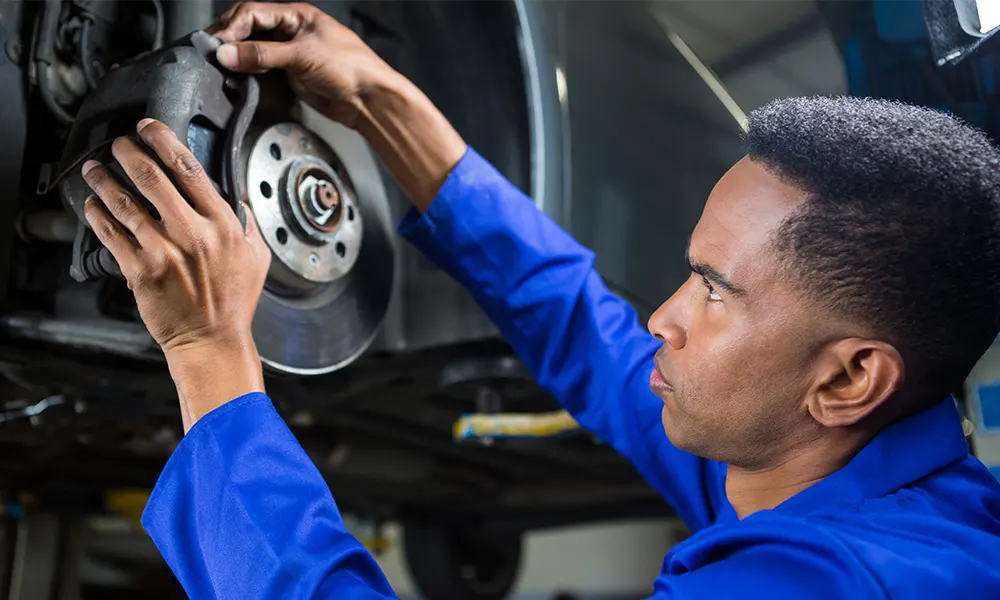
A brake inspection checks the thickness of the brake pads, the condition of the rotors, the level and condition of the brake fluid, and the lines and hoses for leaks or damage, giving a full picture of braking health.
Each of these items tells part of the story. The pads are measured against their minimum thickness so their remaining life is known, and the rotors are examined for wear, scoring or warping that would affect braking. The brake fluid is checked for both level and condition, since fluid that is low or degraded can soften the pedal. Because the pads and rotors wear together, our guide to when to replace brake pads explains how the timing of a pad change protects the rotors.
The lines and hoses are inspected too, for any leaks or damage that could compromise the system’s safety. Together these checks give a complete picture of braking health, so nothing important is missed, and if the inspection shows work is due you can book a brake inspection in Brisbane to have it carried out.
How are pads measured?
By remaining thickness against the minimum. The pads have a minimum safe thickness, so measuring how much friction material is left shows their remaining life, which is how a brake check tells you whether they are healthy, due soon, or ready to replace.
Is fluid checked too?
Yes, level and condition. Brake fluid is checked for both its level and its condition, because low or degraded fluid can lead to a softer pedal and reduced braking, so it is an important part of a full inspection rather than just the pads and rotors.
What problems does a brake inspection catch early?
A brake inspection catches early problems such as pads nearing their limit, rotors starting to wear or warp, low or degraded brake fluid, and any leak, all of which are cheaper and safer to fix before they worsen.
The value of catching these early is both financial and about safety. Pads found near their limit can be replaced before they run out and start grinding, which protects the rotors from expensive damage. Rotors caught as they begin to wear or warp can often be addressed before they need replacing, and a brake inspection is part of the broader value of a quick safety inspection that finds problems before they leave you stranded.
Low or degraded fluid and small leaks are also caught before they affect the pedal, keeping the braking firm and reliable. Because many of these are exactly the items checked for a safety certificate, having your brakes in good order also helps if you need a roadworthy safety certificate, since worn brakes are a common reason a car fails.
There is also real value in the reassurance an inspection gives, which is easy to underestimate. Knowing your brakes have been measured and confirmed as healthy takes away the nagging uncertainty of wondering whether that faint noise or slightly different pedal feel means something. Equally, if the check shows the pads are getting low, you get an honest heads-up and can plan the replacement rather than being caught out. Either way you drive away knowing exactly where your brakes stand, which is a better position than guessing. For the small time and cost involved, that clarity about the most safety-critical system on the car is well worth having, especially before a long trip or a family drive.
What’s the most valuable catch?
Pads caught before they damage rotors. Replacing pads while they still have material left, rather than after they have worn away and started grinding, protects the rotors from expensive damage, which is one of the biggest savings a regular brake inspection delivers.
Does it help pass a roadworthy?
Yes. Because worn brakes are a common reason a car fails a safety inspection, having your brakes checked and in good order beforehand helps avoid a fail and a re-inspection, so a brake inspection is worthwhile before selling or re-registering a car.
How often should you have your brakes inspected?
You should have your brakes inspected at least once a year or at every service, and sooner if you notice any change in braking, since regular checks match the way brake components wear over time.
A yearly check, or one at every service, suits the gradual way brakes wear, so any developing wear is picked up while it is still minor. Tying the inspection to your servicing makes it easy to remember and means it happens as a matter of course rather than something you have to think about. The simplest approach is to have it done as part of your general car servicing, so your brakes are checked regularly without extra appointments.
Beyond the routine, any change in braking is a reason to have them looked at sooner, whether that is a new noise, a vibration, or a softer pedal than usual. Acting on those changes promptly, rather than waiting for the next scheduled check, keeps you ahead of any problem.
What’s a good interval?
Yearly or at each service. Inspecting your brakes at least once a year, or whenever the car is serviced, matches how gradually brake parts wear, so any developing issue is caught while it is still minor and inexpensive to address.
Should I check sooner if worried?
Yes, at any change in braking. If you notice a new noise, a vibration, a softer pedal, or the car pulling when braking, have the brakes inspected sooner rather than waiting for the next scheduled check, since these changes can point to wear that needs attention.
Conclusion
Regular brake inspections turn gradual, silent wear into a known, planned repair, keeping braking safe and costs down. Because the change is slow and easy to miss, a periodic check is what gets you ahead of it rather than reacting to a noise. To keep your brakes in good order, Car One Automotive can inspect them and advise on any work due.
Frequently Asked Questions
Why are regular brake inspections important?
Because brake wear is gradual and often silent until it is advanced, so you cannot always feel it developing. Checking the pads, rotors and fluid periodically catches wear early, which keeps your braking safe and reliable and keeps repairs cheap by acting before damage is done.
What does a brake inspection check?
The thickness of the brake pads, the condition of the rotors, the level and condition of the brake fluid, and the lines and hoses for leaks or damage. Together these give a full picture of braking health, so nothing important about the system is overlooked.
How often should I get my brakes inspected?
At least once a year or at every service, which matches how gradually brake components wear. You should also have them checked sooner if you notice any change in braking, such as a new noise, a vibration, or a pedal that feels softer than it used to.
What problems does a brake inspection catch?
Pads nearing their limit, rotors starting to wear or warp, low or degraded brake fluid, and leaks in the lines or hoses. All of these are cheaper and safer to fix before they worsen, and catching worn pads early in particular protects the rotors from costly damage.
Is a brake inspection part of a car service?
Often yes. A brake check is commonly included as part of a routine service, which is the easiest way to keep on top of it. A dedicated inspection can also be done at any time you have a specific concern about braking, without waiting for the next service.