Being told your rotors need work at a brake service raises a fair question about whether a brake disc can be saved or must be replaced.
This guide explains rotor machining vs replacement: how the decision is made, what each option costs in Brisbane and when machining is not safe.
Here is what you will learn:
- How minimum thickness decides machining vs replacement
- Symptoms of warped, scored or worn rotors
- Typical Brisbane costs for both options
- Why many modern rotors are replaced rather than machined
- How local driving affects rotor wear
How Do You Decide Between Rotor Machining and Replacement?
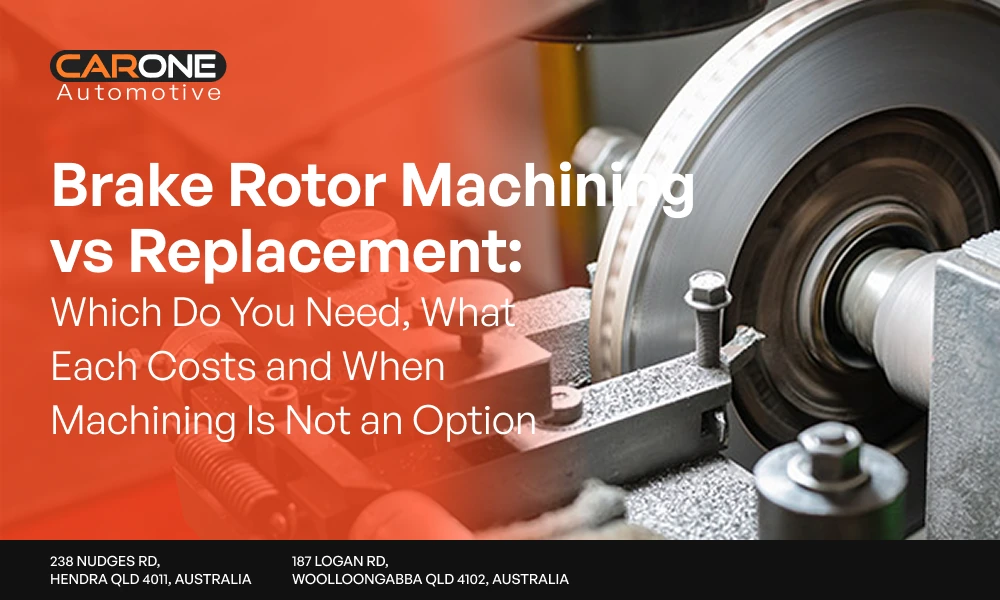
Rotors can be machined only if they will still be above the manufacturer’s minimum thickness afterwards and have no cracks; if not, replacement is the only safe option. The minimum rotor thickness is stamped on the edge of the rotor and is measured with a micrometer. Machining removes a thin layer of metal, so a rotor already close to the limit has nothing left to give.
Rotor run-out is the other measurement that matters. It describes how much the rotor wobbles as it spins, and it is checked with a dial gauge. A rotor that is thick enough but has excess run-out may be cured by machining or by correct refitting, while one below minimum thickness cannot be saved at all.
In our workshop, a rotor measured during a pad change sat only slightly above the stamped minimum, so we recommended replacement because machining would have left too little margin. The owner avoided paying for a machining job that would have worn out within months.
Once the numbers are in, the next step is a quote that lists the measured thickness for each rotor. A visit for a brake pad and rotor service in Brisbane starts with those measurements, so the choice between machining and new rotors is based on facts, and the pads are fitted to match.
What Are the Signs Your Brake Rotors Need Attention?
Signs include a pulsing brake pedal or steering wheel vibration when braking, grinding or scraping noises, deep grooves or a raised lip on the rotor edge, and blue heat marks. Warped rotors are the common label, but the real cause is usually uneven pad material deposited on the surface or run-out. Brake pedal vibration is the symptom most drivers notice first.
Brake judder is the shudder that builds when you brake from speed, and it often fades at low speed. Scores and a lip around the edge show the rotor has worn thin in the swept area, while blue marks show it has been overheated. Each sign points toward a closer look at thickness.
Vibration does not always come from the rotors, and wheel balance or worn suspension parts can feel almost identical. A guide on car shaking while driving covers other causes of vibration, so you can tell whether a brake inspection or a wheel check is the right first step for your symptom.
Brakes are also part of every safety inspection, which is why rotor condition matters beyond comfort. Brakes are an inspection criterion for Queensland approved inspectors, as the Queensland Light Vehicle Inspection Manual sets out for inspection staff, so worn or damaged rotors can cause a failed result as well as poor braking. Owners around Greenslopes QLD 4120 who notice grooves should have them measured.
How Much Does Rotor Machining Cost Compared With Replacement?
Rotor machining in Brisbane typically costs $80 to $150 per axle, while new rotors with pads typically cost $350 to $750 per axle, with European and performance vehicles costing more. The brake rotor machining cost looks attractive, but it buys a thinner rotor with a shorter remaining life. The table below compares the two options.
| Factor | Machining | Replacement |
| Typical Brisbane cost | $80 to $150 per axle | $350 to $750 per axle with pads |
| Remaining rotor life | Shorter; rotor is thinner | Full new-rotor life |
| Best for | Thick rotors with light grooves or run-out | Thin, cracked or heat-damaged rotors |
| Typical time | 1 to 1.5 hours per axle with pads | 1 to 1.5 hours per axle with pads |
| Pads | Fit new pads | Fit new pads |
New brake pads should be fitted with either option, because old pads carry the old wear pattern and will not bed in cleanly on a fresh surface. These are typical ranges rather than quotes, and workshops in Woolloongabba QLD 4102 and Hendra QLD 4011 confirm the price after measuring.
Pads are usually the main part of the bill when rotors are fine, so it helps to separate the pad cost from any rotor work. A guide on when to replace brake pads explains the wear signs and the pad-only price, so you can see how much of a combined quote comes from the pads and how much from the rotors.
Rear axle pricing differs from the front, and the rotors are often smaller and cheaper, which can change how a quote splits between the axles. A page on rear brake pad replacement cost sets out typical rear prices in Brisbane, which helps when a quote covers both axles and you want to check each one separately.
A rotor and pad job is a normal line on a Queensland workshop quote, because brakes are a standard repair category, as the RACQ car service and repairs page shows by listing brakes among routine services. That gives you a category benchmark when you compare quotes from different workshops.
When Is Machining Not an Option?
Machining is not an option when rotors are at or near minimum thickness, cracked, badly heat-damaged, or are thin modern or European designs where replacement costs little more than machining. Many workshops now replace rather than machine because modern rotors are made thin to save weight, so there is little spare metal. Rear rotor replacement is also common for another reason.
Rear rotors with an integrated drum for the park brake need special handling, and they are often simply replaced. Heat cracks are the other deal-breaker, because a cracked rotor can fail without warning no matter how thick it is.
Some owners prefer to do the work themselves, and rotor removal is a manageable job on many cars. For readers who want the DIY steps, the rotor removal guide shows how a rotor comes off, though measuring thickness and fitting the right parts is still the key to a safe result.
European brakes are the most common case where replacement wins. Their rotors are often thin and designed to be replaced with the pads, so machining saves little and leaves less metal. A workshop with European car specialists will measure, advise and fit the correct parts, so the quote reflects what the design actually allows and a fair price for the car.
How Does Brisbane Driving Affect Brake Rotors?
Stop-start traffic, hilly suburbs and humid weather in Brisbane cause heat build-up and surface rust, so rotors on local cars often wear unevenly and show scoring sooner than expected. Scoring and lip develop fastest on cars that brake hard down hills such as Mt Gravatt and crawl through stop-start corridors near Woolloongabba and Hendra. Cars that sit unused for weeks can also develop rust ridges, and daily commuters around Hamilton QLD 4007 put the most stop-start miles on their rotors.
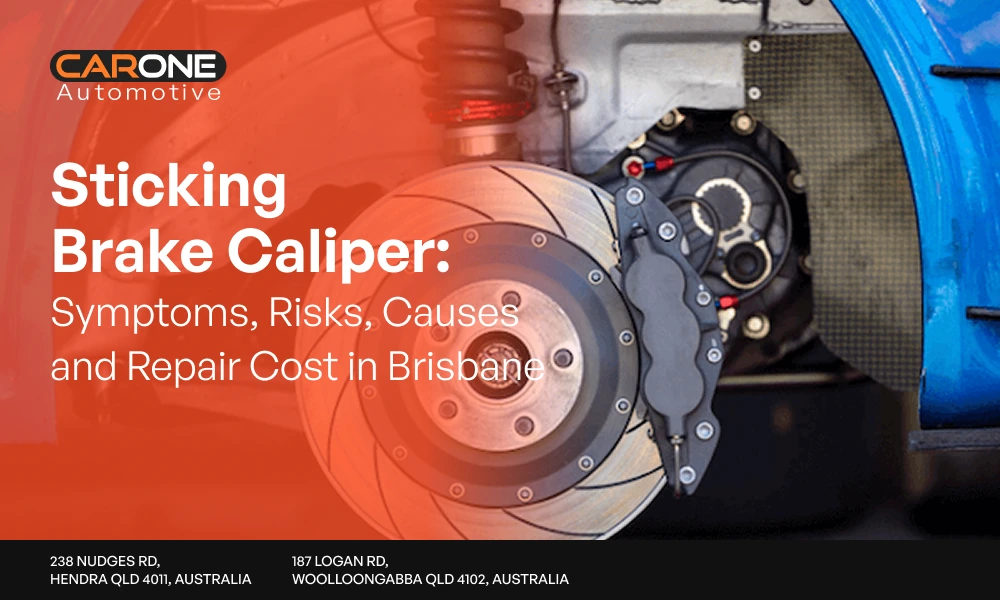
One rotor wearing faster than its partner usually points to a brake that is not releasing properly. If you see one-sided wear, the guide to a sticking brake caliper explains why one rotor wears faster and how a seized caliper damages both rotor and pad, so the cause is fixed along with the parts.
The table below lists the off-peak drive time from each nearby suburb to the closest workshop.
| Suburb | Nearest Workshop | Drive Time (Off-Peak) |
| Greenslopes | Woolloongabba | 6 to 10 min via Logan Rd |
| Coorparoo QLD | Woolloongabba | 6 to 9 min via Old Cleveland Rd |
| East Brisbane QLD | Woolloongabba | 4 to 7 min via Stanley St |
| Nundah QLD | Hendra | 8 to 12 min via Sandgate Rd |
| Albion QLD | Hendra | 8 to 12 min via Lutwyche Rd and Sandgate Rd |
| Eagle Farm QLD | Hendra | 4 to 7 min via Kingsford Smith Dr |
Seeing the southside workshop on a map helps you plan the drop-off. Drivers from Coorparoo and East Brisbane can find the Woolloongabba workshop on Google Maps to check the address, opening hours and recent customer reviews, and to see where to leave the car during the brake inspection.
Hendra is listed separately, so northside owners can check it just as easily. Drivers from Ascot QLD 4007 and Clayfield QLD 4011 can read reviews of our Hendra workshop to see how other owners describe brake work, and to check the address and hours before they book a time.
Rotor Machining vs Replacement: Which Should You Choose in Brisbane?
Choose machining when rotors have enough thickness and only light damage; choose replacement when they are thin, cracked or nearly as cheap to replace, and always fit new pads with either. Rotor machining vs replacement is a measured decision, not a matter of preference. Three questions settle it, and you can ask them of any quote:
- Is the rotor above minimum thickness after machining?
- Is it free of cracks and heat damage?
- Is machining much cheaper than replacing for this car?
Ask for the measured thickness to be written on your quote, so you can see the number behind the recommendation. Southside drivers can arrange a brake service in Woolloongabba, where the rotors are measured and the three questions answered before any work begins, so you leave knowing exactly why a rotor was kept or replaced, with the measurements written down.
Northside owners can use the same checklist with the second workshop, which measures every rotor against its stamped minimum before advising. A brake service in Hendra covers the same measurements and the same advice, so owners on that side of the river can judge their own quote with confidence.
Conclusion
The choice between machining and replacing rotors comes down to measured thickness and condition, not preference. Ask for the measurement on your quote and fit new pads with either option.
For brake inspections and rotor work in Woolloongabba or Hendra, book with Car One Automotive.
Frequently Asked Questions
How Long Do Brake Rotors Usually Last?
Many rotors last 50,000 to 100,000 km, often through two sets of pads. Hard driving, hills and heavy vehicles shorten that, and thin European rotors may be replaced with every pad change.
Do I Need to Replace Rotors Every Time I Replace Pads?
No. Rotors that are above minimum thickness and in good condition can stay, sometimes after machining. The measured thickness decides, not a fixed rule.
Should Rotors Be Replaced in Pairs?
Yes. Rotors should be machined or replaced in pairs on the same axle so braking stays even and the car doesn’t pull to one side.
Can I Drive With Warped Rotors?
You can drive carefully for a short time, but pedal pulsing lengthens stopping distances and can get worse. Book an inspection soon to measure the rotors.
Are Slotted or Drilled Rotors Worth It for Daily Driving?
Usually not. They suit heavy towing or performance use, but for daily driving quality plain rotors are quieter, longer lasting and cheaper.