Brake fluid is easy to overlook because it rarely runs low, so a flush on a service quote can look like an upsell.
This guide explains how often a brake fluid flush is really needed, what it costs in Brisbane and what old fluid does to braking, starting with what your logbook service schedule says.
Here is what you will learn:
- The usual brake fluid change interval
- Why brake fluid absorbs moisture
- Warning signs of old or contaminated fluid
- Typical Brisbane price for a brake fluid flush
- Why humid Brisbane weather matters
How Often Do You Need a Brake Fluid Flush?
Most manufacturers recommend replacing brake fluid every two years regardless of kilometres, and some European and performance models specify shorter intervals in the logbook. Anyone wondering how often to change brake fluid should start with the schedule printed for their own car. Owners in Coorparoo QLD 4151 who drive few kilometres still need the two-year change, because time matters as much as distance.
Brake fluid comes in several grades. DOT 3 and DOT 4 brake fluid are glycol-based and broadly compatible, DOT 5.1 is also glycol-based with a higher boiling point, and DOT 5 is silicone-based and must never be mixed with the others. Use the grade printed on the reservoir cap, because the wrong type can harm seals and lower braking performance.
Once you know the interval and the right fluid, the remaining step is booking the work with a workshop that bleeds all four corners. A visit for a brake service in Brisbane can include the fluid change alongside a pad and rotor inspection, so the whole braking system is checked in one trip and nothing is left to chance.
Why Does Brake Fluid Need Changing at All?
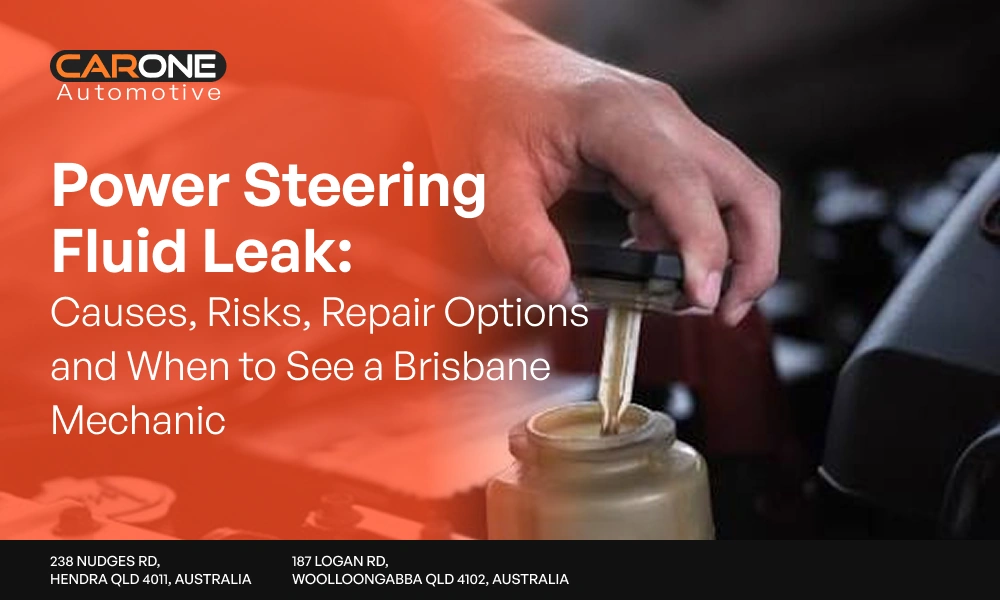
Brake fluid absorbs moisture from the air over time, which lowers its boiling point and can cause a soft pedal under hard braking and internal corrosion in calipers and the ABS unit. Brake fluid is hygroscopic, which simply means it attracts and holds water. Even a sealed system slowly takes in moisture through hoses and seals.
Water boils at a lower temperature than brake fluid, so wet fluid can form vapour bubbles when the brakes get hot. Vapour compresses, unlike liquid, so the pedal feels soft or sinks toward the floor just when you need it most. Brake fluid with a lower boiling point is therefore a real safety issue, not only a maintenance box to tick.
Moisture also corrodes metal from the inside. When it attacks the hydraulic parts of the ABS module, the first symptom may be a dashboard light, and a guide to the ABS warning light explains what that light means and why contaminated fluid is one of the possible causes behind a warning that appears without any change in how the car feels.
Corrosion can also form on caliper pistons, which makes them stick instead of sliding freely. A seized piston leaves a pad dragging on the rotor, and the guide to a sticking brake caliper shows the signs of a seized caliper and how the damage builds when old fluid is left in the lines.
What Are the Signs Your Brake Fluid Needs Replacing?
Signs include dark or cloudy fluid in the reservoir, a spongy or long brake pedal, brake fade on long descents, and a failed moisture test during a service. A spongy brake pedal is the symptom drivers notice first. The table below links each sign to its likely cause and how urgent it is.
| Sign | Likely Cause | Urgency |
| Dark or cloudy fluid in reservoir | Old, moisture-laden fluid | Book a flush within weeks |
| Spongy or long brake pedal | Moisture, air in lines or master cylinder | Book an inspection now |
| Brake fade on long descents | Fluid boiling from moisture content | Avoid hills; book now |
| Failed moisture test at service | Fluid past its service life | Flush at this service |
A moisture content test uses a small handheld tester to read how much water the fluid holds. In our workshop, a car that had missed its scheduled fluid change failed the test and showed dark fluid, and a flush brought the pedal back to normal.
A soft pedal does not always mean old fluid, and a spongy pedal can also mean air in the lines or a failing master cylinder, so it needs inspection. A guide to spongy brake pedal causes walks through the possibilities, so you can see why a proper check comes before any fluid is replaced, and what a mechanic will test first.
How Much Does a Brake Fluid Flush Cost in Brisbane?
A brake fluid flush at a Brisbane independent workshop typically costs $90 to $180, with European cars and vehicles needing an ABS bleed procedure at the higher end. The brake fluid change cost is modest next to the parts it protects. The table below shows typical 2026 Brisbane prices and times.
| Vehicle or Job | Typical Price (AUD) | Typical Time |
| Standard passenger car flush | $90 to $140 | 45 to 60 min |
| European car or ABS bleed procedure | $140 to $180 | 60 to 90 min |
| Flush added to a logbook service | $70 to $120 | Adds 30 to 45 min |
The price covers removing the old fluid, filling with new fluid to the correct specification, a full brake bleed at all four corners and a final pedal and leak test. These are typical ranges rather than quotes, and workshops in Woolloongabba QLD 4102 and Hendra QLD 4011 confirm the price once the car is identified.
Bundling the flush with a scheduled service usually cuts labour, because the car is already on the hoist. Owners can ask to add it to your logbook service so that the fluid change, the oil and the other scheduled items are done in one visit with a single itemised invoice.
A fluid change is a normal line on a quote and not an unusual extra, because brakes are a standard repair category at Queensland workshops, as the RACQ car service and repairs page shows when it lists brakes alongside other routine work for owners. It helps to know that when a workshop recommends it.
A Queensland benchmark price also exists for a basic service, which gives useful context for the bundle figure above. The RACQ car service page lists a basic service offer, so you can compare it with what a flush adds when it is included in a visit like that.
Does Brisbane’s Humidity Affect Brake Fluid?
Brisbane’s humid summers mean brake fluid can absorb moisture faster than in drier climates, so sticking to the two-year interval matters more for local drivers than skipping a cycle. A brake fluid flush Brisbane drivers book on schedule protects the ABS module and the calipers from slow corrosion. Hilly runs such as Mt Coot-tha or Mt Gravatt add heat on the descents.
Ask for a moisture content test at each service. It takes a minute, and the result tells you whether the fluid is still in good condition or past its life, which removes any doubt about whether the flush is an upsell.
Brake checks are most useful when they happen regularly, not only after something feels wrong, because most braking faults build slowly. Reading why regular brake inspections matter shows how fluid, pads, rotors and lines are checked together, so small problems are found early and the car stays safe on Brisbane’s hills.
Here is how far the closest workshop is from nearby suburbs when traffic is light.
| Suburb | Nearest Workshop | Drive Time (Off-Peak) |
| Greenslopes QLD | Woolloongabba | 6 to 10 min via Logan Rd |
| Coorparoo | Woolloongabba | 6 to 9 min via Old Cleveland Rd |
| East Brisbane QLD | Woolloongabba | 4 to 7 min via Stanley St |
| Nundah QLD | Hendra | 8 to 12 min via Sandgate Rd |
| Albion QLD | Hendra | 8 to 12 min via Lutwyche Rd and Sandgate Rd |
| Eagle Farm QLD | Hendra | 4 to 7 min via Kingsford Smith Dr |
Seeing the southside workshop on a map helps when you are planning a drop-off. Drivers from Coorparoo and East Brisbane can find the Woolloongabba workshop on Google Maps to check the address, opening hours and recent customer reviews, and to see where to park while the fluid is changed.
A second listing covers the Hendra workshop for owners north of the river. Drivers from Ascot QLD 4007 and Clayfield QLD can read reviews of our Hendra workshop to see how other owners describe brake work, and to confirm the address and hours before they book a time.
When Should You Book a Brake Fluid Flush in Brisbane?
Book a brake fluid flush when the logbook interval falls due, when a moisture test fails, or when the pedal feels soft, as fresh fluid protects calipers and the ABS unit from corrosion. A short checklist of triggers keeps it simple:
- The two-year logbook interval has come due
- A moisture content test has failed
- The brake pedal feels soft, spongy or long
- Brake fade appears on long descents
Skipping the flush can lead to costly caliper or ABS repairs later, which is why it is cheap insurance. Southside drivers can act on any trigger by booking a brake service in Woolloongabba, where the fluid, pads and rotors are inspected together and a moisture test is offered at each visit, so you can see the fluid condition for yourself.
Northside owners can follow the same checklist with the second workshop, which runs the same fluid check and bleed process on every car. A brake service in Hendra covers the same fluid change, bleed and inspection, so owners on that side of the river can protect their calipers and ABS unit without a long drive.
Conclusion
A brake fluid flush is a small, scheduled job that protects pedal feel and the expensive parts of the braking system. Check your logbook interval and ask for a moisture test at each service.
For a brake fluid flush in Woolloongabba or Hendra, book with Car One Automotive.
Frequently Asked Questions
Can I Just Top Up Brake Fluid Instead of Flushing It?
A top-up adds fresh fluid but leaves the old, moisture-laden fluid in the lines. Brake fluid levels also drop as pads wear, so a low level should be checked, not just topped up.
What Colour Should Brake Fluid Be?
New brake fluid is usually clear to light amber. Dark brown or cloudy fluid has absorbed moisture and contaminants and is due for replacement.
How Long Does a Brake Fluid Flush Take?
Most brake fluid flushes take 45 to 60 minutes. European cars or vehicles that need an ABS bleed procedure can take up to 90 minutes.
Can I Mix DOT 3 and DOT 4 Brake Fluid?
They are compatible in an emergency, but mixing lowers the boiling point to the weaker fluid’s level. Use the type on the reservoir cap and never add DOT 5 silicone fluid.
Is a Brake Fluid Flush Part of a Logbook Service?
It is when the logbook interval for brake fluid falls due, usually every two years. Check the schedule and confirm it appears on the itemised invoice.