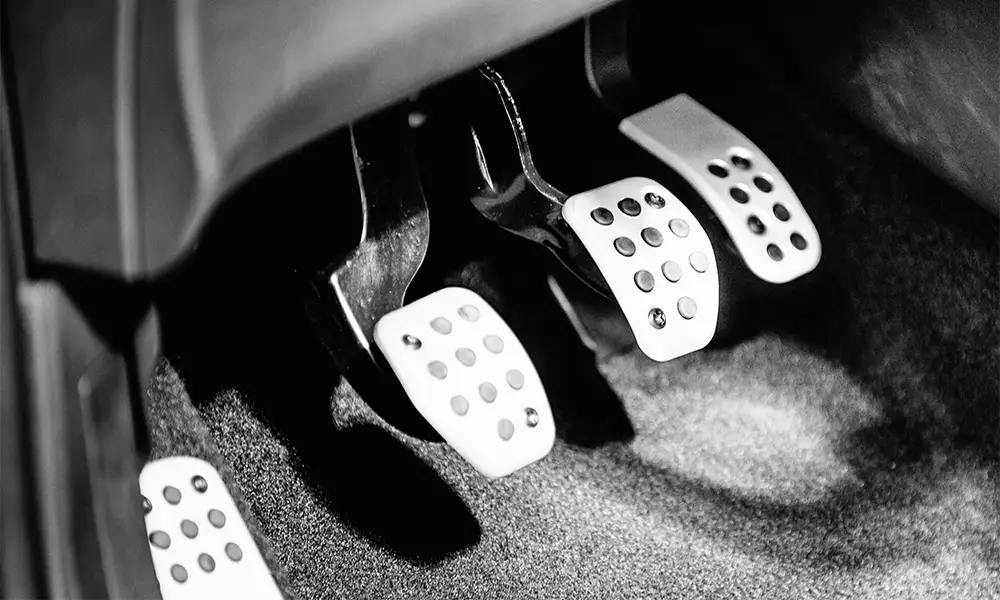
When the brake pedal sinks softly toward the floor instead of pushing back firmly, your car is telling you something is wrong in the braking system. It is one of those faults that is easy to talk yourself out of, but brakes are not the place to take chances.
This guide explains what a spongy brake pedal means, the common causes from air in the lines to a failing master cylinder, and how each is fixed, so you understand why it must be checked without delay.
Here is what we will cover:
- What a spongy brake pedal feels like
- The most common causes
- Why air and fluid problems are common
- Whether it is safe to drive
- How each cause is fixed
What Causes a Spongy Brake Pedal?
A spongy brake pedal is most often caused by air trapped in the brake lines, low or contaminated brake fluid, a leaking brake hose, or a failing master cylinder, all of which stop the system building firm hydraulic pressure.
Brakes work by pushing incompressible fluid through sealed lines to squeeze the pads against the discs. Anything that lets that pressure escape or introduces something compressible, like air, results in a soft, sinking pedal instead of a firm one. Keeping up with general car servicing helps here, because fluid condition and small leaks are the sort of thing a routine check picks up long before they ever leave you with a soft pedal.
Why Does Air Make the Pedal Soft?
Brake fluid does not compress, which is what gives a healthy pedal its firm feel. Air, on the other hand, squashes easily. When air gets into the lines, pressing the pedal compresses that air before the fluid can act on the calipers, so the pedal travels further and feels spongy.
Can Old Fluid Cause It?
Yes. Brake fluid absorbs moisture over time, and moisture-laden fluid boils at a lower temperature. Under braking heat it can turn to vapour, which is compressible, producing a soft brake pedal. This is why fluid needs periodic changing rather than being left for the life of the car.
| Cause | Why it softens the pedal | Fix |
|---|---|---|
| Air in lines | Air compresses | Bleed the brakes |
| Old/low fluid | Boils, low pressure | Flush and top up |
| Leaking hose/line | Pressure escapes | Replace hose/line |
| Master cylinder | Internal bypass | Replace cylinder |
Is It Safe to Drive With a Spongy Brake Pedal?
No, it is not safe to drive with a spongy brake pedal, because reduced braking power increases stopping distance and the fault can worsen quickly, so the brakes should be checked before driving further.
This is not a scare tactic, it is simply how hydraulics work. A soft pedal today can become a much softer one tomorrow, and brakes tend to fail at the worst possible moment. The safe move is to stop driving and book a brake check in Brisbane rather than gamble on it holding up for one more trip when the whole system depends on that firm pedal.
What if the Pedal Goes to the Floor?
If the brake pedal goes to the floor with little resistance, treat it as a serious fault and stop driving. It usually means a significant loss of pressure from a leak or a failing master cylinder. Do not keep testing it on the road; have our Brisbane mechanics look at it before the car is driven again, because a pedal that reaches the floor rarely fixes itself and usually gets worse.
Can It Fail Suddenly?
Yes. A small leak or a slowly failing component can tip into a sudden, near-total loss of braking with little warning. That is exactly why minor brake wear matters, and why a soft pedal is worth acting on early rather than waiting to see whether it gets worse on its own.
Why Are Air and Fluid the Usual Culprits?
Air and fluid problems are the usual culprits because brakes work by hydraulic pressure, and any air in the lines or old moisture-laden fluid stops that pressure transferring firmly to the calipers.
Understanding the spongy brakes causes really comes down to this one idea: the whole system depends on a solid, sealed column of fluid. Get air into it, or let the fluid degrade, and the firm connection between your foot and the brakes is lost.
How Does Air Get Into the Lines?
Air usually enters after a leak, during brake repairs if the system is opened up, or when the fluid reservoir is allowed to run too low and draws air in. Once it is in there, it will not clear on its own, which is where a proper brake bleed comes in.
How Often Should Fluid Be Changed?
Brake fluid should be changed periodically as it absorbs moisture, not left indefinitely. The exact interval varies by vehicle, so it is worth asking at your next service. Fresh fluid keeps the boiling point high and the pedal firm, which is cheap insurance for such an important system.
How Is a Spongy Brake Pedal Fixed?
A spongy brake pedal is fixed by first identifying the cause, then bleeding out trapped air, flushing old fluid, or replacing a leaking hose or failing master cylinder, after which the firm pedal is restored and road tested.
The order matters, because fixing the wrong thing wastes money and leaves the fault in place. Once the cause is confirmed and repaired, the system is bled up firm and checked on the road. If pads or discs are also worn, it is worth knowing the rear brake pad replacement cost so there are no surprises when the full picture comes back and you can weigh up the whole job at once.
What Does Bleeding the Brakes Do?
Bleeding pushes fresh fluid through the lines and forces trapped air out through each caliper, restoring a solid column of fluid and a firm pedal. It is often combined with other brake work, and while the wheels are off it can be a good time to address discs; if you are curious, this covers how brake rotors are removed so you can see what is involved when discs are replaced at the same time as a brake fluid service.
When Is the Master Cylinder Replaced?
The master cylinder is replaced when testing shows it is bypassing internally, meaning its seals no longer hold pressure and the pedal slowly sinks even with no external leak. It is confirmed by proper diagnosis rather than guesswork, because it is a more involved repair than a simple bleed or fluid flush.
A Warning You Should Never Drive On
A spongy brake pedal is a hydraulic warning, and it is one you should never simply drive on. The reassuring part is that the fix is usually straightforward once the cause is found, whether that is bleeding out air, flushing tired fluid, or replacing a hose or master cylinder. What matters most is treating a soft pedal as the safety issue it is and getting it checked promptly rather than hoping it firms up. If your pedal feels soft or is sinking, have the brakes inspected without delay by Car One Automotive.
Frequently Asked Questions
What Causes a Spongy Brake Pedal?
Usually air trapped in the brake lines, low or contaminated brake fluid, a leaking brake hose, or a failing master cylinder. All of these stop the hydraulic system building firm pressure, so instead of pushing back solidly, the pedal sinks softly toward the floor when you press it.
Is It Safe to Drive With Spongy Brakes?
No. A spongy pedal means reduced braking power, which increases your stopping distance exactly when you can least afford it, and the fault can worsen quickly into a much bigger loss. Have the brakes checked before driving any further, rather than hoping it holds up on the next trip.
Why Does My Brake Pedal Go to the Floor?
A pedal that sinks to the floor points to a serious loss of hydraulic pressure, usually from a fluid leak or a master cylinder bypassing internally. This is one of the more dangerous brake faults, so stop driving as soon as it is safe and have it checked urgently.
Can Old Brake Fluid Cause a Soft Pedal?
Yes. Brake fluid absorbs moisture from the air over time, and that moisture can boil under braking heat, forming compressible vapour that softens the pedal. This is why fluid needs periodic changing, and a proper fluid flush often restores a firm pedal without any other parts being replaced.
How Is a Spongy Brake Pedal Fixed?
By first finding the cause, then carrying out the matching repair: bleeding out trapped air, flushing old fluid, or replacing a leaking hose or a failing master cylinder. Once that is done, the brakes are bled up firm and road tested to confirm the pedal feels solid again.