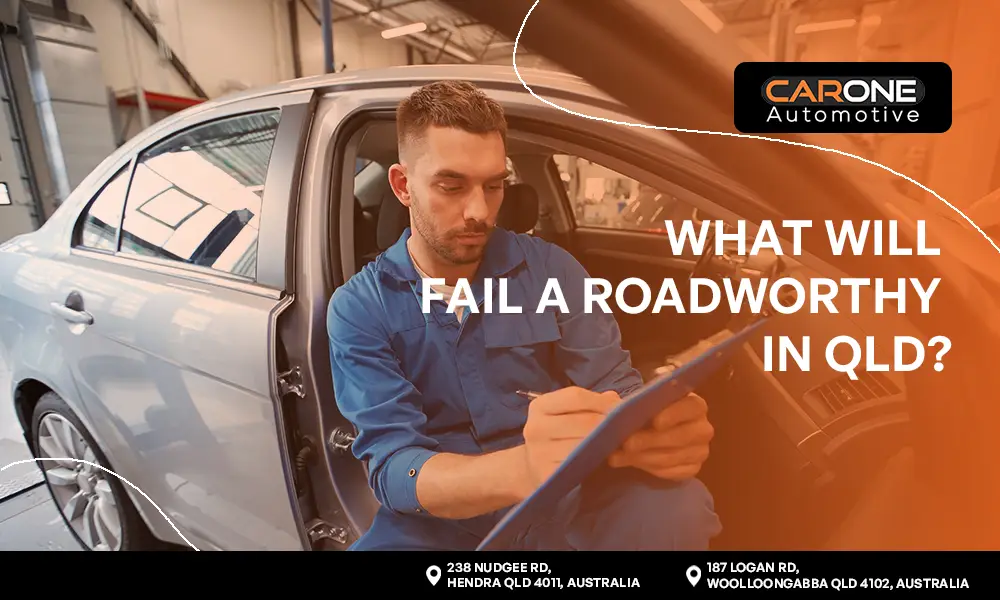
Most roadworthy fails are not catastrophic. They are cheap, fixable items that you could have spotted yourself at home with a ten-minute walk-around. Understanding what will fail a roadworthy QLD inspection puts you in control of the process before the formal inspection date. The common roadworthy fails that catch drivers off guard are rarely complex mechanical issues. They are blown globes, worn wiper blades, low tyre tread and minor leaks that are easy to address once you know to look for them.
This guide lists the twelve items most likely to fail a Queensland roadworthy in 2026, why each one fails, and the realistic cost of getting it fixed before re-inspection.
Here is what this guide covers:
- The top twelve fail items
- Why each one fails
- Realistic fix cost ranges
- What to check at home before the inspection
- When a fail signals a bigger problem
What Will Fail a Roadworthy in QLD?
The items most likely to fail a Queensland roadworthy are worn tyres below 1.5 mm tread, blown brake lights or indicators, perished wiper blades, oil leaks, cracked windscreens in the driver’s vision zone, illegal exhausts or window tint, uneven brake force, and worn suspension bushes.
These items appear on fail reports more consistently than anything else across Queensland inspection stations. Some of them, like a blown globe or a perished wiper blade, take minutes to fix and cost almost nothing. Others, like uneven brake force or worn suspension components, require workshop attention but are still straightforward repairs once identified.
The key insight is that virtually all of the RWC fail items QLD inspectors flag most often are identifiable before the formal inspection if you take the time to look. A pre-inspection walk-around, a simple tread depth check and a fluid level assessment can catch the majority of issues before they become items on a fail report.
For the full checklist of what inspectors assess across every category, the Full Pass Requirements guide covers each standard in detail. The broader context for how the process works is covered in the Passing a Queensland Roadworthy Guide.
Tyres, Brake Lights and Wipers
Tyres fail when tread is under 1.5 mm or there is sidewall damage, brake lights fail when a globe is blown or wiring is corroded, and wipers fail when rubber is perished or smearing. All of these are typically under $100 to fix.
These three categories account for a disproportionate share of Queensland roadworthy fails, and all of them are preventable with a basic pre-inspection check.
Tyres
Tyre tread must measure above 1.5 mm across the full width of the contact patch. Uneven wear that brings any section of the tyre below this level is a fail, even if the centre tread still looks adequate. Sidewall cracking, bulging or cord exposure are also automatic fails regardless of tread depth. A tread depth gauge costs a few dollars and removes all guesswork. Alternatively, a 20-cent coin placed in the tread groove gives a rough indicator. If you can see the full band of the coin, the tread is getting close to the limit.
Fix cost: a single tyre replacement ranges from around $80 to $250 depending on size and brand. A full set of four is a more significant outlay but avoids the risk of a further fail at re-inspection.
For a tyre condition check and replacement before your RWC, Brisbane Tyre Service can assess tread depth and sidewall condition across all four tyres.
Brake Lights and Indicators
A single blown brake light globe is one of the most common and easily avoided fail items on a Queensland roadworthy. Inspectors check every light in the circuit individually, and a globe that works intermittently at home may not work consistently under inspection conditions. Indicators that flash at the wrong rate, caused by a blown globe causing incorrect resistance in the circuit, are also flagged.
Fix cost: a replacement globe is typically $5 to $20. If wiring corrosion is causing the failure, the repair cost increases but is still generally manageable.
For brake system repairs beyond the lighting circuit, Brake Pad Replacement Brisbane covers pad, rotor and calliper work ahead of inspection.
Wiper Blades
Wiper blades that streak, skip or leave sections of the windscreen uncleared fail because they impair the driver’s vision in wet conditions. Rubber that has perished, cracked or separated from the blade frame is a consistent fail item. This is one of the cheapest and fastest fixes on any roadworthy checklist.
Fix cost: a pair of replacement wiper blades typically costs $20 to $60 and can be fitted at home in under ten minutes.
For a broader overview of the Brisbane roadworthy process including what to expect at inspection, the Brisbane Roadworthy Guide is a useful companion resource.
Fluid Leaks and Engine Bay Issues
Visible oil, coolant or brake fluid leaks fail a roadworthy because they signal safety risks and environmental concerns. Fix cost depends entirely on the source. A leaking sump bolt is cheap to address, while a leaking rear main seal is a more significant repair.
Fluid leaks are assessed on severity and source. Not every trace of oil in an engine bay is automatically a fail, but an active drip, a pooling of fluid under the vehicle at inspection time, or contamination of brake or clutch components is treated seriously.
Oil Leaks
An oil leak is one of the more common reasons Queensland drivers are surprised by a fail result. A vehicle that has been sitting in a driveway with a slow drip can present very differently at a workshop inspection where the engine is at operating temperature and under assessment. The most common sources of oil leaks that fail inspections include valve cover gaskets, rocker cover seals, sump plugs and oil cooler lines.
Fix cost: a valve cover gasket replacement is typically $150 to $350 in parts and labour. A rear main seal replacement is more involved and can cost $400 to $800, depending on the vehicle.
Coolant Leaks
A coolant leak that is active at inspection time is a fail. Leaking hose clamps, cracked overflow tanks, and weeping radiators are all common sources. The risk from a coolant leak extends beyond the vehicle to the road surface, which is why inspectors treat even moderate leaks seriously.
Brake Fluid Leaks
Any brake fluid leak is an automatic fail. Brake fluid leaking from a calliper, wheel cylinder or brake line directly compromises the vehicle’s stopping ability. This is one area where there is no borderline assessment. A leak is a fail.
It’s important to monitor fluid levels and warning signs before they become serious issues. The guide on Dangers of Ignoring Warning Lights explains what dashboard warnings indicate and why addressing them promptly matters.
Windscreen, Body and Lights
Cracks in the driver’s vision area of the windscreen fail automatically, rust in structural body areas fails on safety grounds, and incorrectly aligned or non-functional headlights fail because of the night-time visibility risk they create.
Windscreen Cracks and Chips
A windscreen crack that falls within the critical vision zone directly in front of the driver is an automatic fail. The critical vision zone is broadly defined as the area swept by the wiper blades in line with the driver’s forward field of view. Chips outside this zone may or may not be flagged depending on size and likelihood of spreading. Any windshield crack that is clearly visible and falls within the driver’s sight line should be repaired or replaced before the inspection rather than presented and hoped for the best.
Fix cost: windscreen chip repair is typically $50 to $100 per chip through a specialist repairer. Full windscreen replacement ranges from $200 to $600 depending on the vehicle.
Rust and Body Integrity
Surface rust on cosmetic panels is assessed differently from rust that compromises structural components. Rust penetrating the chassis rails, sill sections, floor pan or suspension mounting points is a fail because it undermines the structural integrity of the vehicle. Sharp or jagged edges on body panels that could cause injury to occupants or pedestrians are also flagged.
Fix cost: structural rust repairs vary enormously depending on the extent and location. Minor sill repairs may cost a few hundred dollars. Severe structural rust can make a repair uneconomical.
Headlight Alignment and Output
Headlights that are aimed too high, too low or too far to one side are a fail. Faded or heavily yellowed headlight lenses that reduce output below the required level may also be flagged. Non-standard LED or HID conversions without proper ADR certification are treated as non-compliant.
Fix cost: headlight alignment adjustment is typically $50 to $100 at a workshop. Lens restoration for yellowed covers costs $80 to $150. Globe replacement for standard fittings is $20 to $60 per globe.
Illegal Modifications and Aftermarket Parts
Non-ADR-compliant exhausts, window tints below 35% visible light transmission in non-rear windows, illegal LED light bars, lowered suspension outside engineering certification, and non-compliant wheels and tyres all fail a Queensland roadworthy automatically.
Illegal modifications are a consistent source of failures for vehicles that have had aftermarket work done without documentation. The modification itself is not always the problem. The absence of the correct paperwork to support it is what creates the failure.
Window Tint
Queensland law requires a minimum of 35 percent visible light transmission on front side windows. Aftermarket tint that brings the glass below this level is a fail regardless of when it was installed or who installed it.
Exhaust Modifications
Aftermarket exhausts that exceed legal noise limits or remove emissions control components are a fail. A product sold as a direct replacement does not automatically meet Queensland roadworthy standards. The exhaust must comply with both noise and emissions requirements as assessed at inspection time.
Suspension Changes
Lowering or raising suspension beyond the limits permitted without engineering certification is a fail. The permitted range varies depending on the vehicle, but modifications that bring the body into contact with the tyres or significantly alter handling characteristics will not pass.
Wheels and Tyres Outside Specification
Wheels and tyres that fall outside the vehicle’s approved specification in terms of diameter, width or offset require modification documentation. Running a combination that has not been approved creates a potential fail on both tyre and modification grounds.
If a fail result on modification grounds does not seem consistent with what was assessed, the guide on Dodgy Roadworthy Operators explains what a legitimate assessment looks like and what to do if a result seems incorrect.
What to Check at Home Before the Inspection
Before booking your roadworthy, walk around the car and test every light, check tyre tread with a 1.5 mm gauge or a 20-cent coin, top up fluids, replace wiper blades, and check for any visible leaks under the engine bay.
Working through this pre-inspection routine takes less than thirty minutes and can prevent the most common reasons why my car failed roadworthy searches end up on this page. Here is the sequence to follow.
Lighting Check
Have someone press the brake pedal while you walk around the rear of the car. Check both brake lights, both indicators, and the number plate light. Then run through indicators front and rear, reversing lights with the car in reverse, hazard lights and headlights on both low and high beams. Replace any globe that is not working.
Tyre Check
Check tread depth at multiple points across the width of each tyre, not just the centre groove. Look at the sidewalls for cracking, bulging, or any sign of damage. Check that all four tyres are inflated to the correct pressure.
Wiper Blades
Run the wipers across a wet windscreen and watch for any streaking, skipping or areas of the glass that are not being cleared. Replace the blades if there is any doubt.
Fluid Levels
Check engine oil, coolant, brake fluid and windscreen washer fluid. Top up anything low. Look under the car after it has been parked overnight for any sign of dripping or pooling.
Windscreen
Sit in the driver’s seat and look across the windscreen at a low angle toward a bright background. This makes chips and cracks much easier to see than looking straight through the glass.
Under the Bonnet
Look for any obvious signs of leaks around the valve cover, sump, coolant hoses and brake master cylinder. A clean engine bay makes this easier to assess.
When a Fail Signals a Bigger Problem
Most fails are minor, but uneven brake force, knocking suspension, severe oil leaks, or unequal headlight beams can signal underlying issues that need diagnosis before re-inspection. A pre-inspection check from an honest mechanic flags these concerns early.
The roadworthy fail list for most vehicles is a collection of small items. But occasionally a fail item is a symptom of something more significant, and addressing the symptom without understanding the cause leads to a further fail at re-inspection.
Uneven Brake Force
A brake test that shows significantly uneven force between the left and right wheels on the same axle points to a seized calliper, contaminated brake pads or a hydraulic fault. Replacing the pads alone without addressing the underlying cause will not fix the imbalance.
Knocking or Worn Suspension
A suspension knock under inspection conditions may come from a worn ball joint, a collapsed bush, or a broken spring. Each of these has a different repair requirement and a different cost. Diagnosing the specific component before ordering parts saves time and avoids unnecessary expense.
Severe Oil Leaks
An oil leak that is severe enough to fail an inspection usually points to a gasket or seal that has failed completely rather than one that is just beginning to weep. A mechanic who can identify the exact source before the repair begins can give you an accurate cost estimate and confirm whether any secondary damage has occurred.
Headlight Beam Irregularities
Headlights that are misaligned or producing unequal output may indicate a damaged headlight housing, a corroded earth connection or a failing low-beam circuit. Alignment adjustment without checking the underlying condition of the circuit may not produce a lasting fix.
For the full Brisbane roadworthy booking process once the vehicle is ready, Brisbane Roadworthy Bookings covers how to get an appointment and what to bring.
Conclusion
The roadworthy fail list reads like a checklist of small items that most drivers can spot themselves with a basic walk-around. A tread depth check, a light test and a look under the bonnet for fluid leaks catch the majority of common fails before they ever appear on an official report. The items that slip through are usually the ones nobody looked for before the inspection date.
For a Brisbane pre-inspection check that identifies the cheap fixes before the formal RWC, Car One Automotive runs honest pre-checks across the city.
Frequently Asked Questions
What Will Fail a Roadworthy in QLD?
The most common fail items in Queensland are worn tyres below 1.5 mm tread, blown brake lights or indicators, perished wiper blades, visible fluid leaks, cracked windscreens in the driver’s vision zone, illegal modifications and uneven brake force. Most of these are inexpensive to fix before the formal inspection.
How Much Does a Typical Fail Cost to Fix?
Minor fails such as wiper blades, globes and tyre replacements generally cost under $100 per item. Brake repairs range from $150 to $500 depending on what is needed. Windscreen replacement costs $200 to $600. Structural rust or major mechanical fails can cost significantly more.
Does an Oil Leak Automatically Fail an RWC?
Not every trace of oil is an automatic fail, but an active drip or pooling visible at inspection time will be flagged. Contamination of brake or clutch components from an oil leak is a serious fail. Any known oil leak should be repaired or assessed before the inspection to avoid uncertainty.
Can I Drive a Failed Car After the Inspection?
A failed roadworthy inspection means that the vehicle did not meet the minimum safety standards at the time of the inspection. Driving a vehicle with serious safety faults may be illegal and is a risk to other road users. You should address failed items before driving the vehicle further if the faults identified affect braking, steering or visibility.
How Long Do I Have to Fix Fail Items?
Queensland’s inspection rules allow 14 days from the initial inspection date to repair the failed items and return to the same AIS for re-inspection. Within this window, only the previously failed items need to be rechecked. Missing the 14-day window typically requires a full re-inspection at full cost.