Removing a brake rotor looks simple in a video and can be, but a seized rotor and the safety critical nature of brakes are why it is worth understanding properly first. Brake rotor removal follows a genuinely predictable sequence, but a handful of common sticking points catch out even careful, methodical owners.
This guide walks through brake rotor removal, the steps, the tools, the common sticking points, and importantly when the job is better left to a professional.
In the sections below you will find:
- What brake rotor removal involves
- The steps and tools
- Dealing with a stuck rotor
- The safety cautions
- When to leave it to a pro
How Is A Brake Rotor Removed?
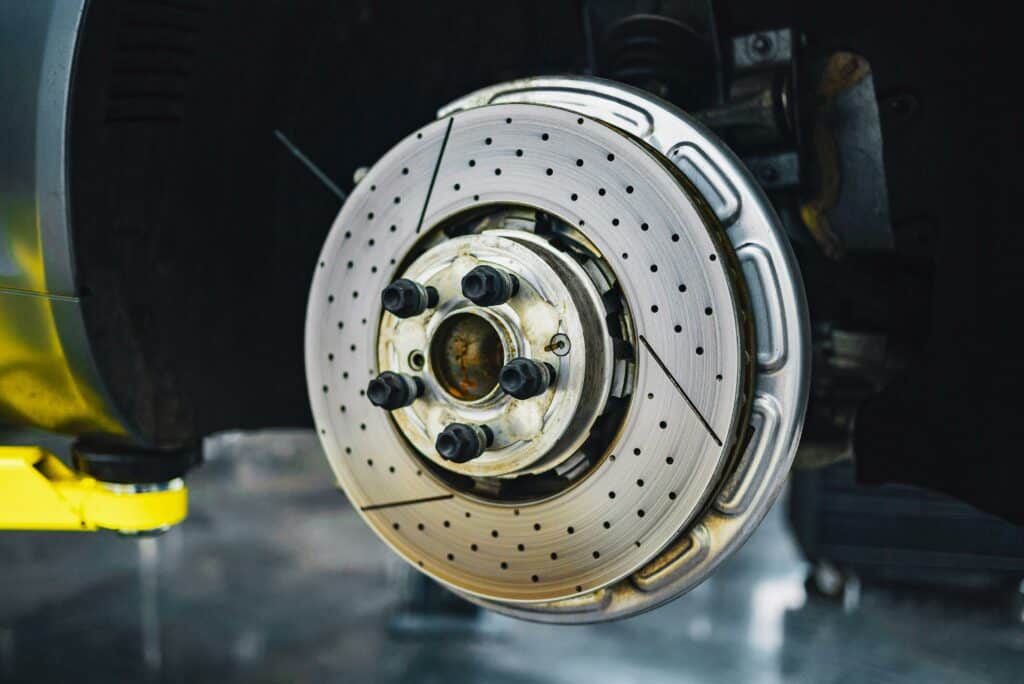
A brake rotor is removed by lifting and supporting the car safely, taking off the wheel, unbolting and supporting the brake caliper and its bracket, removing any retaining screw, and then sliding the rotor off the hub.
This sequence rarely changes much between vehicles, though the exact bolt sizes, caliper bracket arrangement and presence of a retaining screw vary from car to car. Working through the steps in order, rather than skipping ahead, is what keeps the job straightforward and genuinely safe.
| Step | Action | Caution |
|---|---|---|
| 1 | Lift and support car | Use axle stands |
| 2 | Remove wheel | Loosen before lifting |
| 3 | Unbolt caliper + bracket | Support, don’t hang |
| 4 | Remove retaining screw | May be tight |
| 5 | Slide rotor off | May be seized |
For a broader understanding of when a rotor actually needs attention in the first place, our guide to when to replace brake pads covers the wear signs that typically prompt this whole job.
What Tools Are Needed?
A jack and a set of axle stands, a socket set matched to your car’s bolt sizes, and often a rubber or dead blow mallet to help free a rotor that has bonded to the hub over time.
Do I Remove The Caliper?
Yes, the caliper must come off to access the rotor, and it should always be properly supported once removed, since letting it hang unsupported by its hose risks damaging the hose itself.
How Do You Deal With A Stuck Brake Rotor?
You deal with a stuck brake rotor by applying penetrating oil to the hub, tapping the rotor face with a mallet, and using the threaded jacking holes if the rotor has them, since rust between the rotor and hub is the usual cause of a seized rotor.
A seized rotor is genuinely one of the most common sticking points in this entire job, and it can be frustrating if you are not expecting it. Patience matters more than force here, since repeatedly tapping around the rotor and giving the penetrating oil time to work is usually more effective than simply hitting harder.
Why Is My Rotor Stuck?
Rust forms gradually between the rotor and the hub over time, especially if the car has sat unused for a while, effectively bonding the two surfaces together until they are persuaded apart.
What Are The Jacking Holes For?
Threaded jacking holes, where fitted, allow you to thread bolts in and progressively wind them against the hub, gently pushing the rotor off evenly without needing to strike it at all.
What Are The Safety Cautions?
The safety cautions for brake rotor removal are to support the car on axle stands rather than a jack alone, never let the caliper hang by its hose, and always test the brakes carefully before driving, because brakes are safety critical.
These cautions are not optional extras, they are the difference between a straightforward job and a genuinely dangerous situation. A jack alone is not designed to hold a vehicle’s weight safely while you work underneath it, which is precisely why axle stands are non negotiable for this kind of work.
Why Axle Stands?
A jack alone can fail or slip while you are working underneath the car, which represents a serious and entirely avoidable risk that proper axle stands remove almost completely.
Why Not Hang The Caliper?
Letting the caliper hang unsupported by its flexible brake hose can stretch or damage that hose internally, potentially causing a brake fluid leak or failure later, often without any obvious external sign.
When Should You Leave It To A Professional?
You should leave brake work to a professional if you are unsure at any step, if the rotor is badly seized, or if the pads or brakes also need attention, because incorrect brake work is a genuine safety risk.
There is no shame in handing this job over, particularly given how directly it affects your ability to stop safely. Our Brisbane mechanics deal with seized rotors and full brake jobs regularly, and getting it done properly the first time is worth far more than the money saved doing it yourself if you are not fully confident.
If your brakes are due for their next scheduled check anyway, pairing rotor work with your regular general car servicing is often the simplest way to have everything looked at properly in one visit rather than two.
When Is It A Pro Job?
If you are unsure at any point, the rotor is badly seized despite reasonable effort, or the pads and brakes need other attention as well, it genuinely makes sense to call in a professional.
Why Be Cautious With Brakes?
Because a mistake made during brake work directly affects your ability to stop the car safely, brakes are one of the few components where genuine caution during any repair is always the right approach.
Conclusion
Brake rotor removal follows a clear sequence, but it hinges on safe support and correct reassembly at every step along the way. Because brakes are safety critical, any genuine uncertainty is a sign to call in a professional rather than push through. If you would rather have it done properly and safely, Car One Automotive can take care of your brake and rotor work.
Frequently Asked Questions
How Is A Brake Rotor Removed?
By lifting and safely supporting the car, removing the wheel, unbolting and supporting the caliper and its bracket, removing any retaining screw, and sliding the rotor off the hub in a careful, methodical sequence.
How Do I Remove A Stuck Brake Rotor?
Apply penetrating oil to the hub, tap the rotor face gently with a mallet, and use the threaded jacking holes if your rotor has them. Rust between the rotor and hub is the usual underlying cause.
What Safety Precautions Matter For Brake Work?
Support the car properly on axle stands rather than a jack alone, never let the caliper hang unsupported by its hose, and always test the brakes carefully before driving, since brakes remain genuinely safety critical.
Why Is My Brake Rotor Seized To The Hub?
Rust gradually forms between the rotor and hub over time, effectively bonding them together. Penetrating oil, careful tapping, and the rotor’s threaded jacking holes, where fitted, usually free it without excessive force.
Should I Remove My Own Brake Rotors?
Only if you are genuinely confident and properly equipped for the job. If you are unsure, the rotor is badly seized, or the brakes need other attention, it is considerably safer to use a professional.