An overheating engine is one of the few car problems that can go from a warning to serious damage in minutes, so recognising it fast matters.
This guide explains how to tell if your car engine is overheating, covering the signs of engine overheating, what to do immediately to protect the engine, and the common causes behind it. Knowing what to look for and how to react can be the difference between a small repair and a new engine.
Here is what we cover:
- The signs your engine is overheating
- What to do the moment it happens
- Why overheating is so damaging
- The common causes
- How to prevent it
What are the signs your engine is overheating?
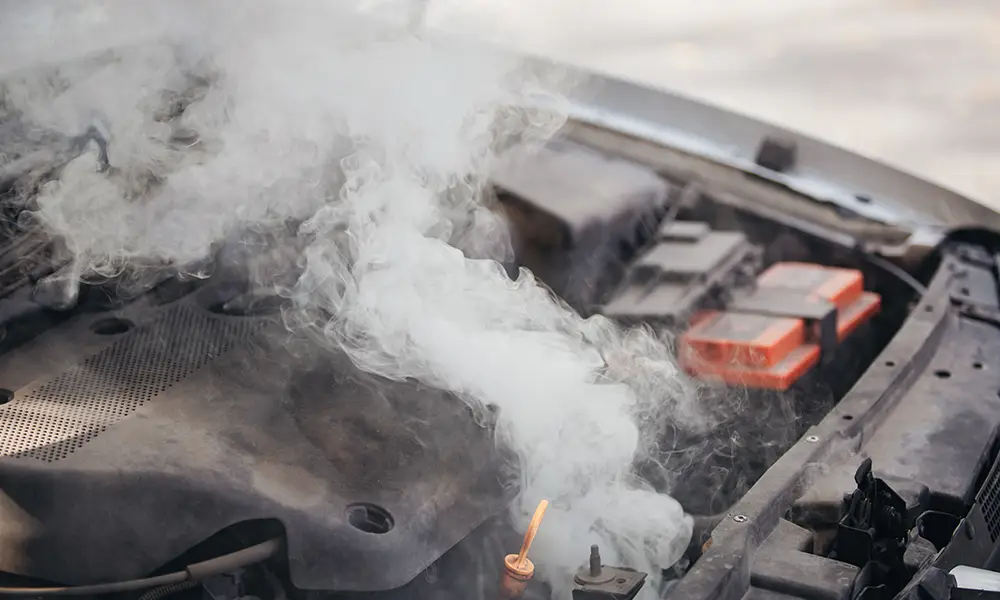
The signs your engine is overheating are the temperature gauge climbing into the red, steam or vapour from under the bonnet, a hot or sweet smell, reduced power, and a warning light, any of which means you should act quickly.
The temperature gauge is your first and clearest warning, and if the needle is climbing toward or into the red, the engine is running hotter than it should. Steam or vapour rising from under the bonnet is a more urgent sign, meaning coolant is boiling, and a hot metallic or sweet smell often accompanies it. Because overheating is so often tied to losing coolant, our guide to how ignoring coolant leaks costs you explains why a small leak so often leads to a hot engine.
Some cars also cut power to protect themselves when they get too hot, and a warning light may appear alongside the rising gauge. Any of these signs of engine overheating means you should act, and the table below sums up what each is telling you and the right response.
| Sign | Meaning | Action |
| Gauge in red | Too hot | Pull over safely |
| Steam from bonnet | Boiling coolant | Stop, cool down |
| Hot/sweet smell | Coolant/overheat | Stop, check |
| Power loss | Engine protecting itself | Stop driving |
It is worth getting into the habit of glancing at the temperature gauge occasionally as you drive, particularly in slow traffic on a hot day or when climbing a long hill, since these are the conditions that most often push an engine toward overheating. Many drivers never look at the gauge until a warning appears, by which point the situation may already be advanced. A quick check now and then means you spot the needle creeping up early, while there is still plenty of time to pull over calmly, rather than reacting to steam from under the bonnet when the problem has become serious.
What’s the clearest sign?
The gauge climbing into the red. The temperature gauge is designed to warn you before serious harm occurs, so a needle moving toward or into the red is the clearest early sign that the engine is overheating and needs immediate attention.
Is steam always overheating?
Steam or vapour usually means yes. Steam rising from under the bonnet typically means the coolant is boiling, which is a more advanced and urgent stage of overheating than a rising gauge alone, so it calls for stopping the car as soon as it is safe.
What should you do if your car overheats?
If your car overheats you should pull over safely, turn off the engine, and let it cool before checking, never opening the radiator cap while hot, then arrange for the cooling system to be checked before driving further.
The single most important thing is to stop, because continuing to drive an overheating engine is what turns a minor fault into major damage. Pull over as soon as it is safe, switch off the engine to stop it generating more heat, and give it time to cool down before you look at anything. It is vital not to open the radiator or expansion tank cap while the system is hot, since the coolant is under pressure and can spray out and scald you.
Once the engine has cooled, the cause needs finding before you drive on, because whatever made it overheat will still be there. Rather than risk further damage, it is safest to have the cooling system checked, and you can arrange cooling and coolant repair in Brisbane to have the fault identified and fixed properly.
Should I keep driving to a garage?
No, stop and let it cool. Driving even a short distance while overheating risks serious engine damage, so it is far safer to stop, let the engine cool, and arrange for the car to be checked or towed rather than pushing on to a workshop.
Why not open the cap?
Hot coolant can scald under pressure. When the engine is hot, the cooling system is pressurised, so removing the radiator or expansion tank cap can release a spray of scalding coolant and steam, which is why the cap must never be opened until the engine has fully cooled.
Why is overheating so damaging?
Overheating is so damaging because excessive heat can warp the cylinder head, blow the head gasket or crack the block, turning a cooling fault that was cheap to fix into a major engine repair.
The engine is built to run within a fairly narrow temperature range, and when it exceeds that, the metal components expand beyond their limits. This can warp the cylinder head so it no longer seals properly, blow the head gasket that sits between the head and block, or in severe cases crack the block itself. Any of these is a serious, expensive repair, which our guide to how a cooling system is tested and fixed helps put in context against the small cost of maintaining the system.
What makes overheating so costly is precisely this jump, where a cheap fault like a leaking hose, left unchecked, causes damage that runs into the thousands. The speed of it is the danger too, since serious harm can occur within minutes of the gauge hitting the red, which is why stopping promptly matters so much.
What does overheating damage?
The head, gasket and block. Excessive heat can warp the cylinder head, blow the head gasket, or crack the engine block, all of which are major repairs, so overheating turns a minor cooling fault into potentially the most expensive damage an engine can suffer.
How fast can damage happen?
Minutes of severe overheating can do it. Serious harm can occur within minutes once the engine is badly overheating, which is why the correct response is to stop immediately rather than trying to reach a destination, and why a white exhaust haze, covered in our guide to what white exhaust smoke means, can signal gasket damage has already begun.
What causes an engine to overheat?
An engine overheats due to low coolant from a leak, a failing water pump or thermostat, a blocked radiator, or a cooling fan fault, all of which stop the system carrying heat away from the engine.
The cooling system works by circulating coolant to carry heat away from the engine and release it through the radiator, so anything that interrupts that process can cause overheating. Low coolant from a leak is the most common cause, leaving too little fluid to do the job. A failing water pump cannot circulate the coolant, a stuck thermostat can block its flow, and a blocked radiator or a faulty cooling fan stops the heat being released. Because pinpointing which of these is at fault matters, a cooling system diagnostic confirms the cause before any repair.
Many of these faults develop gradually and can be caught before they cause an overheat, which is where prevention comes in. Keeping up with general car servicing means the coolant, hoses, pump and radiator are checked regularly, so a developing problem is often found and fixed long before it leaves you stranded with a hot engine.
Brisbane’s climate adds to the load on a cooling system, since hot ambient temperatures give the system less margin to work with, especially in stop-start traffic where there is little airflow through the radiator. A cooling system that copes fine in cooler weather can be exposed on a scorching summer day if it is already weakened by an ageing hose, a tired water pump, or coolant that has not been changed in a long time. This is exactly why keeping the cooling system in good order through regular maintenance matters so much here, because it removes the small weaknesses that a hot day would otherwise turn into an overheat.
What’s the most common cause?
Low coolant from a leak. A leak from a hose, the radiator, the water pump or a gasket lets coolant escape, leaving too little to carry heat away, which is the most frequent reason an engine overheats and why coolant level matters so much.
Can a fan cause overheating?
Yes, especially in traffic. The cooling fan pulls air through the radiator at low speed and in traffic, when there is little airflow from movement, so a faulty fan can let the engine overheat in slow traffic even when everything else in the system is working.
The bottom line on an overheating engine
Overheating shows itself through the gauge, steam and smell, and stopping immediately is what protects the engine from expensive damage. Whatever caused it will still be there, so the fault needs finding before you drive on. If your engine has overheated, Car One Automotive can find the cause and repair the cooling system.
Frequently Asked Questions
What are the signs of engine overheating?
The temperature gauge climbing into the red, steam or vapour from under the bonnet, a hot or sweet smell, reduced power, and a warning light. The gauge is the earliest sign, while steam is more urgent, and any of them means you should act quickly.
What should I do if my car overheats?
Pull over safely, turn off the engine, and let it cool before checking anything. Never open the radiator cap while the system is hot, as pressurised coolant can scald you. Once cool, have the cooling system checked before driving on, since the cause will still be present.
Why is engine overheating so serious?
Because excessive heat can warp the cylinder head, blow the head gasket, or crack the block, turning a cheap cooling fault like a leaking hose into a major engine repair costing thousands. The damage can also happen within minutes, which is why stopping promptly matters so much.
What causes an engine to overheat?
Low coolant from a leak, a failing water pump or thermostat, a blocked radiator, or a cooling fan fault, all of which stop the system carrying heat away from the engine. Low coolant is the most common cause, and many of these faults can be caught early during servicing.
Can I drive a short distance if my car is overheating?
No. Even a short drive while overheating risks serious and expensive engine damage, since the harm can occur within minutes. Stop as soon as it is safe, let the engine cool, and have the car checked or towed rather than trying to reach your destination.