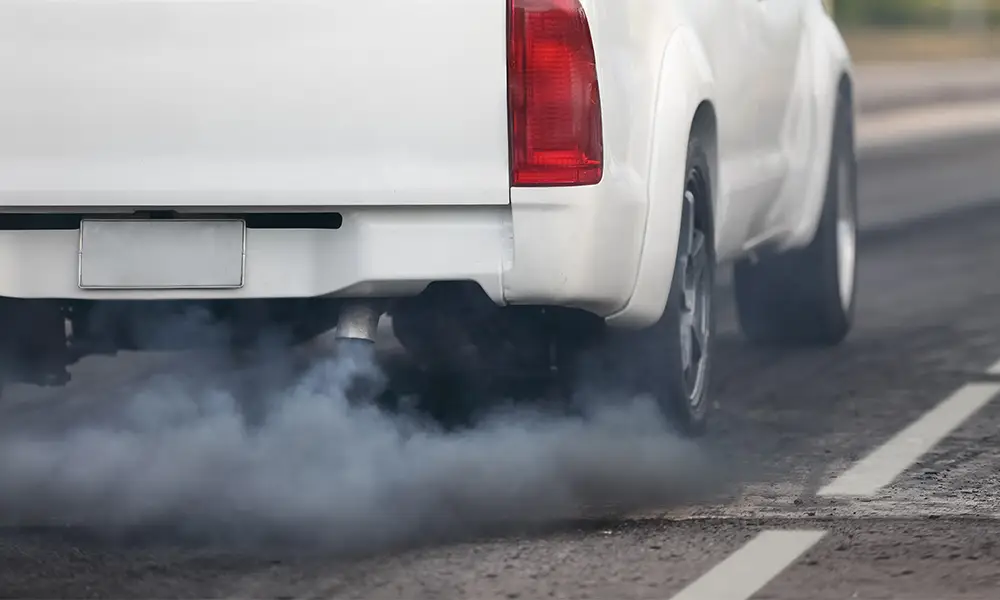
A puff of white from the exhaust on a cool morning is usually nothing, but thick white smoke that keeps coming is a different story. One is normal and clears in seconds; the other can be an early sign of a serious and expensive engine fault.
The trick is knowing which one you are looking at. This guide explains what white smoke from the exhaust means, how to tell harmless condensation from a serious coolant leak, and what to do depending on which you have.
Here is what we will cover:
- What white exhaust smoke means
- Harmless condensation versus a real fault
- The serious causes to rule out
- How urgent it is
- What to do next
What Does White Smoke From the Exhaust Mean?
White smoke from the exhaust means either harmless water vapour from condensation, which clears as the engine warms, or coolant being burned in the engine, usually from a head gasket fault, which produces thick, sweet-smelling smoke that does not clear.
Those two outcomes could not be more different, so the first job is telling them apart. The white smoke from exhaust causes really do fall into two camps: the completely normal, and the truly serious. Almost everything comes down to how thick the smoke is, whether it clears, and whether it smells sweet.
Thin White Vapour on a Cold Start
If the smoke is thin, wispy and appears mostly on a cold start, it is almost certainly condensation. As the engine and exhaust warm up, that vapour burns away and the smoke stops. This is normal combustion behaviour and needs no action at all.
Thick, Sweet, Persistent Smoke
If the smoke is thick, has a slightly sweet smell and keeps coming after the engine is warm, that points to coolant being burned in the combustion chamber. This is the serious end of the scale and should not be ignored, particularly if the car is also losing coolant.
| Sign | Likely meaning | Action |
|---|---|---|
| Thin, clears when warm | Condensation | Normal, no action |
| Thick, sweet smell | Coolant (head gasket) | Stop, get it checked |
| With coolant loss | Head gasket likely | Pressure test |
| With overheating | Serious | Stop driving |
When Is White Smoke Harmless?
White smoke is harmless when it is a thin vapour that appears on a cold start and clears within a minute or two as the engine warms up, which is simply condensation in the exhaust system burning off.
This is the most common version by far, and it is nothing to worry about. White exhaust smoke on startup, especially in cooler weather, is a normal part of the engine reaching operating temperature. If it disappears quickly and does not return once warm, you can carry on as usual.
Why Does It Happen on Cold Mornings?
Overnight, moisture condenses inside a cold exhaust system. When you start the engine, that trapped water heats up and leaves as visible white vapour. The cooler the morning, the more obvious it tends to be, which is why it looks worse in winter than in summer.
How Long Should It Last?
A genuine condensation puff lasts only a minute or two, then clears completely and stays gone for the rest of the drive. If it keeps producing smoke long after the engine is warm, it has moved out of harmless territory and is worth a closer look.
What Are the Serious Causes of White Smoke?
The serious cause of persistent white smoke is coolant entering the combustion chamber, usually through a failed head gasket, a cracked head or block, which also shows up as coolant loss, overheating and sometimes milky oil.
When coolant leaks into where fuel is meant to burn, it turns to steam and leaves as thick, sweet white smoke. Because the fault is internal, the surest way to confirm it is a pressure test, and understanding how a cooling system is tested makes it clear what a workshop will check, why the test matters, and how the result points to the head gasket.
These serious faults tend to get worse quickly once they begin, so early detection is everything, and staying on top of general car servicing and acting on any early coolant loss gives you the best chance of catching a problem before it becomes major engine damage.
How Do I Know It’s the Head Gasket?
The tell-tale combination is thick white smoke, unexplained coolant loss, a temperature gauge that creeps up, and sometimes a milky, mayonnaise-like film under the oil cap. A dashboard warning light often appears alongside overheating, and it is worth knowing what a check engine light means so you can act on the warning early rather than ignore it and let a repairable head gasket turn into a cracked head.
Is a Diesel Different?
Diesels can produce white smoke for a slightly different reason: unburnt fuel, often from an injection or glow plug fault, rather than coolant. Thick white smoke on a diesel still warrants a proper diagnosis, because the causes range from a fuel issue through to the same serious head gasket problems as a petrol engine.
What Should You Do About White Smoke?
If the white smoke is thin and clears, you can drive normally, but if it is thick, persistent or comes with coolant loss or overheating, you should stop driving and have the cooling system pressure tested before serious engine damage occurs.
The action really does depend on the type. For a serious case, the safe move is to stop and arrange a diagnostic and pressure test so the source is confirmed before any more damage is done. Driving a coolant-burning engine only makes an expensive repair worse.
When Can I Keep Driving?
If the smoke is a thin vapour that clears once warm, and there is no coolant loss or overheating, you can keep driving normally. If your concern is really an ageing, blowing exhaust rather than the engine, that is a separate issue, and it helps to know when to replace your exhaust system so you can plan the work before it fails a roadworthy or gets loud enough to become a problem of its own.
When Must I Stop?
Stop as soon as it is safe if the smoke is thick and persistent, especially with coolant loss or a rising temperature gauge, because continuing risks warping the head or worse. Once a fault is confirmed, you can arrange the right repair, whether that is engine work or exhaust repairs in Brisbane for a separate exhaust problem, so the repair addresses the real fault rather than a guess and you are not paying twice.
Conclusion
White exhaust smoke is usually just harmless condensation, clearing within a minute or two of a cold start and nothing to lose sleep over. The signs that it is serious are clear: thick, sweet-smelling smoke that persists, coolant loss, and overheating, which together point to coolant burning in the engine. The smell, the thickness and whether it clears tell you which you are dealing with, so you can reassure yourself or act quickly.
If your smoke fits the serious pattern, have it checked promptly by Car One Automotive.
Frequently Asked Questions
What Does White Smoke From the Exhaust Mean?
Either harmless water vapour from condensation that clears as the engine warms up, or coolant being burned inside the engine, usually from a head gasket fault. The difference is in the smoke: condensation is thin and disappears quickly, while burning coolant is thick, sweet-smelling and does not clear.
Is White Smoke From the Exhaust Serious?
A thin vapour that clears once the engine warms up is normal and nothing to worry about. Thick, sweet-smelling smoke that keeps coming, especially alongside coolant loss or overheating, is serious and points to coolant burning in the engine, so it needs checking before it does real damage.
Why Is There White Smoke on Cold Mornings?
Moisture naturally condenses inside a cold exhaust system overnight, then burns off as a thin white vapour when you start the engine and it heats up. This is completely normal, especially in cooler weather, and it should clear within a minute or two as the exhaust reaches temperature.
Can a Head Gasket Cause White Smoke?
Yes. A failed head gasket lets coolant leak into the combustion chamber, where it burns and produces thick, sweet-smelling white smoke that does not clear. It usually comes with other clues too, such as unexplained coolant loss, overheating, and sometimes a milky look to the engine oil.
What Should I Do if I See Thick White Smoke?
Stop driving if the smoke is thick and persistent, or if it comes with coolant loss or a rising temperature gauge, because continuing risks serious engine damage. Have the cooling system pressure tested to confirm whether a head gasket or related fault is letting coolant into the engine.