A car battery gives few second chances: it works fine right up until the morning it does not, usually at the worst possible time.
This guide explains how to know when to replace your car battery, the warning signs, how long batteries last, and how to test yours before it leaves you stranded. Catching a tired battery early is far better than discovering it in a car park with a car that will not start.
Here is what we cover:
- The signs your battery needs replacing
- How long car batteries last
- Why Brisbane heat matters
- How to test your battery
- Battery or charging fault
What are the signs you need to replace your car battery?
The signs you need to replace your car battery are slow or laboured cranking, dim lights, a battery warning light, needing jump-starts, visible corrosion or swelling, and an age of more than a few years, any of which suggests the battery is failing.
The most useful early warning is how the engine cranks, because a battery that is losing capacity turns the engine over more slowly and with more effort than it used to. Dim lights, a battery warning light on the dash, or needing a jump-start are stronger signs that the battery is on its way out. This slow, laboured cranking is also a common reason for a no-start, which our guide to the common reasons a car won’t start covers alongside the other causes.
Visible corrosion around the terminals or a swollen battery case point to a battery that has been damaged or stressed, often by heat, and age itself is a factor once you are past a few years. If the car struggles most first thing, our guide to why a car won’t start in the morning is worth a look. The table below sums up the signs and what each calls for.
| Sign | Meaning | Action |
| Slow cranking | Weak battery | Test soon |
| Dim lights | Low charge | Test |
| Jump-starts needed | Failing | Replace likely |
| Corrosion/swelling | Damage/heat | Replace |
| Over 3 to 5 years | End of life | Plan replacement |
What’s the earliest sign?
Slow, laboured cranking. The first noticeable sign is usually the engine cranking more slowly and with more effort than it used to when you start the car, which indicates the battery is losing capacity, so it is the cue to have it tested before it fails.
Does age alone matter?
Yes, batteries have a limited life. A battery has a limited lifespan regardless of how it is used, so once it is past a few years old, age alone is a reason to have it checked and to plan a replacement, since an old battery becomes increasingly likely to fail.
How long do car batteries last?
Car batteries typically last three to five years, though Brisbane’s heat can shorten that, since high temperatures accelerate the internal wear that eventually leaves a battery unable to hold charge.
Three to five years is a reasonable expectation for a car battery, but it is an average rather than a guarantee, and where you live plays a real part. Brisbane’s warm climate is harder on batteries than a cooler one, because heat speeds up the internal chemical wear that gradually reduces a battery’s ability to hold charge. That is why batteries here often last toward the shorter end of the range. Because a battery near the end of its life can fail suddenly, having it checked as part of your general car servicing means a tired one is caught before it strands you.
Knowing the rough lifespan helps you plan, since once a battery is around the four-year mark it is sensible to keep an eye on it and be ready to replace it. Understanding how long do car batteries last in our climate is what lets you get ahead of a failure rather than being caught out by one.
The way you use the car affects battery life too, and it is worth being aware of. A car that mostly does short trips never gives the battery a proper chance to recharge fully, so it spends much of its life in a partly discharged state, which shortens its lifespan. A car left standing for long periods slowly self-discharges as well, and modern cars draw a small amount of power even when parked. Combined with Brisbane’s heat, these factors mean a battery here can reach the end of its useful life sooner than the three-to-five-year average might suggest. Knowing this helps you judge your own situation, since a battery in a car used for short heat-soaked trips is one to keep an eye on earlier than one in a car driven regularly on longer runs that keep it well charged.
Why does heat shorten battery life?
It accelerates internal wear. Heat speeds up the internal chemical processes that wear a battery out, so in a warm climate like Brisbane’s, batteries tend to degrade faster and often reach the end of their life sooner than the three-to-five-year average would suggest in a cooler place.
Should I replace before it fails?
Once it’s old and weak, yes. If a battery is several years old and showing signs of weakness such as slow cranking, replacing it proactively is sensible, since it avoids the inconvenience and poor timing of a sudden failure, which almost always happens when you least want it.
How do you test your car battery?
You test a car battery with a load test that measures whether it holds voltage under demand, which a workshop can do quickly, giving a clear answer on whether the battery is healthy or due for replacement.
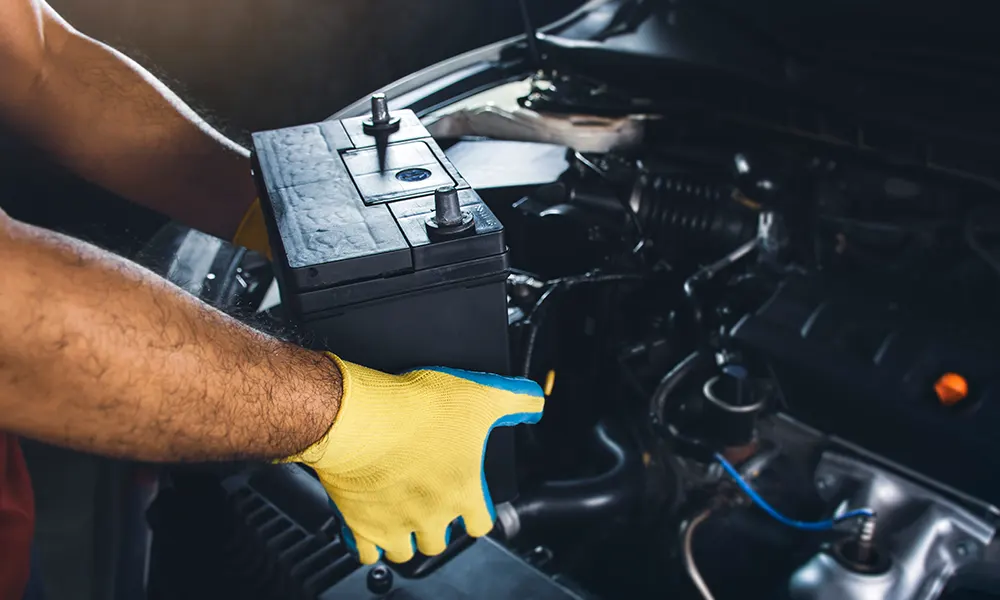
A load test is the meaningful check, because it does not just measure the battery’s voltage at rest, it measures whether the battery can hold that voltage under the demand of actually doing its job. That is what reveals a battery that reads fine sitting still but collapses when asked to turn the engine over. It is a quick test for a workshop to carry out, and you can arrange battery and electrical testing in Brisbane to get a clear answer rather than guessing.
The value of testing is that it removes the uncertainty, telling you definitively whether the battery is still healthy or has reached the point of replacement. Rather than waiting to be stranded, having a suspect battery tested is the simple way to confirm its condition and act before it fails.
What does a load test show?
Whether it holds voltage under demand. A load test measures whether the battery can maintain its voltage while under the demand of starting the engine, which is what exposes a failing battery that might read acceptably at rest but cannot actually do its job when called on.
Can I test it myself?
A basic check yes, a load test is best. A simple voltage check at rest is possible with a basic meter, but it does not tell the full story, so a proper load test carried out by a workshop gives the clear, reliable answer on whether the battery needs replacing.
Is it the battery or a charging fault?
It is the battery if it is old and simply will not hold charge, but if a new or healthy battery keeps going flat, the alternator or a parasitic drain is the real cause, so testing the charging system confirms which.
This distinction matters, because replacing the battery is pointless if the real problem is elsewhere. An old battery that will not hold charge is straightforward, and a replacement solves it. But if you fit a new battery and it keeps going flat, the battery is not the culprit, and the cause is usually the alternator not charging it properly or a parasitic drain flattening it while the car sits, which our guide to why a battery drains overnight explains in detail.
Because the two look similar from the driver’s seat, testing the charging system is what tells them apart. If you keep ending up with a dead car battery despite a good battery, our Brisbane mechanics can test the charging system and find the true cause before anything is replaced.
What if a new battery goes flat?
Suspect the alternator or a drain. If a new or known-good battery keeps going flat, the battery is not the problem, and the cause is usually the alternator failing to charge it or a parasitic drain flattening it while the car is parked, which testing the charging system confirms.
How is the charging system tested?
A charging test with the engine running. The charging system is tested with the engine running to confirm the alternator is producing enough to keep the battery charged, which identifies a charging fault as the cause of repeat flats rather than the battery itself.
Conclusion
Slow cranking, age and repeated flats are the signs to act on, Brisbane’s heat shortens battery life, and a quick test confirms whether it is the battery or the charging system. Testing before you are stranded is far better than discovering the problem at the worst moment. When your battery is due or suspect, Car One Automotive can test it and put it right.
Frequently Asked Questions
What are the signs I need to replace my car battery?
Slow or laboured cranking, dim lights, a battery warning light, needing jump-starts, visible corrosion or swelling around the terminals, and an age of more than a few years. Slow cranking is usually the earliest sign, so it is the cue to have the battery tested before it fails.
How long do car batteries last?
Typically three to five years, though Brisbane’s heat can shorten that, since high temperatures accelerate the internal wear that ends a battery’s life. Because of this, batteries here often last toward the shorter end of the range, so it is worth watching one closely once it is four years old.
How do I test my car battery?
With a load test that measures whether the battery holds its voltage under the demand of starting the engine, rather than just its voltage at rest. A workshop can do this quickly and give a clear answer on whether the battery is healthy or has reached the point of replacement.
Why does my new battery keep going flat?
If a healthy or new battery keeps going flat, the battery is not the problem. The cause is usually the alternator not charging it properly or a parasitic drain flattening it while the car sits, so the charging system should be tested rather than simply fitting yet another battery.
Does heat affect car batteries?
Yes. Heat accelerates the internal chemical wear of a battery, which is why batteries in warm climates like Brisbane often last toward the shorter end of the three-to-five-year range. That is also why heat-related corrosion or a swollen case are signs a battery has been stressed and may need replacing.