
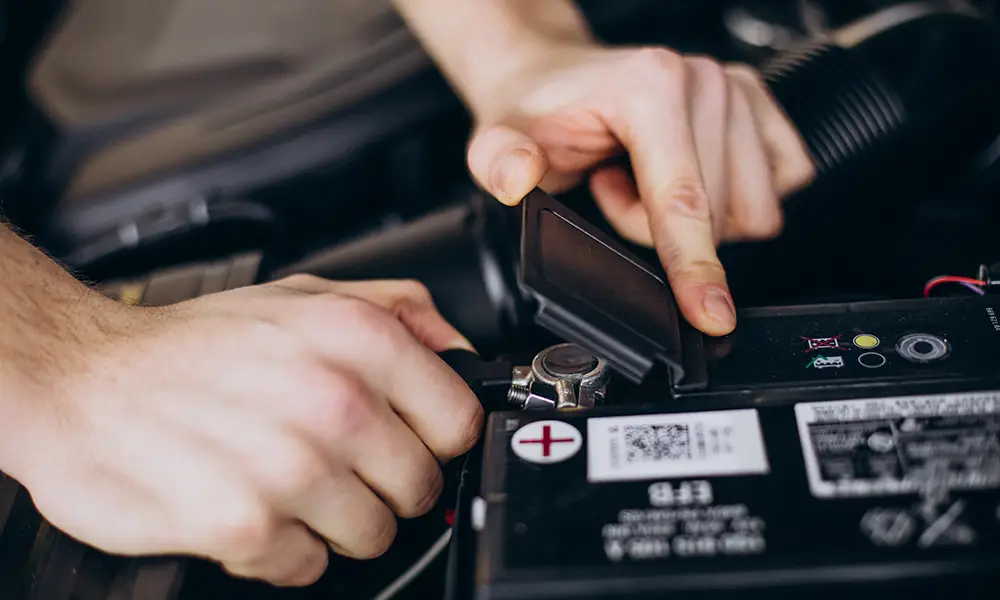
Few things are as frustrating as a car that started fine last night and is completely dead this morning, over and over.
This guide explains what causes a car battery to drain overnight, how to tell a parasitic drain from a worn battery or a failing alternator, and how a mechanic tracks the fault down. Getting to the actual cause is what stops the problem repeating, rather than just jump-starting it again each day.
Here is what we cover:
- What drains a battery overnight
- Is it the battery, alternator or a drain
- Common parasitic drains
- How a mechanic finds the drain
- How to prevent it
What causes a car battery to drain overnight?
A car battery drains overnight most often due to a parasitic drain from something staying powered, such as an interior light, glovebox light or faulty module, or because the battery is old or the alternator is not fully charging it.
There are really three suspects here, and telling them apart is the whole task. The first is a parasitic drain, where something keeps drawing power after you have switched off and walked away, slowly flattening the battery while the car sits. The second is simply an old battery that no longer holds its charge overnight, and the third is a charging fault, where the alternator is not putting enough back in while you drive. When the battery drains overnight and the car will not start, our guide to the common reasons a car won’t start covers how these fit alongside the other possible causes.
The pattern often gives a clue, since a parasitic drain typically kills the battery only after the car has sat for a while, whereas an old battery or a charging fault can leave you stranded more readily. The table below sums up the causes and their tell-tale signs.
| Cause | Sign | Fix |
|---|---|---|
| Parasitic drain | Dead after sitting | Trace and fix circuit |
| Old battery | Slow start, then dead | Replace battery |
| Alternator not charging | Warning light, repeat flats | Repair charging |
| Light left on | Obvious | Turn off, recharge |
Timing is one of the most helpful clues you can note before the car even reaches a workshop. A battery that is fine after a short stop but dead after the car sits all night points more toward a parasitic drain, whereas one that struggles even after a good run points more toward the battery or charging. Keeping a mental note of how long the car can sit before it goes flat, and whether jump-starting gets you going again straight away, gives a mechanic a useful head start on narrowing down which of the three is behind it.
What’s a parasitic drain?
Something drawing power with the car off. A light, relay, module or wired-in accessory that stays active after you switch off keeps taking small amounts of current, which over a night or two is enough to flatten the battery even though the car seems completely shut down.
Could the battery just be old?
Yes, old batteries lose charge overnight. As a battery ages it holds less and self-discharges faster, so an older battery can go flat simply from sitting, especially in the heat, which is why age is one of the first things to consider when the problem keeps recurring.
Is it the battery, alternator, or a drain?
It is the battery if it is old and simply will not hold charge, the alternator if a warning light shows and it keeps going flat despite a good battery, and a parasitic drain if a healthy battery dies only after the car sits overnight.
Working through these three in order is how the cause is narrowed down. An old battery reveals itself with slow cranking that gradually gets worse until one morning there is nothing left, and the fix is simply a replacement. A charging fault, by contrast, keeps flattening even a new battery because the alternator is not replenishing it as you drive, often with a battery or charging warning light showing. Our guide on when to replace your car battery helps you judge whether the battery itself is at the end of its life.
A parasitic drain behaves differently again, leaving a perfectly healthy battery flat only after the car has been parked for a while. Because these can be tricky to tell apart from the driver’s seat, our Brisbane mechanics can test the battery and charging system and confirm which of the three is actually responsible before anything is replaced.
How do I test the battery?
A load test shows if it holds charge. Connecting a tester measures whether the battery can hold voltage under demand, which gives a clear answer on whether it is simply worn out or still healthy, so you are not replacing a good battery unnecessarily.
What points to the alternator?
Repeat flats with a good battery. If a new or known-good battery keeps going flat and a charging warning light appears, the alternator is likely not charging properly, which a charging test confirms with the engine running.
What are common parasitic drains?
Common parasitic drains include interior, boot or glovebox lights that stay on, a faulty relay or module that does not sleep, aftermarket accessories wired incorrectly, and a failing component that keeps drawing current after the car is switched off.
The most straightforward culprits are lights that fail to switch off, such as a boot or glovebox light with a faulty switch, quietly draining the battery every night. Beyond those, modern cars have many electronic modules that are supposed to power down, or sleep, shortly after you leave, and one that fails to do so keeps drawing current. Catching electrical niggles early is part of the value of regular general car servicing, where the battery and charging system are checked as a matter of course.
Aftermarket accessories are a very common cause, since dashcams, alarms and other add-ons that are wired incorrectly can keep drawing power around the clock. A failing component can do the same. Because the source can be almost anything electrical, it usually takes proper testing to find, rather than guesswork.
The reason aftermarket accessories cause so many of these problems is that they are often wired in a hurry to whatever live feed is easiest to reach, rather than to a properly switched circuit that shuts off with the car. A dashcam left recording in parking mode, an alarm, or a phone charger left in a permanently live socket can each draw enough to flatten a battery over a night or two. If your trouble began soon after something was fitted, that accessory is the obvious first suspect, and having it checked or rewired often solves the drain completely.
Can accessories cause it?
Yes, poorly wired dashcams and alarms. Add-ons wired to a permanent live feed, rather than a switched one, keep drawing current after the car is off, which is a frequent cause of overnight drains, especially where the accessory was fitted after the car was built.
What if nothing looks obvious?
A module not sleeping, needs testing. When there is no light left on and no obvious accessory, the cause is often an electronic module that fails to power down as it should, which cannot be seen and has to be traced with proper electrical testing to identify.
How does a mechanic find the drain?
A mechanic finds a parasitic drain by measuring the current the car draws with everything off, then pulling fuses one at a time to isolate the circuit responsible, which pinpoints the fault before any part is replaced.
The process is methodical rather than guesswork, which is exactly why it works. With the car fully shut down, a meter measures how much current is still being drawn, and an abnormally high reading confirms a drain exists. From there, removing one fuse at a time and watching for the reading to drop isolates the exact circuit at fault, which narrows a whole-car mystery down to a single system.
Once the circuit is identified, the specific component or wiring fault within it can be found and repaired, so you only pay to fix what is actually causing the problem. If you are wondering about the cost of tracing it, our guide to what a diagnostic costs gives a sense of what to expect, and you can book an electrical diagnostic in Brisbane to have the drain measured and traced properly.
How is the drain measured?
A meter reads the current with the car off. A multimeter connected in the circuit shows how much current the car is still drawing once everything has shut down, and a reading above the small, normal background level confirms a parasitic drain is present.
How long does it take?
Tracing can take time, but it’s precise. Because a car has many circuits and some modules take time to power down, finding a drain can take patience, but the fuse-by-fuse method is precise and finds the exact circuit, which is far better than replacing parts on a hunch.
Conclusion
An overnight flat is usually a parasitic drain, an old battery or a charging fault, and a proper current test finds it without replacing parts on a guess. Telling the three apart is the key to fixing it once rather than jump-starting it every morning. If your battery keeps going flat, Car One Automotive can test the system and trace the cause.
Frequently Asked Questions
What causes a car battery to drain overnight?
Usually a parasitic drain from something staying powered, such as an interior or glovebox light or a faulty module, or an old battery that no longer holds charge, or an alternator not fully charging it while you drive. The pattern of when it goes flat helps point to which.
How do I know if it’s the battery or a drain?
An old battery simply will not hold charge and cranks slowly before dying, while a parasitic drain kills a perfectly healthy battery only after the car has sat for a while. A load test of the battery and a current test of the car confirm which is responsible.
What is a parasitic battery drain?
It is current still being drawn while the car is switched off, from lights left on, an electronic module that will not power down, or incorrectly wired accessories. Over a night or two, even a small constant draw is enough to flatten an otherwise healthy battery completely.
Can a dashcam drain my battery?
Yes. Aftermarket accessories such as dashcams and alarms, if wired to a permanent live feed rather than a switched one, keep drawing power after the car is off and can flatten the battery overnight. It is a very common cause, especially with add-ons fitted after the car was built.
How does a mechanic find a battery drain?
By measuring the current the car draws with everything switched off, then pulling fuses one at a time and watching for the reading to drop, which isolates the exact circuit responsible. From there the faulty component or wiring is found and repaired, so only the real cause is fixed.