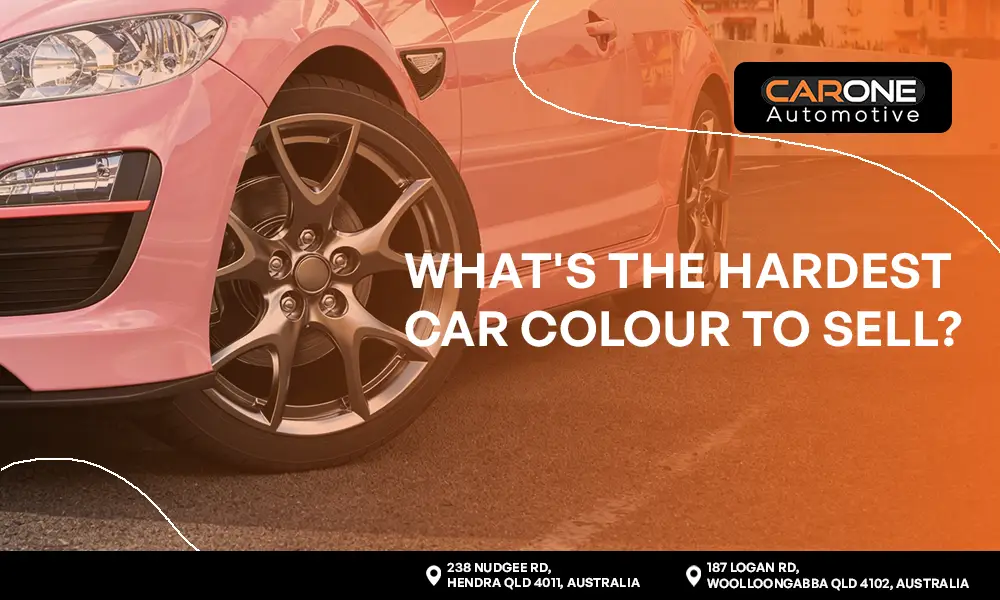
If you are listing a car privately, you have probably wondered whether your paintwork is helping or hurting your asking price and whether that bold colour you loved on the showroom floor is going to cost you on resale. In the Australian used-car market, the hardest car colour to sell is usually one that limits buyer demand, narrows appeal, or dates the vehicle faster than neutral colours like white, black, grey, or silver.
This guide explains which car colours are hardest to resell, which colours tend to hold value best, and how much paint choice actually affects resale prices when everything else about the vehicle is equal.
Here is what this guide covers:
- The colours buyers avoid most consistently
- The colours that always sell regardless of market conditions
- Why neutral colours dominate the Australian second-hand market
- How much colour actually affects the final price
- What you can do if you are selling a vehicle in a difficult colour
What is the Hardest Car Colour to Sell?
The hardest car colours to sell privately in Australia are typically lime green, bright yellow, orange, bright red, and unusual matte or textured finishes because they appeal to a significantly smaller pool of buyers and can signal a vehicle with a specialized or modified history.
The worst car colours for resale share a common characteristic: they were chosen enthusiastically by one driver and rejected by the majority of subsequent buyers. The original owner bought the colour because it stood out. Every buyer after them faces the same feature and must decide whether to stand out similarly.
Most people do not. The Australian used-car buyer tends toward practicality over personality in their vehicle choices, and a striking colour that felt exciting at the dealership can feel like a liability when it is time to sell.
The specific colours that consistently create the smallest buyer pools in the Australian private sale market:
Lime Green
The most reliably difficult colour to sell. The buyer pool is genuinely narrow, and lime green vehicles often sit on the market for weeks or months longer than equivalent vehicles in neutral colours. The discount needed to attract a buyer for a lime green vehicle is typically larger than for any other colour.
Bright Yellow
Yellow has a small but dedicated fan base, which means the right buyer will love the car and pay well. The challenge is finding that buyer. Yellow vehicles often require longer listing periods and more negotiation room than the seller expected when they chose the colour originally.
Orange
Bright orange occupies similar territory to yellow. It is not without appeal, but the appeal is narrow enough that private sale timelines stretch considerably compared to a comparable vehicle in white or silver.
Matte and Textured Finishes
Matte finishes are increasingly common on new vehicles, but the second-hand market for matte-painted cars remains limited. Many buyers are put off by the maintenance requirements and the cost of rectifying matte paint damage. A vehicle with a matte wrap rather than a factory matte finish adds a further complication because the buyer inherits both the aesthetic choice and the ongoing cost of the wrap.
Two-Tone and Unusual Metallic Colours
Two-tone paintwork and highly unusual metallic shades such as gold, bronze, or heavily green-tinted metallics attract a narrow buyer pool for similar reasons. The colour works for some buyers and actively deters others, which reduces the field of interested parties compared to a vehicle in a standard neutral.
For the full picture of what affects a private car sale beyond colour, including paperwork, pricing, and service history, the Australia-Wide Selling Guide covers every aspect of the private sale process in detail.
What are the Best Colours to Sell a Car?
White, silver, grey, and black are consistently the easiest car colours to sell in the Australian second-hand market. They suit the widest buyer demographic, hide minor surface wear reasonably well, and benefit from the strong demand created by fleet and corporate vehicle replacement cycles that keep these colours in constant supply and demand.
The best colour to sell car in Australia has been white for well over a decade. White has dominated new vehicle registration data in Australia and maintained its position at the top of second-hand market preference data consistently. The reasons are practical as much as aesthetic: white reflects heat better than dark colours in a hot climate, hides dust reasonably well between washes, and carries no personality connotation that would deter any segment of the buying public.
Silver and grey occupy the next tier. Both are neutral colours that read as modern and professional across a wide range of vehicle types. They show minor scratches less readily than black and carry similar broad appeal to white. The fleet effect is significant for silver and grey: a high proportion of corporate and government vehicles are registered in these colours, which means the second-hand market receives a consistent supply of well-maintained, neutrally-coloured vehicles that anchor buyer expectations.
Black presents a slightly different situation. Black is perennially popular as a choice and the buyer pool is large. The challenge with black is that it shows every swirl mark, scratch, and minor blemish more visibly than any other colour. A black vehicle in less-than-perfect condition will lose significantly more from cosmetic imperfections than a comparable vehicle in silver or grey. For sellers with a well-maintained black vehicle, this is not an issue. For sellers with a black vehicle that has accumulated the minor wear of normal use, it is worth accounting for.
Understanding the common mistakes buyers make when assessing a vehicle in a particular colour can help sellers anticipate and address them. Common Car-Buying Mistakes covers the first-time buyer perspective that many private sale sellers encounter.
For buyers conducting a pre-purchase inspection before committing to a vehicle in any colour, Pre-Purchase Inspection Guide explains what the inspection covers and how it affects the buyer’s decision.
Why Does Car Colour Affect Resale Value?
Car colour affects resale value because buyer preference creates demand asymmetry. A popular colour attracts three or four genuinely interested buyers, giving the seller negotiating strength. A polarizing colour might attract one interested buyer, which gives that buyer all the leverage in the negotiation.
The car colour resale value effect is fundamentally a supply and demand issue. In a market with five buyers interested in a white Toyota Camry and one buyer interested in an orange one, the sellers of the five white cars have more options and stronger negotiating positions. The seller of the orange car has one buyer. That buyer knows it.
Buyer preference in the Australian second-hand market is shaped by several factors:
- Practicality in the Australian climate, where lighter colours manage heat better and are preferred in warmer regions
- Corporate and fleet purchasing patterns, which create a large supply of neutrally coloured well-maintained vehicles that establish the baseline of buyer expectation
- Resale foresight, where buyers purchasing a second-hand vehicle in a popular colour are already thinking about what that vehicle will be worth when they sell it
- Insurance considerations, where some research suggests certain colours may be associated with higher claim rates, though the effect on insurance premiums is modest and not a primary concern for most buyers
The practical consequence of demand asymmetry is that a polarizing colour does not just reduce the number of buyers. It also changes the negotiation dynamic entirely. A seller of a popular-colour vehicle can decline an offer and wait for the next interested party. A seller of a difficult-colour vehicle is often negotiating with the only interested party they have seen in weeks.
Colour is one resale factor, but service history is a larger one. For sellers assessing the combined impact of missing records and a challenging colour, Other Resale Factors That Matter More explains the relative weight of documentation versus colour in the buyer’s decision.
For the evidence on how consistent servicing affects a vehicle’s value and saleability over time, How Regular Servicing Protects Resale gives the financial case for maintenance as a resale strategy.
For the broader view of how maintenance history shapes a vehicle’s lifespan and its appeal to second-hand buyers, Maintenance Impact on Lifespan covers the long-term relationship between service records and vehicle value.
How Much Does Colour Really Cost You?
On average, a polarizing colour costs a private seller around 5% to 10% of the asking price compared to an identical vehicle in white, silver, or grey. However, condition, service history, and kilometres consistently outweigh colour as the dominant factors in determining whether a vehicle achieves its asking price.
To put the 5% to 10% figure in concrete terms: on a $20,000 vehicle, a difficult colour might cost $1,000 to $2,000 compared to a neutral equivalent. That is a real and meaningful difference, but it is smaller than the impact of a missing logbook, visible accident damage, or significantly overdue service work, any of which can cost the seller more.
The colour discount also varies significantly by vehicle type. A sports car in bright yellow attracts a different buyer profile than a family sedan in the same colour. A yellow sports car has a plausible enthusiast audience. A yellow people mover has almost none. The same colour that creates a modest discount on one vehicle type can create a severe discount on another.
Understanding where colour sits in the hierarchy of resale factors helps sellers prioritise their pre-sale preparation. If you are selling a lime green vehicle with a complete logbook, a recent service, no visible damage, and accurate kilometres, your colour disadvantage will be partially offset by the documentation and condition advantages. If you are selling the same vehicle with a missing logbook and deferred maintenance, you have two compounding problems rather than one.
What If You are Stuck With a Hard-to-Sell Colour?
If you are selling a car in a polarizing colour, target enthusiast forums and niche marketplaces where colour-specific buyers are more concentrated, allow slightly more negotiation room in your initial asking price, and ensure that condition and service history are as strong as possible to offset the colour disadvantage.
The private car sale strategy for a difficult colour is different from the strategy for a neutral colour. The goal shifts from reaching the largest possible audience to finding the right buyer within a smaller audience. That changes where you list, how you describe the vehicle, and what you emphasise in the listing.
Where to List a Difficult-Colour Vehicle
General platforms like Carsales and Gumtree reach the broadest audience, but the majority of that audience will scroll past a polarizing colour. Supplement general listings with targeted options:
- Make-specific Facebook groups and forums, where enthusiasts who actively appreciate the vehicle are more likely to be colour-tolerant or colour-positive
- Colour-specific communities where applicable, such as groups dedicated to particular models where unusual colours have a following
- Enthusiast platforms and car club forums where the buyer demographic is more likely to see an unusual colour as a feature rather than a deterrent
How to Write the Listing
Be direct about the colour in the listing description rather than hoping buyers will not notice until they see the photos. A buyer who arrives at an inspection surprised by the colour is a buyer who feels they were misled, even when no deception was intended. Describe the colour accurately and let the photographs speak honestly.
How to Price It
Price the vehicle five to eight percent below equivalent neutral-coloured examples from the outset, rather than listing at the same price and absorbing that discount during negotiation. A vehicle priced to reflect the colour clearly attracts buyers who have already accepted the colour and are evaluating value. A vehicle priced as if the colour is not a factor attracts buyers who will then attempt to negotiate the discount anyway, making the sale process longer and more frustrating.
The most important thing to remember is that condition still matters more than colour. A lime green vehicle in exceptional condition with a complete logbook and recent service will always outsell a white vehicle with deferred maintenance and a missing logbook. The colour is a factor in the buyer’s first impression. The condition and documentation determine whether they proceed after that impression.
For a pre-sale mechanical check and condition assessment that strengthens your position regardless of the colour on the vehicle, Brisbane Mechanic Pre-Sale Checks provides certified pre-sale inspections for private sellers across Brisbane.
The Bottom Line
Colour matters in a private car sale, but it matters less than most sellers fear. The five to ten percent discount a polarizing colour typically creates is real but manageable, and it is consistently outweighed by the larger factors of condition, service history, and honest presentation.
Service history, a recent service, clean presentation, and an accurate listing description do more for your asking price than the colour on the bonnet. If you are selling a vehicle in a difficult colour, the strategy is straightforward: price it honestly, find the right audience, and make sure everything else about the car is as strong as it can be.
For a pre-sale inspection that lifts your asking price regardless of paint colour, Car One Automotive offers certified Brisbane checks that give buyers the confidence to proceed at your price.
Frequently Asked Questions
What Is the Hardest Car Colour to Sell?
Lime green is consistently the hardest colour to sell in the Australian private market, followed by bright yellow, orange, and unusual matte finishes. These colours appeal to a narrow buyer pool, which reduces demand, extends selling time, and gives buyers more negotiating leverage than they would have with a neutral-coloured equivalent vehicle.
What Is the Best Colour for Resale Value?
White is consistently the best colour for resale value in Australia, followed by silver, grey, and black. These neutral colours attract the widest buyer demographic, sell faster than polarizing colours, and typically achieve closer to asking price because multiple interested buyers create a more competitive environment for the seller.
Does Colour Matter More Than Service History?
No. Service history has a larger impact on resale price and sale speed than colour in most cases. A vehicle in a difficult colour with a complete logbook and recent service will outperform an equivalent neutral-coloured vehicle with missing records or deferred maintenance. Colour affects first impressions. Documentation and condition determine whether the sale proceeds.
Are Matte Colours Harder to Sell?
Yes. Matte finishes, whether factory-applied or wrapped, create a smaller buyer pool than standard gloss finishes because many buyers are concerned about the maintenance requirements and the cost of repairing matte paint. Matte-wrapped vehicles add a further layer of uncertainty because the buyer also inherits the ongoing cost and condition of the wrap.
How Much Does Colour Affect Resale Price?
A polarizing colour typically reduces the achievable private sale price by five to ten percent compared to an equivalent vehicle in white, silver, or grey. The impact varies by vehicle type and the specific colour. Sports cars in unusual colours face a smaller penalty than family vehicles in the same shades, because the buyer demographic has different expectations.