
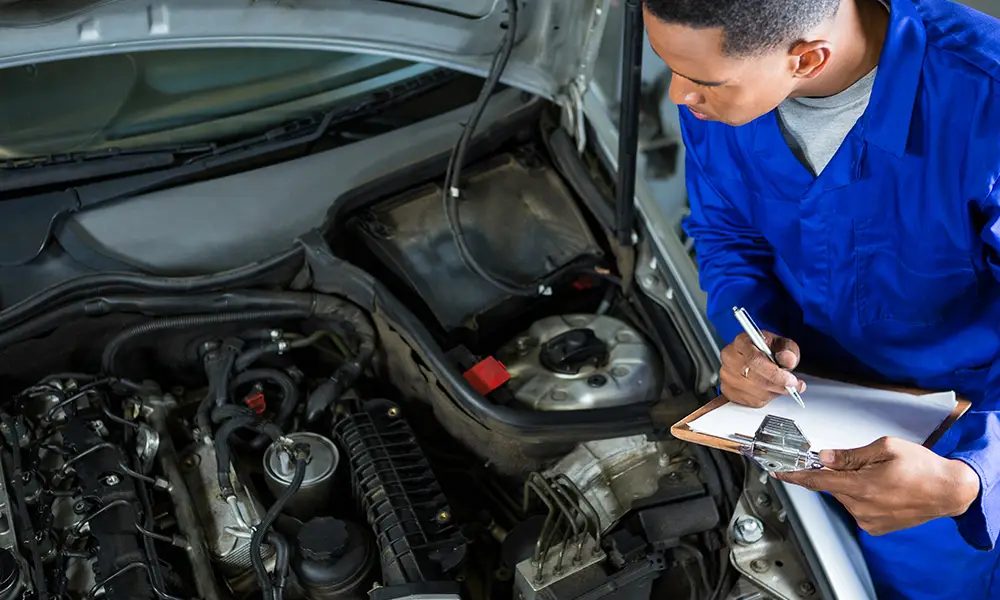
Cars rarely fail without warning. Most give small signs for weeks before something actually breaks, if you know what to look for. A regular car health check is simply the habit of looking, so those small signs get caught while they are still cheap and easy to deal with.
This guide is a simple health check you can run yourself between services, covering the everyday items that keep your car safe and reliable, plus a clear line on when to hand it over to a mechanic.
Here is what we will cover:
- What a car health check covers
- The simple checks you can do yourself
- What needs a professional
- How it fits with regular servicing
- When to see a mechanic
What Does a Car Health Check Cover?
A car health check covers the key safety and reliability items: fluid levels, tyres, brakes, lights, battery and any warning lights, giving you a quick picture of the car’s condition between full services.
Think of it as a quick safety check car owners can run at home in a few minutes, rather than a full workshop inspection. None of it is complicated, and the aim is simply to notice change: a fluid that is lower than last time, a tyre wearing unevenly, a light that has stopped working, or a warning lamp on the dash. Spotting any of those early is what turns a small job into a quick one.
The table below sets out the core items and what to do if something looks off.
| Item | Quick check | Action if wrong |
|---|---|---|
| Fluids | Oil, coolant levels | Top up, investigate loss |
| Tyres | Tread, pressure | Inflate, replace if worn |
| Brakes | Feel, noise | Book a check |
| Lights | All working | Replace globe |
| Battery | Strong start | Test if slow |
How Often Should I Check?
A quick monthly look works well for most people, with a more thorough check before any long trip. It only takes a few minutes to run your eye over the fluids, tyres and lights, and doing it regularly means you notice problems as they start rather than long after they have set in.
Is It a Replacement for Servicing?
No, and it is important to be clear about that. A health check complements your regular servicing rather than replacing it, because plenty of items still need a workshop to assess properly. Think of the two as partners: your own checks between visits, and a full service at the scheduled intervals.
What Can You Check Yourself?
You can safely check fluid levels, tyre tread and pressure, all the lights, and how the car starts and brakes yourself, which catches the most common developing problems early.
These are the jobs anyone can do without tools or risk, and they cover a lot of ground. A quick glance at the oil and coolant, a look at the tyres, a walk around to test the lights, and a note of how the car feels starting and stopping will surface the majority of everyday issues. Building these into a habit is the whole idea behind these everyday car maintenance tips, which turn a health check into something you do without thinking between services.
How Do I Check Tyres and Fluids?
For tyres, look at the tread depth and check the pressures against the placard in the driver’s door jamb, topping up any that are low. For fluids, use the dipstick for oil on level ground with a cool engine, and check the coolant against the min and max marks on the reservoir.
What Should I Listen and Feel For?
Pay attention to any new noise from the brakes, how firmly the car starts, and whether any warning light is showing. A grinding or squealing brake, a slow or laboured start, or a fresh dashboard light are all cues that something is worth a closer look before it worsens.
What Needs a Professional Check?
A professional check is needed for the items you cannot safely assess, such as brake wear, suspension condition, underbody inspection and any warning light, which require a hoist and diagnostic tools.
This is where your own health check reaches its limit, and honestly so. Measuring brake pad and rotor wear, judging the state of the suspension, and inspecting the underbody all need the car safely up on a hoist, which is not something to attempt in the driveway. A thorough workshop version of these checks is set out in a full car inspection guide, which covers the deeper items your monthly look cannot reach.
If you are checking over a car you are thinking of buying rather than one you already own, the process is a little different and more detailed, and what a pre-purchase inspection includes is the more thorough route to follow before any money changes hands.
Why a Hoist Matters
A hoist lifts the car so the underbody, brakes and suspension can actually be seen and measured, which is impossible from ground level. Wear that looks fine from outside is often obvious once the wheels are off and the car is raised, which is why these items belong with a mechanic.
What About Warning Lights?
A warning light is a prompt to investigate rather than a diagnosis on its own. The light points to a system, not the exact fault, so a diagnostic scan reads the stored code and helps confirm the real cause before anyone starts replacing parts on a guess.
When Should You See a Mechanic?
You should see a mechanic when a health check turns up a warning light, a fluid that keeps dropping, a brake or steering change, or anything you are unsure about, rather than waiting for the next scheduled service.
The rule of thumb is simple: safety items do not wait. A vehicle health check that flags a warning light, a fluid you keep topping up, or a change in how the brakes or steering feel is telling you something needs attention now. Booking a car service in Brisbane when one of those turns up means the issue is caught early, while it is still small and inexpensive to sort.
Which Signs Can’t Wait?
A warning light, a fluid level that keeps dropping despite topping up, and any change in how the brakes or steering feel. These point to safety-related faults, so having our Brisbane mechanics look at them promptly is far wiser than leaving them until the next scheduled service.
Should I Wait for the Next Service?
Not for anything safety-related. Routine wear can often wait for the next service, but a warning light, a brake or steering change, or a stubborn fluid loss should be looked at sooner. When in doubt, it is always safer to have it checked than to leave it and hope.
Conclusion
A quick, regular health check is one of the simplest habits a driver can keep, because it catches small problems early and works hand in hand with proper servicing to keep a car safe and reliable. Do the easy checks yourself, and leave the hoist-and-scanner work to a workshop. If your check turns up something you would like looked at, the team at Car One Automotive can help.
Frequently Asked Questions
What Does a Car Health Check Cover?
It covers the key safety and reliability items on your car, which means fluid levels, tyres, brakes, lights, the battery, and any warning lights on the dash. Together they give you a quick, useful picture of the car’s condition in between its full scheduled services.
What Can I Check on My Car Myself?
Plenty of the basics. You can check fluid levels with the dipstick and reservoirs, tyre tread and pressure, that all the lights work, and how the car feels when it starts and brakes. These simple checks catch the most common developing problems early.
What Needs a Professional to Check?
The items you cannot safely assess at home, such as brake wear, the condition of your suspension, a proper underbody inspection, and the cause of any warning light. These need a hoist to lift the car and diagnostic tools to read what is really going on.
How Often Should I Do a Car Health Check?
A quick look once a month works well for most drivers, with a more thorough check before any long trip. A health check like this complements your regular servicing and helps you catch issues early, but it does not replace a proper scheduled service.
When Should I See a Mechanic?
Whenever a check turns up a warning light, a fluid that keeps dropping, a change in how the brakes or steering feel, or anything you are simply unsure about. It is safer to have those looked at promptly than to wait for the next scheduled service.