
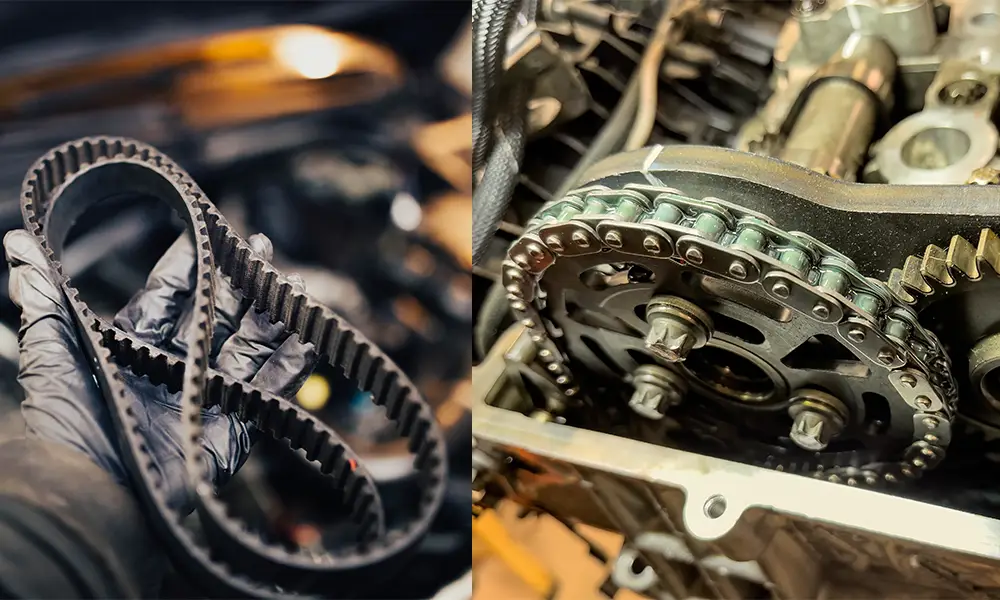
Your engine relies on precise timing to operate smoothly.
Timing belts and timing chains control the synchronisation between the crankshaft and camshaft, ensuring valves open and close at exactly the right moment.
If engine timing components fail, internal engine damage can occur almost instantly.
Understanding whether your car uses a timing belt or a timing chain helps you plan maintenance and avoid unexpected breakdowns.
Timing Belt Explained
A timing belt is a reinforced rubber belt fitted inside the engine. It is lightweight, quiet, and commonly used in many vehicles. However, timing belts wear over time and require scheduled belt replacement.
Most manufacturers recommend replacing a timing belt between 90,000 and 150,000 kilometres, depending on the vehicle and driving conditions. Heat, age, and contamination can all shorten belt lifespan.
Timing Chain Explained
A timing chain is made of metal and runs inside the engine, lubricated by engine oil. Timing chains are designed to last longer than belts and often last the life of the engine if properly maintained.
While timing chains do not have strict replacement intervals, they still require regular chain maintenance, including oil changes and inspections. Poor lubrication is a major cause of timing chain failure.
Key Differences Between Timing Belt and Timing Chain
The biggest difference is maintenance. Timing belts require planned replacement, while timing chains rely heavily on oil quality and engine care.
Belts are quieter and cheaper to replace, but failure can be catastrophic. Chains are stronger and longer-lasting, but repairs can be more complex and costly if problems develop.
What Happens If a Timing Belt Breaks
In many engines, a broken timing belt causes valves and pistons to collide. This can result in bent valves, damaged pistons, and major engine repairs.
Because failure happens without warning, replacing the belt on time is critical. Skipping belt replacement is one of the most expensive maintenance mistakes drivers make.
Common Timing Chain Problems
Although timing chains are durable, they are not maintenance-free. Worn chain guides, stretched chains, or faulty tensioners can cause rattling noises, engine vibration, and poor performance.
Ignoring these symptoms can lead to chain failure and severe engine damage.
How Mechanics Identify Timing System Issues
Professional inspections include listening for unusual noises, checking engine fault codes, and reviewing service history. Mechanics also inspect oil condition, as poor lubrication directly affects chain longevity.
At Car One, technicians assess engine timing components carefully and recommend preventative maintenance rather than waiting for failure.
Cost Comparison and Long-Term Ownership
Timing belt replacement is usually a scheduled expense, while timing chain repairs often arise due to neglected maintenance. While chain repairs can be more expensive, regular servicing reduces the risk significantly.
Knowing which system your vehicle uses allows you to budget and service appropriately.
Choosing What’s Right for Your Car
There is no universal better option. The right system depends on your vehicle design and how well it is maintained. Regular servicing keeps both belts and chains reliable.
Conclusion
Timing belts and timing chains both play a critical role in engine health. Understanding the differences helps you avoid costly repairs and unexpected engine failure.
If you’re unsure which system your car uses or whether it needs inspection, book a professional check with Car One today and protect your engine’s long-term reliability.
FAQs
1. How can I tell if my car has a timing belt or chain?
Your service manual or a professional mechanic can confirm this quickly.
2. Are timing chains better than timing belts?
Neither is better overall. Both are reliable when properly maintained.
3. What happens if I delay timing belt replacement?
Delaying replacement risks sudden failure and severe engine damage.
4. Do timing chains ever need replacing?
Yes, if stretched or damaged, but regular servicing helps prevent this.
5. Should I replace the water pump with a timing belt?
In many vehicles, replacing both together is recommended for efficiency.


