
Suspension noise is one of the earliest indicators of wear in your vehicle.
While many drivers dismiss noises as “normal,” suspension components are critical to safety, stability, and braking control. When a sound appears, it usually means a part is loose, worn, or failing.
Australian roads with speed humps, potholes, uneven surfaces, and long-distance driving accelerate suspension wear, making early detection essential.
Common Types of Suspension Noise (Detailed Breakdown)
Here are the most common types of suspension noise you may hear:
- Clunking noise car: A heavy clunk when driving over bumps or entering driveways often indicates worn control arm bushes, ball joints, or loose suspension mounts. This noise typically worsens over time.
- Knocking sounds: Knocking is usually associated with worn shock absorbers or struts that can no longer control suspension movement properly.
- Squeaking noises: Squeaks are commonly caused by deteriorated rubber bushes or dry suspension joints, especially noticeable at low speeds.
- Rattling noises: Rattles often point to loose stabiliser bar links, mounts, or fasteners and may sound worse on rough roads.
Understanding these sounds helps pinpoint the problem before damage spreads.
What Causes Car Suspension Issues
Suspension components naturally wear over time, but several factors accelerate failure:
- Frequent driving on rough roads
- Carrying heavy loads
- Towing without a proper suspension setup
- Aggressive braking or cornering
- Age-related rubber deterioration
Bushes harden, shocks lose damping ability, and joints develop play, all contributing to suspension noise.
How Suspension Problems Affect Safety
Suspension noise is not cosmetic. Worn components reduce tyre contact with the road, leading to:
- Longer braking distances
- Poor steering response
- Reduced cornering stability
- Increased tyre wear
In severe cases, suspension failure can cause loss of control, especially during emergency manoeuvres.
When Suspension Noise Becomes Urgent
Immediate inspection is required if noise occurs:
- During braking
- While turning
- At highway speeds
- Alongside steering vibration
- With uneven tyre wear
These symptoms indicate advancing car suspension issues that should not be delayed.
How Mechanics Perform a Suspension Inspection
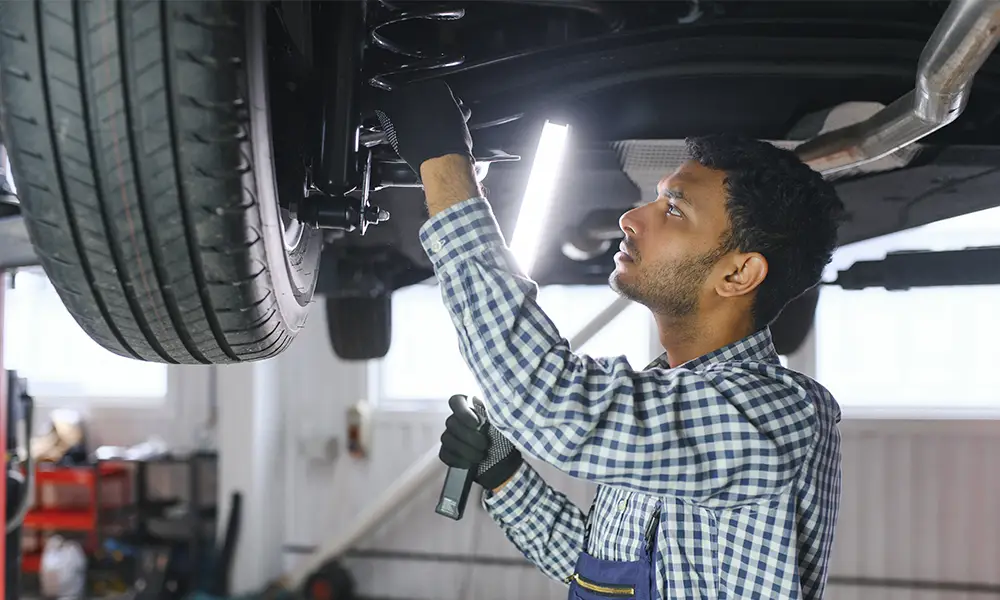
A professional mechanic inspection involves lifting the vehicle and checking:
- Shock absorbers and struts
- Control arms and bushes
- Ball joints
- Stabiliser links
- Mounting points and fasteners
At Car One, inspections focus on safety-critical wear, not just noise elimination.
Suspension Repairs Explained in Plain Terms
Suspension repairs vary depending on severity:
- Minor wear may require bush or link replacement
- Moderate issues often involve shock or strut replacement
- Severe neglect may require multiple component replacements
Early repairs are significantly cheaper and restore factory handling.
Conclusion
Suspension noise should never be ignored.
Early inspection keeps your car safe and stable. Regular servicing helps detect early wear. Addressing noises promptly prevents larger problems.
Book a professional suspension check.
FAQs
Is suspension noise dangerous?
Yes, it often indicates worn safety components.
What causes clunking noises?
Worn bushes or ball joints are common causes.
Can suspension issues affect tyres?
Yes, they cause uneven tyre wear.
Should noise be checked immediately?
Yes, especially if it worsens.
How often should suspension be inspected?
At least once a year or when noise appears.


