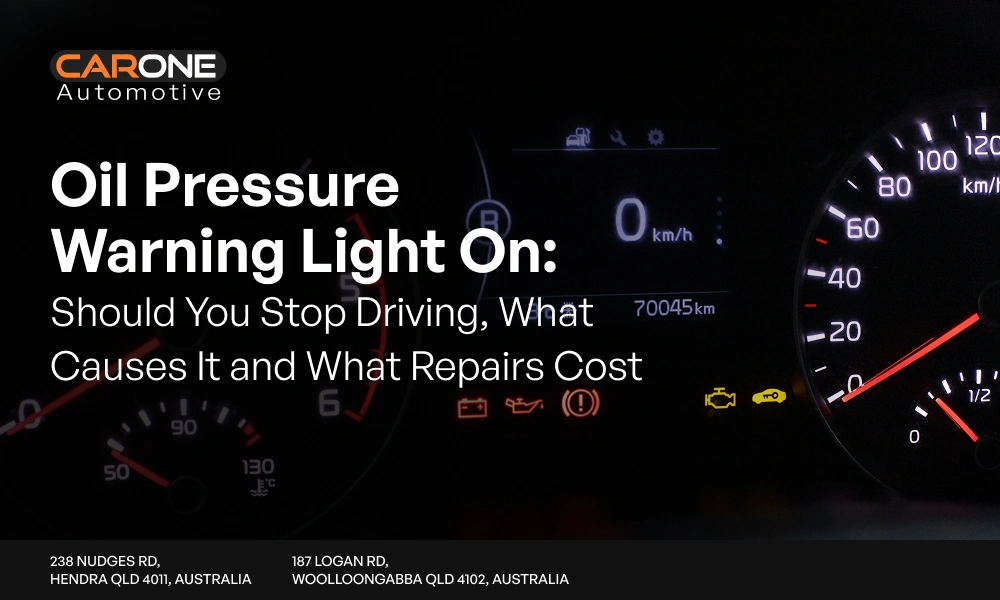
A red oil light is one of the few dash warnings that genuinely means stop now.
This guide explains what to do the moment the oil pressure warning light appears, what causes low oil pressure, and how a mechanic works out whether it is a cheap sensor or a serious problem such as a low oil level or worn engine bearings.
Here is what you will learn:
- Whether to stop driving and what to do first
- The most common causes of low oil pressure
- What you can safely check yourself
- How mechanics test oil pressure and typical repair costs
- How to stop the light coming back
Should You Stop Driving When the Oil Light Comes On?
Yes, pull over as soon as it is safe and switch the engine off, because a red oil light means pressure has dropped below a safe level and running for even a few minutes can destroy engine bearings. Treat an oil pressure light on as a stop signal.
The red oil pressure light is different from an amber oil level or service reminder light. A light that flickers at idle and goes out with revs still needs urgent attention, because pressure is borderline.
Many drivers wonder whether a late oil change could be behind a warning like this one, since oil breaks down over time. A guide on what happens if you skip an oil change explains how old, thin oil and low levels wear an engine, which helps you judge whether a missed service might have contributed to the red light.
What Causes Low Oil Pressure?
Low oil level from leaks or burning, a faulty oil pressure sender, a blocked oil pickup, a worn oil pump, incorrect oil viscosity and worn engine bearings are the most common causes of a pressure drop. The table below links each symptom to its likely cause and how urgent it is.
| Symptom | Likely Cause | Urgency |
| Red light on, oil level low on dipstick | Leak or oil burning | Stop now; top up only if no knocking |
| Light flickers at idle, goes out with revs | Thin or wrong-grade oil, worn pump | Book within days; no long drives |
| Light on, oil level correct, engine quiet | Faulty pressure sender or wiring | Do not drive until tested |
| Light on with knocking or ticking | Bearing or oil pump failure | Stop now and arrange a tow |
The causes run from cheapest to most serious: a low oil level, a faulty sender, wrong oil viscosity, a blocked pickup, a worn oil pump, then worn bearings.
An engine can lose oil from leaks or by burning it. When the level drops from a leak, a guide to a car leaking oil shows the common leak sources and how they are found, so you can tell whether a drip on the driveway explains the red light.
In our workshop, one car arrived with the light on and a correct oil level, and a gauge test showed normal pressure, so the fault was a failed sender. Another showed real pressure loss from a worn pump.
What Can You Safely Check Before Calling a Mechanic?
Once the engine has cooled for about ten minutes on level ground, check the dipstick; if the level is low, top up with the specified oil, but do not restart if the light returns or the engine knocks. Follow these steps:
- Park on level ground and switch the engine off
- Wait about ten minutes for the oil to drain back
- Pull the dipstick, wipe it and push it fully back in
- Pull it out again and read the level between the marks
- Top up slowly if the level is low
The oil level should sit between the minimum and maximum marks. If you need to add oil, use the grade in the owner’s manual. A short read on which engine oil your car needs explains how to read the grade and approval codes, so the top-up matches the engine and does not cause problems later.
Topping up may switch the light off, but it does not explain why the oil was low. Arrange a tow if there is any knocking or ticking.
How Do Mechanics Test Oil Pressure and What Does Repair Cost?
Mechanics fit a mechanical gauge to measure actual pressure, which separates a faulty sender, typically $150 to $350 fitted, from an oil pump or bearing fault that can cost several thousand dollars to repair. The table below shows typical 2026 Brisbane prices.
| Repair | Typical Brisbane Price | Typical Time |
| Oil pressure test with mechanical gauge | $110 to $200 | 1 hour |
| Oil pressure sender replacement | $150 to $350 | 0.5 to 1.5 hours |
| Oil pump replacement | $800 to $2,500 | 4 to 10 hours |
| Oil and filter service | $150 to $300 | 1 hour |
Oil pump replacement often costs $800 to $2,500 depending on engine design, and the workshops in Woolloongabba QLD 4102 and Hendra QLD 4011 confirm the price after testing. A car diagnostic service starts with the gauge, because a dash light cannot separate the two.
Once the gauge reading is known, the repair path becomes clear, and the quote can be matched to the actual fault. Booking oil pressure diagnosis in Brisbane separates a cheap sensor problem from real pressure loss with an actual measurement, so you pay for the right repair rather than a guess at an expensive one.
A gauge reading only means something when it is compared with the right figure for the engine. Independent workshops can access manufacturer service and repair information, including specified oil pressure figures, as the ACCC page on the Motor Vehicle Information Scheme explains. That lets a properly equipped workshop compare the gauge reading with the figure for your engine and decide whether pressure is truly low.
Why Do Brisbane Conditions Make Oil Pressure Problems Worse?
Hot Brisbane summers and long idling in traffic thin engine oil and raise temperatures, so an engine already low on oil or overdue for a change is more likely to lose pressure at idle. Severe-service conditions such as towing, short trips and stop-start traffic all add to the load. Oil viscosity falls as the engine gets hotter.
Drivers can head to a workshop only if the light is off and the oil level is correct; otherwise arrange a tow. Southside drivers around Annerley QLD 4103 and East Brisbane QLD can use the first workshop. Booking car diagnostics in Woolloongabba gets the gauge test done close to home, so the cause is measured before more damage is done, and the team can explain what the reading means.
Northside drivers near Nundah QLD 4012 and Ascot QLD have a second option, which suits owners on that side of the river. A visit for car diagnostics in Hendra offers the same test for owners on that side of the river, and the team can explain what the gauge reading means for your engine.
The table below shows off-peak drive times from nearby suburbs to each workshop.
| Suburb | Nearest Workshop | Drive Time (Off-Peak) |
| East Brisbane QLD | Woolloongabba | 5 min via Vulture St |
| Coorparoo QLD | Woolloongabba | 8 to 10 min via Old Cleveland Rd |
| Annerley | Woolloongabba | 8 to 12 min via Ipswich Rd |
| Ascot | Hendra | 4 to 6 min via Racecourse Rd |
| Clayfield QLD | Hendra | 6 to 8 min via Sandgate Rd and Nudgee Rd |
| Nundah | Hendra | 8 to 10 min via Sandgate Rd |
Seeing the southside workshop on a map helps you plan a tow or a short drive. Drivers from East Brisbane and Coorparoo can find the Woolloongabba workshop on Google Maps to check the address, opening hours and recent customer reviews before they arrange the trip, and to plan the drop-off.
Owners on the northern side of the river can check the Hendra workshop in the same way. Drivers from Ascot and Clayfield can read reviews of our Hendra workshop to see what other owners say about engine diagnosis, and to confirm the address and hours before booking, and to see how quickly a test can be arranged.
How Can You Stop the Oil Pressure Warning Light Coming Back?
Change the oil on schedule with the manufacturer’s grade, check the dipstick monthly, fix leaks early, and investigate a light that flickers at idle before it becomes a constant warning. A short checklist keeps the oil pressure warning light from returning:
- Change the oil and filter on schedule with the right grade
- Check the dipstick monthly and keep the oil level correct
- Fix any oil leak as soon as it appears
- Investigate a flicker at idle before it becomes constant
The first point is the one most owners get wrong, usually by stretching the interval to save a little money. A page on how often to change engine oil sets out typical oil change intervals for different cars and driving conditions, so you can match your own schedule to how you actually use the vehicle.
A scheduled service is the simplest way to stay on top of oil level and condition between the longer gaps. Booking car servicing in Brisbane covers the oil and filter, a level and leak check and the other scheduled items, which keeps oil pressure problems from building up unnoticed between visits.
RACQ publishes a Queensland benchmark price for a basic servicing package, which gives a reference point for regular oil-change servicing. The RACQ car service page lists that offer, and comparing it with a quote shows what routine oil servicing costs compared with a pressure repair.
Conclusion
An oil pressure warning is a signal to stop and check, not to keep driving and hope. Measuring actual pressure is the only way to know whether the problem is a sensor or the engine itself.
A quick gauge test separates a cheap sender fault from real engine trouble. For a diagnostic at Woolloongabba or Hendra, book with Car One Automotive.
Frequently Asked Questions
Can the Wrong Oil Grade Cause Low Oil Pressure?
Yes. Oil that is too thin for the engine, especially when hot, can let pressure drop at idle and trigger the light. Always use the grade listed in the owner’s manual, and avoid mixing different grades when you top up.
Why Does the Oil Light Flicker at Idle?
A flicker at idle usually means pressure is borderline, often from low oil, thin oil or a worn pump. It still needs urgent checking, because it can become a constant warning without any notice and damage the engine badly too.
Is a Faulty Oil Pressure Sender Expensive to Replace?
Usually not. A sender typically costs $150 to $350 fitted in Brisbane. A mechanical gauge test confirms whether the sender or the engine is at fault before any parts are replaced, which avoids paying for the wrong repair at all.
Can You Drive to a Mechanic With the Oil Light On?
No. Turn the engine off and check the oil level once it has cooled down. Drive only if the level is correct, the light stays off and the engine is quiet; otherwise arrange a tow instead of risking the engine.
Does an Oil Additive Fix Low Oil Pressure?
No. Additives cannot repair a worn pump, blocked pickup or worn bearings, and they can mask a serious fault until it becomes expensive. Find the cause with a proper pressure test first, and then fix the real problem properly today.