
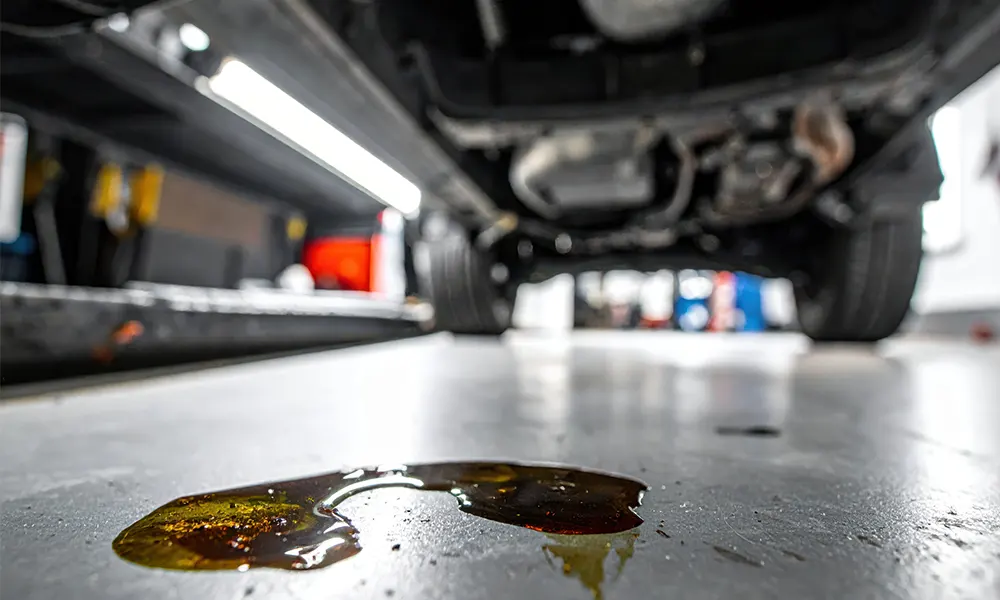
A few dark spots on the driveway are easy to ignore, right up until the oil light comes on or the engine starts to smell hot.
This guide explains why a car leaks oil, how to tell a minor seep from a serious leak, and what the repairs involve, so you know whether you are looking at a quick fix or something that needs attention now.
Here is what we will cover:
- The most common oil-leak sources
- How to tell where the leak is coming from
- How serious is an oil leak
- What the repairs typically cost
- Why you should not just keep topping it up
What Causes a Car to Leak Oil?
A car most often leaks oil from a worn valve cover gasket, a leaking oil pan or sump plug, a failed crankshaft seal, or a loose oil filter, with the location of the drip helping point to the source.
Where the oil lands is one of the best clues you have. A drip near the front of the engine points somewhere different from one between the engine and gearbox, so noting the position before you clean it up is worth doing.
| Source | Where you see it | Severity |
|---|---|---|
| Valve cover gasket | Top of engine, burning smell | Low-medium |
| Sump plug | Centre drip after service | Low |
| Oil pan gasket | Centre/front under engine | Medium |
| Rear main seal | Between engine and gearbox | High |
| Oil filter | Near filter, after service | Low |
Oil condition and how often it is changed play into all of this, and our guide on the truth about engine oil is well worth a read alongside this one.
If you would rather have the source found for you than hunt for it yourself, our Brisbane mechanics can trace the leak properly on a hoist.
Gasket and Seal Leaks
Valve cover gaskets and crankshaft seals perish with age and heat, which is why they are such common leak sources. As the rubber hardens over years of heat cycles, it stops sealing and oil begins to weep past it.
Sump Plug and Filter Leaks
Leaks at the sump plug or oil filter often appear right after a service, and they are usually a quick fix. A plug that is not quite seated or a filter that is slightly loose will drip, and resealing or tightening it resolves it.
How Do You Find Where the Oil Is Leaking From?
You find an oil leak by cleaning the engine, running it, and tracing the fresh oil back to its highest point, though a hidden or high leak often needs a mechanic with a hoist and sometimes a dye test to confirm.
The clean-and-trace method works because fresh oil always runs downward from its source, so the highest wet point is usually where it starts. For leaks that hide high up or come from inside, a diagnostic check for hidden faults helps pin down what a surface look cannot.
Can I Trace It Myself?
A basic clean-and-look can locate obvious leaks, especially near the top of the engine. Degrease the area, run the car, and see where fresh oil reappears first, which often points straight to the source.
When Does It Need a Professional?
High or internal leaks need a hoist and often a dye test to confirm, because the oil can travel a long way from its source before it drips. When a surface trace is inconclusive, that is the point to hand it over.
How Serious is an Oil Leak?
An oil leak is serious if it is dropping the oil level fast or you can smell burning oil, because running an engine low on oil causes rapid wear, while a slow seep is less urgent but should still be fixed.
Severity depends on the rate of loss and the smell. A fast loss or a burning oil smell means oil is reaching hot parts or the level is dropping quickly, and either warrants prompt action. Catching it early is exactly what regular servicing does, and you can book a car service in Brisbane to have a deep sleep before it becomes a real problem.
Keeping the level and quality right in the first place matters just as much, and our guide on how often oil should be changed covers exactly how often that needs doing.
When Is It an Emergency?
It is an emergency if the level is dropping fast or the oil light comes on. Stop and check the level, because running low on oil causes rapid engine wear, and continuing to drive risks serious damage.
Is a Small Seep Okay to Drive?
A small seep is usually fine short term, provided you monitor the level closely. It is not something to ignore indefinitely, but it does not carry the same urgency as a fast leak, so book a fix rather than panic.
What Does an Oil Leak Repair Cost?
An oil leak repair cost in Brisbane ranges from an inexpensive sump plug or filter reseal to a mid-range gasket, with a rear main seal being the most expensive because of the labour to access it, and a quote follows the diagnosis.
The spread is wide because the sources are so different in effort. A reseal is quick, while a rear main seal sits behind the gearbox. The figures below are left for verification, since guessing a price helps no one.
| Source | What’s involved | Indicative cost |
|---|---|---|
| Sump plug / filter | Reseal or replace | $80–$200 |
| Valve cover gasket | Replace gasket | $250–$700 |
| Oil pan gasket | Drop pan, reseal | $500–$1,200 |
| Rear main seal | Gearbox-out labour | $1,500–$3,500+ |
Why Is the Rear Main Seal Pricey?
The rear main seal sits behind the gearbox, so reaching it is labour-heavy, and that labour is what drives the cost. The seal itself is inexpensive; the hours to access it are what make the job a big one.
Why Not Just Keep Topping Up?
Topping up masks the fault and risks running the engine low between checks, which is exactly when damage happens. It also lets the underlying leak worsen, so it is a stopgap at best and never a real fix. If you find yourself adding oil often, our guide on how often you really need an oil change helps separate normal use from a leak.
Conclusion
Oil leaks range from a five-minute reseal to a serious job, and finding the source early prevents the engine damage a slow loss can cause. Because the cost depends entirely on the source, a proper diagnosis is what tells you which end of the range you are looking at.
If you have spotted oil on the driveway, the team at Car One Automotive can find the source and fix it.
Frequently Asked Questions
Why Is My Car Leaking Oil?
Most often a worn valve cover gasket, a leaking sump plug or oil pan, a failed crankshaft seal, or a loose or poorly fitted oil filter. Where the oil drips and how quickly helps point to the source, though a hoist inspection usually confirms it properly.
Is It Safe to Drive a Car That’s Leaking Oil?
A slow seep is usually fine in the short term as long as you monitor the oil level regularly and top up as needed. Fast loss, a burning smell or blue smoke is urgent, because running low on oil causes rapid engine wear, so get it checked promptly.
How Do I Find Where the Oil Is Leaking?
Clean the engine down, run it for a while, then trace the fresh oil back to its highest point, since oil runs downward from the actual leak. Hidden or high leaks often need the car on a hoist and a UV dye test to pinpoint the exact source.
How Much Does an Oil Leak Repair Cost?
It ranges widely, from an inexpensive sump plug reseal or oil filter through to a labour-heavy rear main seal that involves major disassembly. A diagnosis confirms the source first, so you pay for the repair the car really needs rather than replacing parts on a guess.
Can I Just Keep Topping up the Oil?
You can for a short while, but constantly topping up only masks the fault and risks the engine running low between checks, which causes wear. It also lets the leak worsen and can foul other components, so the source is far better found and fixed properly.