Normal is the most useful reference point a driver can have when evaluating a battery replacement quote. But it is also the hardest to pin down, because different vehicles, battery types, and service methods all produce legitimately different prices.
A number that is normal for an ASX is below normal for a Pajero, and a number that looks expensive for a standard sedan may be entirely appropriate for a European vehicle requiring AGM specification and ECU registration.
This guide gives a clear, vehicle-type-based definition of normal car battery pricing, what the range looks like across vehicle categories, what every price within that range must include, and how to immediately identify when a quote falls outside what is reasonable. Automotive repair experts who price battery replacements daily across the Brisbane market have informed this breakdown.
Continue reading to find:
- The typical battery replacement price range by vehicle type
- What every complete quote should include, regardless of price
- What drives prices above the normal range and whether those increases are justified
- How to secure a fair and accurate quote for your specific vehicle
What Is the Normal Price Range for Car Battery Replacement?
In Australia, the typical cost to replace the battery in a compact car ranges from $150 to $220. For a mid-size vehicle, the price is $200 to $300, and for an SUV or a vehicle that requires an AGM or EFB battery, the range is $280 to $400.
Small sedans, city hatchbacks, and entry-level SUVs are all part of the compact car category, which costs between $150 and $220. Toyota Yaris, Honda Jazz, Mazda2, and Mitsubishi Mirage are all examples of vehicles that belong to this category. Their battery requirements are minimal, calling for regular flooded lead-acid batteries with CCA ratings between 400 and 480, and they are easy to install without the need for resets or specialized processes.
Most popular SUVs, midsize sedans, and light commercial vehicles fall within the $200 to $300 range, which is considered midsize. This class includes vehicles like the Hyundai Tucson, Nissan X-Trail, Toyota RAV4, and Mitsubishi Outlander. The capacity and CCA requirements of their batteries are higher, and in order to be compatible with stop-start systems, some versions necessitate EFB (Enhanced Flooded Battery) chemistry. At this price range, you can have automobile solutions that cover all bases without breaking the bank, even if you don’t care about European vehicle specs.
SUVs and European vehicles in the $280 to $400 and above range include premium European sedans and SUVs, heavy-duty 4WDs and utes requiring diesel-spec high CCA batteries, and any vehicle with a battery management system requiring ECU registration after replacement. An Audi A6, BMW 5 Series, or Mercedes-Benz E-Class sits at the upper end of this tier and beyond, because AGM battery cost and registration labour both add meaningfully to the total.
For the Mitsubishi-specific pricing that sits within these tiers, see the guide covering what a fair Mitsubishi battery replacement costs.
What Must Every Normal Battery Replacement Include?
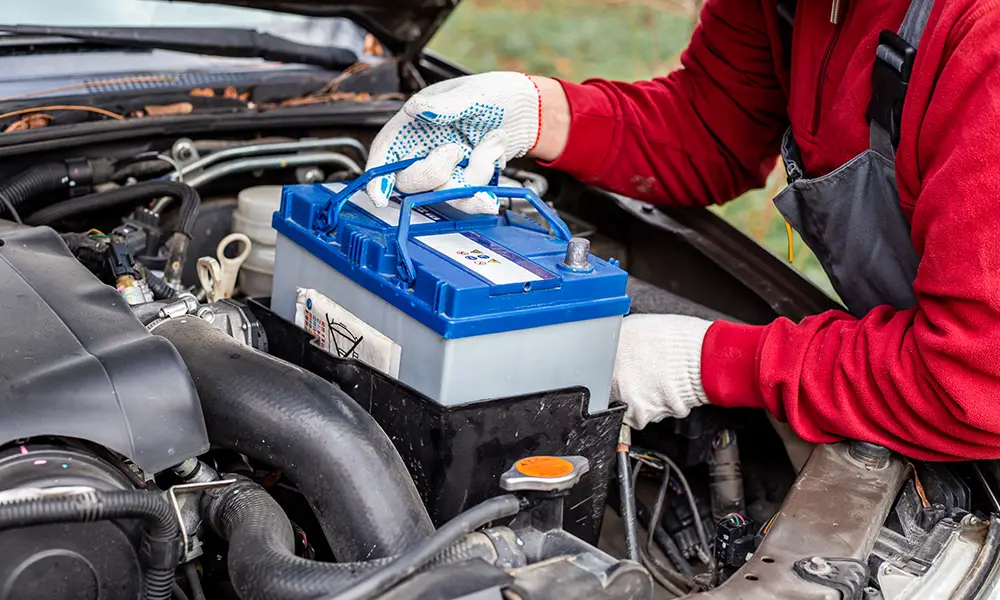
A normal battery replacement at any price point must include the battery unit, fitting labour, an alternator and charging system test, old battery recycling disposal, and a minimum 12-month warranty. Any quote that is missing these items is below the normal standard, regardless of how attractive the price appears.
The battery unit is the core component, and its specification must match the vehicle’s CCA and capacity requirements. The fitting process encompasses the actual installation, which involves using the proper terminal approach, mounting securely, and checking for any issues afterwards. Most discounted services neglect to include the most crucial extra component, an examination of the alternator and charging system. The second the car starts running on a freshly fitted battery that hasn’t had its alternator checked is at risk of damage; a malfunctioning alternator can destroy any battery it charges, regardless of quality
It is mandatory to dispose of old batteries for recycling. Because of the toxic substances they contain, lead-acid batteries are considered a controlled waste item. The buyer is not charged extra by any legitimate workshop that disposes of them in an approved way. If a service asks the consumer to remove the old battery or costs extra for disposal, it is not operating up to standard.
Warranty must be documented and explicit. Expert mechanical services providing normal pricing will state the warranty period in writing, specify who backs it (the battery manufacturer or the workshop), and confirm the process for a warranty claim if required. At the standard pricing point, a 12-month warranty is reasonable; however, for mid-range battery units, many reputable businesses provide 24- to 36-month warranties. When auto mechanics stand by the brand of battery they install with a longer warranty, it’s a good sign that the parts are of good quality.
For a comprehensive guide to what is included in a complete battery replacement across makes and vehicle types in Australia, see the guide on what a car battery should cost in Australia.
What Makes a Battery Price Higher Than Normal and Is That Justified?
Battery prices exceed the normal range when the vehicle requires an AGM battery, when battery registration is required for European vehicles, when a mobile callout fee is added, or when a premium battery brand is specified. All of these can be legitimate cost drivers. The question is whether the explanation accompanies the price.
Due to the complexity of the production process and the materials used, AGM batteries are more expensive than typical flooded or EFB batteries. Certain high-end Japanese and Korean automobiles, as well as European vehicles equipped with start-stop systems and experiencing a significant parasitic drain from electronics, are obligated to use AGM. Using a regular battery in place of an AGM one won’t save money; in fact, it will lead to system malfunctions and early failure, which will cost more to fix than the difference in battery prices.
Battery registration on European vehicles adds $50 to $150 in labour time and requires specialist diagnostic equipment. Rather than being an unnecessary expense, this is a necessary technological requirement. Workshops that do not have diagnostic tools compatible with Audi, BMW, or Mercedes are not qualified to replace batteries in European vehicles or complete the registration process.
The $20 to $60 mobile callout fees cover the actual cost of travel and on-site service. This is a genuine and open addition, as any nearby auto repair professionals offering mobile services will attest. There is no abnormal profit margin on the labour or battery.
A premium battery is an appropriate investment for vehicles that are used for demanding tasks such as towing, camping, 4WD use, or have electronics that are susceptible to parasitic drains, as is the case in Europe. A city hatchback that is used for regular commuting does not need to meet the typical performance standard.
When is a higher price not justified? When a workshop cannot explain which specific requirement is driving the cost increase, when AGM is being quoted for a vehicle that does not require it, when registration fees are applied to vehicles that do not have battery management ECU registration requirements, or when the price is significantly above the normal range for the vehicle type with no additional inclusions to show for it.
For guidance on assessing specific quotes, see the resource on when a car battery quote is fair vs inflated.
How Do You Get a Normal, Fair Quote for Car Battery Replacement?
To get a fair battery replacement quote, tell the mechanic your vehicle’s make, model, and year, ask for an itemised quote showing battery and labour separately, and compare it against the normal range for your vehicle type.
The three-step framework works as follows. Step one: provide the exact vehicle details before asking for a price. A mechanic who provides a quote without specifying the make, model, year, and engine type is more likely to be estimating, providing an accurate price, as battery specs might vary across different versions of the same vehicle. The second step is to get a written price that breaks down the cost of the battery unit and labour separately. Make sure that the quote includes the alternator test, disposal, and guarantee. In the third step, you should check the itemized total with the typical range for your vehicle’s tier.
What to avoid: accepting verbal quotes without written confirmation, comparing headline prices that may represent different scopes of work, and choosing the lowest price without confirming what it includes. A quote $40 lower than the normal range is not necessarily a better value if it omits the alternator test, specifies a no-brand economy battery, or does not include disposal.
How much does a typical battery for your vehicle cost? A full service for a tiny automobile typically costs between $150 and $220 under regular driving circumstances. It is common to spend $200 to $300 on a mid-size SUV. Prices ranging from $280 to $400 or more are considered typical and reasonable for drivers of European vehicles or large diesel 4WD. For an auto repair near me search that returns a workshop providing itemised, normal pricing, the key qualifier is whether the quote covers all mandatory inclusions at the stated price.
To request an itemised battery replacement quote from a certified mechanic in Brisbane, visit the certified mechanic for battery replacement in Brisbane service page.
Conclusion
Knowing the normal price range for your vehicle type makes every battery replacement quote straightforward to evaluate. Normal is not one number; it is a range tied to your vehicle’s specific requirements. For honest, normal pricing on car battery replacement across Brisbane, Car One Automotive gives you an itemised quote that is easy to assess.
Frequently Asked Questions
What is a normal price for a car battery replacement?
Replace the battery in a compact car for $150 to $220 with a regular battery; in a midsize or SUV for $200 to $300; and in a large diesel 4WD or European vehicle requiring an AGM battery or ECU registration for $280 to $400 or more. The installation, alternator test, disposal, and warranty costs should be included in the total.
Is $200 a normal price for a car battery?
A typical range for a full replacement service on a compact or small midsize vehicle in Brisbane is around $200. Two possible explanations may be an incomplete scope of work or a battery unit that does not meet specifications if the price tag of $200 is applied to a heavy diesel truck or European car. Make sure you always check the contents.
What should a normal battery replacement always include?
In a typical battery replacement, you should expect to pay for the following: the right battery unit, installation labour, testing of the charging system and alternator, proper disposal of the old battery through an authorized recycling channel, and a written warranty of at least twelve months. Any estimate that doesn’t include these components is missing something important and should be carefully considered before being accepted.
Why do some batteries cost more than normal?
Above-normal pricing is justified when the vehicle requires an AGM battery, when ECU battery registration is required (European vehicles), when a mobile callout fee applies, or when a premium battery brand is specified for a demanding application. Each of these drivers should be explained clearly in the quote.
How do I get a fair, normal quote for battery replacement?
To get an accurate quote, please specify the year, precise model, and engine type of your vehicle. Get an itemized quote that breaks down the cost of the battery and labour separately, and be sure that the price includes testing and disposal of the alternator as well as the guarantee. Before you accept, make sure the amount is within the usual range for your car type.