Few things are more unsettling than your car suddenly losing power and refusing to rev past a crawl in traffic.
This guide explains why your car has gone into limp mode, with reduced engine power and often a check engine light, how far it is safe to drive, and what a mechanic will check to find the real cause.
Here is what you will learn:
- What limp mode is and the warning signs on your dash
- The most common engine and gearbox causes
- When it is safe to keep driving and when to stop
- How a proper diagnostic finds the real fault
- Why Brisbane heat and traffic make limp mode more likely
What Does Limp Mode Mean and Why Does a Car Go Into It?
Limp mode is a protective setting where the engine computer cuts power, limits revs and often holds the gearbox in one gear after detecting a fault that could damage the engine or transmission. A car in limp mode typically shows sudden power loss, revs capped around 2,500 to 3,000 rpm, a gearbox stuck in second or third and warning lights on the dash. Some makers call it reduced engine power or emergency mode.
The engine and transmission computers constantly compare sensor readings, and they limit output and store a fault code when a reading looks dangerous.
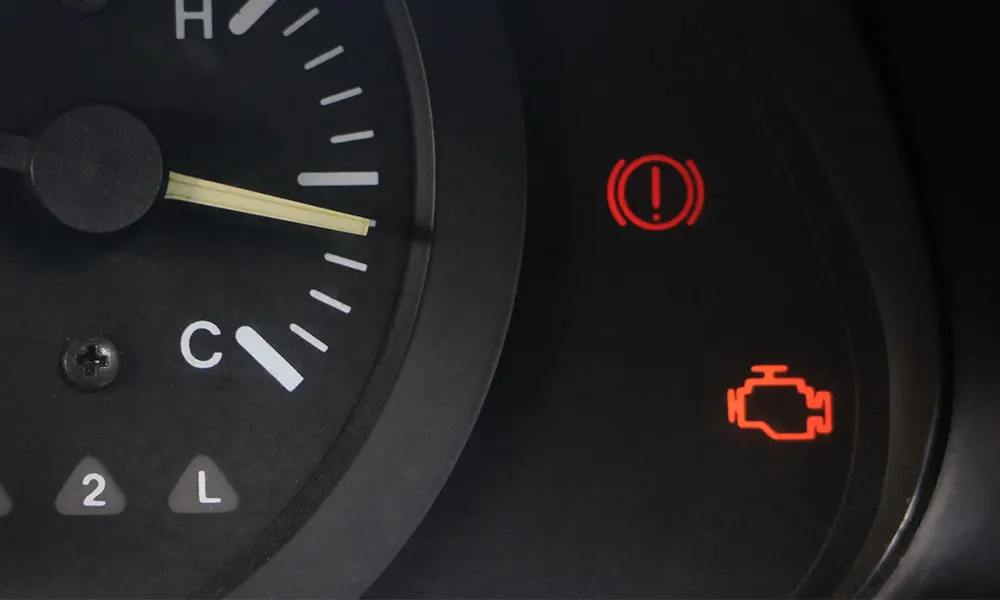
Dash messages that often appear with limp mode include a check engine light, a transmission warning, a reduced power message and a stability or traction control light. Drivers in Coorparoo QLD 4151 often see several at once. A guide to what dashboard warning lights mean helps you read the combination on your own dash and judge how serious each light is before you decide whether to keep driving.
What Are the Most Common Causes of Limp Mode?
Common causes include low or degraded transmission fluid, faulty sensors such as the mass airflow or throttle position sensor, boost leaks on turbo engines, a blocked diesel particulate filter, and wiring or low battery voltage faults. The most common limp mode causes split into engine-side and transmission-side problems. The table below links each cause to its usual symptom, likely fix and urgency.
| Cause | Typical Symptom | Likely Fix | Urgency |
| Low or degraded transmission fluid | Harsh shifts, stuck in one gear | Fluid check, leak repair, transmission service | Book within days; avoid towing |
| Faulty throttle position or MAF sensor | Hesitation, low power, check engine light | Sensor test and replacement | Book soon |
| Boost leak (turbo engines) | Hissing, sudden power cut under load | Smoke test, hose or intercooler repair | Book soon |
| Blocked DPF (diesels) | DPF light, power loss on short trips | Forced regeneration or DPF clean | Book within days |
| Low battery voltage or wiring fault | Multiple warning lights at once | Battery and wiring test | Book soon |
A transmission fault shows as harsh or stuck gear changes, and a boost leak hisses.
In our workshop, a car that entered limp mode on the way to work turned out to have a loose connector at a sensor rather than anything inside the engine.
The check engine light often comes on alongside limp mode, but it does not name the failed part. A guide on check engine light causes explains what the light means and why the code alone is only a starting point, so you know what to ask a workshop to check.
A diesel that does short trips can load its filter with soot until the engine protects itself. The guide to the DPF warning light explains the blocked filter, how regeneration clears it, when a workshop needs to step in and what to try first on a long drive.
Is It Safe to Drive a Car in Limp Mode?
Driving a short, gentle distance home or to a workshop is usually acceptable, but motorway driving, towing or repeatedly restarting to clear the fault risks turning a minor sensor problem into gearbox or engine damage. Reduced engine power makes merging unsafe. Stop at once if you see any of these signs:
- A flashing check engine light
- A burning smell
- A temperature gauge rising
- Loud noises or grinding
- Shuddering
Limp mode can seem to fix itself after a restart, but the stored fault remains. A transmission fault gets worse quickest if you keep driving.
Some gearboxes are more sensitive than others. On a dual-clutch car, limp mode can come from clutch or fluid trouble, and reading about how a dual clutch transmission works explains why heat and stop-start driving put these gearboxes into protective mode more readily than a conventional automatic, especially in summer.
If a scan confirms the gearbox as the cause, early action keeps the repair smaller and the bill lower. Booking transmission repairs in Brisbane means the fluid, clutch and control faults are checked and fixed properly, so a protective mode does not turn into a costly failure on the road.
How Do Mechanics Diagnose Limp Mode?
Mechanics read the stored fault codes with a scan tool, check live sensor data, inspect fluid levels and wiring, then road test the car to confirm the cause, because the fault code alone rarely identifies the failed part. A free code read at a parts store shows only a code number, while advanced vehicle diagnostics adds live data, tests and a road test.
A typical Brisbane diagnostic fee runs from $110 to $180, and complex electrical faults may take longer, with the Woolloongabba QLD 4102 and Hendra QLD 4011 workshops confirming the price once they know the symptoms.
Independent workshops have mandated access to manufacturer service and repair information, so they can diagnose limp mode faults without going back to the dealer. The ACCC page on the Motor Vehicle Information Scheme explains that access, and it is why a properly equipped independent can follow the correct test steps for your car.
Brisbane drivers sometimes wonder whether a scan is a normal charge. Diagnostics is also a standard repair category at Queensland workshops, alongside cooling, batteries and brakes, as the RACQ car service and repairs page shows. A scan is therefore a normal first step, and you can expect any workshop to start there before it quotes for any parts.
A full diagnostic beats a free code read because it shows why the code appeared, not just that it did. Booking car diagnostics in Brisbane gives you the scan, the live data and the road test in one visit, so the repair targets the actual fault instead of a guess.
Why Do Brisbane Driving Conditions Trigger Limp Mode More Often?
Brisbane summer heat, stop-start traffic on routes like the Pacific Motorway and Gympie Road, and short suburban trips raise transmission temperatures and stop diesel particulate filters regenerating, both common limp mode triggers. Towing a caravan or boat up the range or to the coast in summer is a classic gearbox overheating trigger. Short trips also stop DPF regeneration from completing.
A car diagnostic test finds these heat-related faults early.
Southside drivers in East Brisbane QLD can reach the first workshop quickly, and the team can look at the car without a long drive. Booking car diagnostics in Woolloongabba gets the scan, live data and road test done close to home, so the cause of the power loss is found without a long drive in a car that is already struggling.
Northside drivers have their own option near the airport, which suits cars that cannot manage a long trip across the river. Booking car diagnostics in Hendra serves Ascot QLD and Clayfield QLD 4011 and nearby streets, with the same scan and road test, so a car in limp mode does not have to cross the river to be checked.
Typical off-peak drive times from nearby suburbs to the two workshops are listed below.
| Suburb | Nearest Workshop | Drive Time (Off-Peak) |
| East Brisbane | Woolloongabba | 5 min via Vulture St |
| Coorparoo | Woolloongabba | 8 to 10 min via Old Cleveland Rd |
| Annerley QLD | Woolloongabba | 8 to 12 min via Ipswich Rd |
| Ascot | Hendra | 4 to 6 min via Racecourse Rd |
| Clayfield | Hendra | 6 to 8 min via Sandgate Rd and Nudgee Rd |
| Nundah QLD | Hendra | 8 to 10 min via Sandgate Rd |
Seeing the southside workshop on a map is useful when the car is not running well. Drivers from East Brisbane and Coorparoo can find the Woolloongabba workshop on Google Maps to check the address, opening hours and recent customer reviews, and to arrange a tow to the right place when the car cannot be driven.
Hendra’s listing works the same way for owners on the northern side of the river. Drivers from Ascot and Clayfield can read reviews of our Hendra workshop to see how other owners describe diagnostic work, and to confirm the address and hours before booking a tow or a time.
What Should You Do Next If Your Car Goes Into Limp Mode?
Pull over safely, note which warning lights are on, check fluid levels if confident, avoid clearing codes yourself, and book a diagnostic scan promptly so the fault is fixed before it becomes a larger repair. Follow these five steps:
- Pull over safely and switch off if the car feels unsafe
- Note which warning lights are on and take a photo
- Check the engine oil and coolant levels if you are confident doing so
- Do not disconnect the battery to clear codes
- Book a diagnostic scan as soon as you can
Disconnecting the battery to clear codes erases the data the mechanic needs. If the check engine light flashes, stop and arrange a tow. A scan tool reads the stored codes and the live data that explain the fault.
Conclusion
Limp mode is a warning, not a diagnosis, and the cause can range from a loose connector to a failing gearbox. A proper scan and road test identify the real fault before a small problem becomes an expensive one.
A full diagnostic with live data finds the cause faster and cheaper than guesswork. For a diagnostic at Woolloongabba or Hendra, book with Car One Automotive.
Frequently Asked Questions
Can a Weak Battery Cause Limp Mode?
Yes. Low system voltage can upset the engine and transmission computers and trigger limp mode with several warning lights at once. A battery and charging test is one of the first checks in a diagnostic.
Will Limp Mode Go Away on Its Own?
Limp mode often clears after a restart, but the stored fault code usually remains and the cause is still there. The car will typically drop back into limp mode until the fault is diagnosed and fixed.
Does Disconnecting the Battery Reset Limp Mode?
It may clear the warning temporarily, but it also erases fault data a mechanic uses to find the cause. Leave the battery connected and have the codes and live data read with a scan tool.
Can Low Transmission Fluid Put a Car Into Limp Mode?
Yes. Low or degraded transmission fluid lets the gearbox overheat or slip, and the transmission computer then locks it in one gear to prevent damage. Fluid level and condition are checked early in a diagnosis.
How Far Can You Drive in Limp Mode?
Only a short, gentle distance home or to a workshop, away from motorways. If the temperature gauge rises, the check engine light flashes or you hear grinding, stop and arrange a tow.