
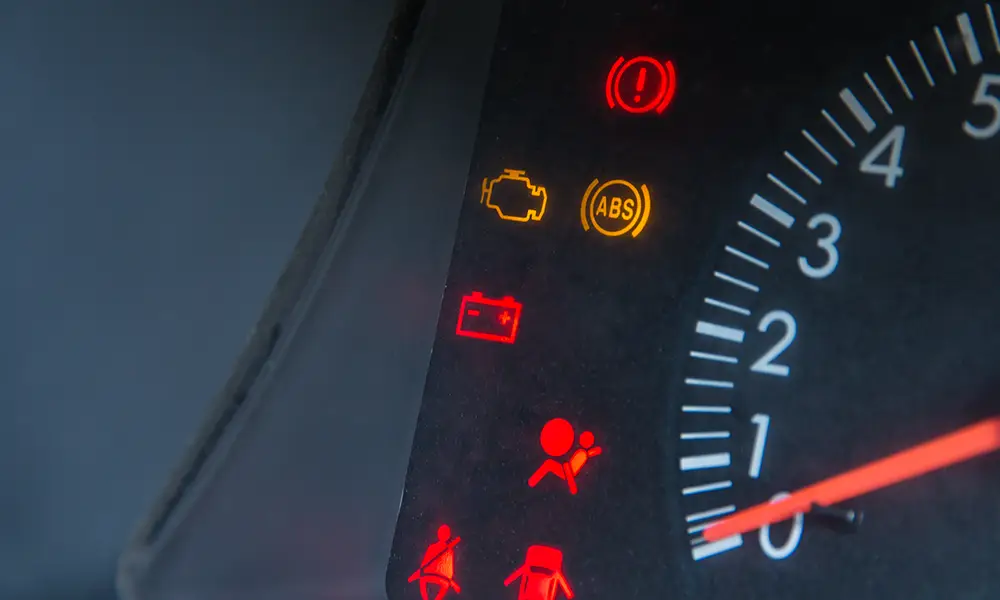
Most drivers discover their battery is dead when they turn the key and nothing happens. In many cases, the warning signs were there for weeks or months before that moment. They just were not recognised for what they were.
This guide explains whether car batteries give warning before dying and what those warnings actually look like, described in specific enough terms to help drivers identify them accurately rather than dismiss them as something else. The guide also addresses when a battery should be replaced based on age alone, even when no symptoms are visible. Professional auto technicians with years of diagnostic experience have informed this breakdown.
Continue reading to understand:
- Do batteries give reliable warning signs before failure?
- The most common and frequently missed warning indicators
- When battery age alone justifies replacement
- How to test your battery before complete failure
Do Car Batteries Give Warning Before They Die?
Most car batteries do give warning signs before complete failure. However, older batteries at 5 or more years are far more likely to fail suddenly with no prior symptoms, which is why age alone is a valid reason to replace regardless of how the car is currently running.
There is an important paradox here that drivers need to understand. Even after passing a simple voltage test, a battery could still be hours or days away from dying. A battery’s surface charge when at rest can only be measured via voltage. It can’t tell you how much juice is left in the battery or how it holds up when the engine is started.
Battery testing and replacement decisions should never be based on voltage alone. A load test that applies controlled electrical demand and assesses State of Health as a percentage is the only credible indicator of real-world battery health. When the vehicle’s electrical demand surges, after lying idle for a few days, or during cold starts, a battery that reads 12.4 volts at rest can measure 55% state of health under load. This indicates that the battery will fail.
What does it mean for something to fail suddenly in real life? In the evening, a driver typically parks their automobile. Turning the key the following morning had no effect. There is no response, no lighting, and no cranking. It wasn’t a fluke; the battery had deteriorated to an unreliable level before the last failure incident, which is what led to this situation.
For a full breakdown of how this applies across different vehicle makes, see the full guide to car battery lifespan and warning signs.
What Are the Most Common Car Battery Warning Signs?
The most common warning signs are slow or laboured engine cranking, dimming headlights at idle, electrical accessories flickering or behaving erratically, a battery warning light on the dashboard, and a visibly swollen or distorted battery case.
Slow or laboured cranking is the most recognizable signal. Even more so at first thing in the morning, the engine’s pre-fire rotation is substantially slower than normal. This occurs when the starting motor does not receive enough power to spin the engine at regular speed due to the battery’s inability to deliver its full rated cold-cranking amps.
Dimming headlights at idle occur when the battery cannot sustain a consistent voltage between alternator charging cycles. The alternator operates well, and the battery is largely bypassed when travelling at highway speeds. The alternator’s output drops, and the battery’s electrical load increases when the engine is idling. When the voltage drops significantly, it’s a sign that the battery is failing.
Windows that stutter or move erratically, interior lights that flicker temporarily upon startup, audio systems that briefly shut off, and dashboard displays that act strangely during cold starts are just a few examples of the many symptoms that might accompany electrical devices flashing or acting erratically. All of these indicate that the voltage is unstable, which means that the battery is having trouble maintaining its power.
A battery warning light indicates the charging system has detected an anomaly. This warning covers the battery, the alternator, and the wiring between them. A vehicle diagnostics service is the appropriate response, not simply clearing the warning and hoping it does not return.
Overcharging or heat damage manifests physically as a bulging or deformed battery case. The buildup of internal gases has deformed the case to an unacceptable degree. Because of the danger of electrolyte leakage, a battery in this condition needs to be removed and replaced without delay.
If any of these signs are present, the appropriate next step is outlined in the guide covering what to do when your car battery needs replacing in Brisbane.
What Battery Warning Signs Do Drivers Most Often Miss?
The most missed warning signs are intermittent electrical issues: a radio that resets to default settings, a clock that regularly loses time, windows that are noticeably slower than they used to be, or a start-stop system that deactivates without a clear reason. Drivers attribute these symptoms to software updates, age, or minor faults rather than the battery.
A radio resetting to factory defaults is particularly telling. Modern car audio systems retain their settings in memory using a continuous small current drawn from the battery. When the battery’s voltage drops below a certain threshold, even briefly, the radio loses
its memory and resets. This happens invisibly during parking, which is why drivers often notice it on a cold morning start without any other obvious symptoms.
Clock drift occurs for the same reason. The car’s clock is maintained by the battery during ignition-off periods. A battery experiencing voltage dips during deep rest will allow the clock to lose seconds or minutes overnight.
When the current going to the window motors is lower than what their rated draw requires, the operation of the windows becomes slower. The battery’s inability to maintain full power for the motors causes them to slow down. Rather than a battery problem, drivers usually think it’s a problem with the window regulator.
One of the first functions to disengage when the battery degrades below a threshold is the start-stop system in vehicles that have it. When the battery is unable to consistently restart the engine several times in rapid succession, the mechanism is programmed to disengage. It is not a good idea to update the software at the dealer if the start-stop light is consistently indicating an inactive or fault condition; instead, you should have a professional mechanic check the battery. Fixing a car reliably starts with finding the root of the problem, not just the symptoms.
When Should You Replace a Battery Even Without Warning Signs?
A battery should be replaced proactively at 4 years in Queensland even without any visible warning signs, because beyond this age the risk of sudden failure is high enough that waiting for symptoms is statistically costly.
The reasoning is simple. The prolonged heat in Queensland causes batteries to degrade more quickly than the manufacturer’s stated lifespan. By the third or fourth year in Brisbane, a battery with a five-year rating in temperate climates might have exhausted its useful service life. The fact that it can start the car even while operating at insufficient capacity is more indicative of having sufficient residual capacity to satisfy current demand than of operating at appropriate capacity. A decrease in that margin occurs covertly.
Proactive replacement is far less expensive than reactive replacement. Workshops offer quick battery replacement services that take less than an hour and cost between $150 and $300, depending on the vehicle and battery specifications. Towing, possible after-hours fees, and further diagnostic work, should the failure produce subsequent faults, can be added to the price of emergency replacement following a failure.
For guidance on how battery lifespan varies by usage pattern and vehicle type, see the how long a car battery should last before replacement guide.
How Do You Test If a Battery Is Failing Before It Dies Completely?
The only reliable pre-failure test is a load test, which measures State of Health as a percentage rather than just voltage, and can detect a failing battery that still reads a normal voltage on a basic multimeter.
When testing a fully charged battery, a common multimeter will read the resting voltage, which is usually between 12.4 and 12.7 volts. Nothing about the battery’s capacity or performance under load is revealed by this; all it tells you is the surface charge level. Even though the battery is 60% healthy, it could be on the verge of failure even if it reads 12.5 volts when at rest.
A load tester applies a controlled current draw to the battery and measures how well it maintains voltage under that demand. The outcome is the battery’s State of Health, which is a percentage that indicates its remaining capacity relative to its original rated capacity. A battery that doesn’t have a 70% SoH value isn’t reliable in bad weather and needs to be changed before it dies.
The recommendation is to book a load test at age 3 or older, particularly in Queensland where the heat accelerates degradation. It is not safe for drivers to wait for alerts before putting themselves through a test. Is there a way to tell when a car battery is about to die? While this is often the case, it is not always accurate enough to be used as proof of health when symptoms are absent.
To arrange a load test with a mechanic near you, visit the book a car battery test in Brisbane service page.
Conclusion
Car batteries do warn before dying, but those warnings are often subtle enough to miss, and older batteries can skip the warning entirely. Knowing what to watch for, and acting on age before symptoms appear is the most reliable protection against being stranded.
For battery testing and replacement across Brisbane, Car One Automotive gives you a
definitive answer before failure does.
Frequently Asked Questions
Do car batteries give warning before they die?
Most do, but not reliably. Common warnings include slow cranking, dim lights, and erratic electronics. Batteries over 5 years old are significantly more prone to sudden failure with no warning at all. Age is a valid reason to test and replace, even without visible symptoms.
What are the most common car battery warning signs?
Slow or laboured engine cranking, headlights dimming at idle, electrical accessories flickering, a battery warning light, and a swollen or distorted battery case. Any one of these should prompt a load test, not just a visual inspection or voltage check.
What warning signs do drivers most often miss?
Intermittent electrical issues are the most frequently missed. A radio resetting to factory defaults, a clock losing time, windows moving slower than usual, and the start-stop system deactivating without cause are all signs of a failing battery that drivers typically attribute to software or mechanical wear.
Can a battery fail suddenly with no warning?
Yes. Batteries over 5 years old can fail suddenly with no prior symptoms. This is because voltage readings can appear normal while internal capacity is critically
degraded. A load test measuring State of Health is the only reliable method to identify a battery approaching failure.
How do you test a car battery before it completely fails?
The correct method is a load test performed by a mechanic with the appropriate equipment. This measures the State of Health as a percentage of original capacity. A result below 70% SoH indicates a battery that should be replaced proactively before a roadside failure occurs.