From a shopping-centre car park scratch to a stone chip on the highway, paint damage is almost inevitable, and the right repair depends on how deep it goes.
This guide covers vehicle paint repair options, from touch-ups to respraying, what each type of damage needs, and what to expect on colour match, cost and outcome. Understanding how the repair is matched to the damage helps you know what a fair job looks like and what result to expect.
Here is what we cover:
- The paint repair options
- Matching the repair to the damage
- How colour matching works
- What to expect on cost and finish
- Preventing future damage
What are the vehicle paint repair options?
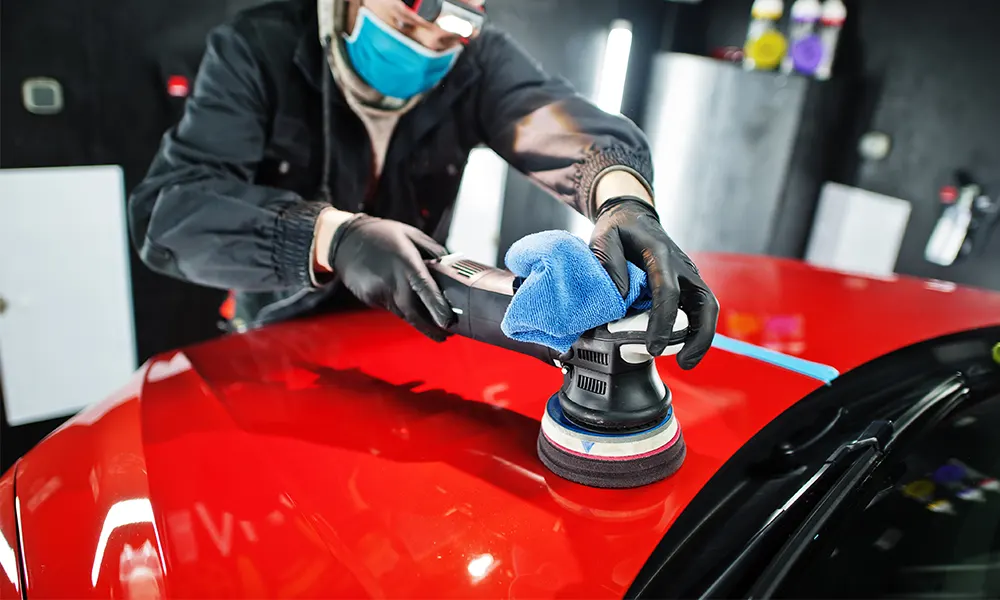
The vehicle paint repair options range from a minor touch-up for small chips, to machine buffing for surface scratches, to a panel respray for deeper damage, with the right choice depending on how far the damage goes into the paint layers.
Car paint is built up in layers, with a colour coat and a protective clear coat over the top, and how deep the damage goes decides which repair it needs. A shallow scratch that only affects the clear coat can often be polished out, while a small stone chip can be touched up and sealed. Damage that reaches the colour or the primer beneath needs a panel repair, and larger or multiple areas of damage may call for a respray. When you want it done to a proper standard, professional car detailing in Brisbane covers paint correction and repair work.
Matching the option to the damage is the key to a good result and a fair price, since using more than the damage requires wastes money and doing less leaves it visible. If you are unsure what your damage needs, our Brisbane team can assess it. The table below matches common damage to the right repair.
| Damage | Repair | Outcome |
| Light surface scratch | Machine buff | Often removed |
| Small stone chip | Touch-up | Sealed, less visible |
| Deep scratch to primer | Panel repair | Repainted section |
| Large/multiple damage | Respray | Full colour match |
Timing matters with paint damage, particularly where the metal has been exposed. A stone chip that has gone through to bare metal will, if left, begin to rust, and once corrosion sets in the repair becomes larger and more involved than a simple touch-up would have been. Dealing with chips and deep scratches promptly, while they are still small and the metal is sound, keeps the repair at the cheaper end. It is one of those cases where a little attention now saves a bigger job later, so it is worth not putting off even minor-looking damage that has broken through the paint.
What suits a small chip?
A touch-up if it’s shallow. A small stone chip that has not spread can usually be touched up, sealing the exposed area and making it far less visible, which is a proportionate repair for minor damage rather than repainting a whole panel.
When is a respray needed?
For deeper or larger damage. When the damage is deep, spread across a panel, or affects several areas, a respray gives a uniform finish and a full colour match, which smaller repairs cannot achieve, so it is reserved for more significant damage.
How do you match the repair to the damage?
You match the repair to the damage by checking whether it is only in the clear coat, into the colour, or down to primer or metal, because clear-coat marks often buff out while damage reaching the metal needs filling, priming and repainting.
The depth of the damage is what determines everything, so the first step is establishing which layers are affected. A simple test is to run a fingernail lightly across the scratch, since if it catches, the damage has gone past the clear coat and into the colour or deeper. Marks that stay in the clear coat can often be machine buffed out, whereas anything reaching bare metal needs the full process of filling, priming and repainting to restore and protect the panel. Keeping the finish well maintained helps here, and our guide to car detailing secrets covers the habits that keep damage shallow and easy to correct.
Because depth also drives the cost and the effort, correctly identifying it up front is what leads to the right repair rather than an over- or under-treatment. A professional assessment confirms the depth so the appropriate scratch repair or panel work is chosen.
How do I tell how deep it is?
A fingernail catching means it’s deeper. Running a fingernail across the scratch is a quick test, because if it catches, the damage has passed the clear coat into the colour or primer, whereas if it glides over, the mark is likely shallow enough to polish out.
Does depth change the cost?
Yes, deeper needs more work. Shallow clear-coat marks can often be buffed out relatively simply, while damage reaching the colour or metal needs filling, priming, repainting and blending, which takes more time and materials, so the depth directly affects the cost of the repair.
How does colour matching work?
Colour matching works by identifying the car’s paint code and using it to mix an exact match, with a skilled painter blending into surrounding panels so the repair is invisible, which matters most on metallic and pearl finishes.
Every car has a paint code, usually on a compliance plate, that identifies its exact colour, and this is the starting point for mixing paint that matches. From there, skill takes over, because simply applying the matched paint is not enough, and a good painter blends it into the surrounding panels so there is no visible edge where the repair meets the original. This blending is what makes a repair truly disappear, and it is most demanding on metallic and pearl finishes, where the flake and depth have to be matched as well as the base colour. Caring for the car overall, including keeping up with general car servicing, supports its condition and value alongside a good paint repair.
The paint code gives an accurate starting mix, but it is the painter’s eye and technique in blending that determine whether the finished car paint touch up is invisible or noticeable, which is why skill matters as much as the paint itself.
One thing worth understanding is that a car’s paint rarely stays exactly as it left the factory, because years of sun and weather gradually fade and soften the colour. This is part of why a good painter blends a repair into the surrounding panels rather than simply matching the original factory code, since a fresh coat of the exact original colour can actually stand out against paint that has aged. In Brisbane’s strong sun this fading is more pronounced than in cooler places, which makes skilled blending all the more important for a repair that genuinely disappears into the panels around it.
Where’s my paint code?
Usually on a compliance plate. The car’s paint code is typically found on a compliance or build plate, often in the door jamb or engine bay, and it identifies the exact colour so the paint can be accurately mixed to match your car.
Is metallic harder to match?
Yes, blending is key. Metallic and pearl finishes contain flake that catches the light, so matching them requires blending the repair carefully into the surrounding panels rather than just applying the colour, which is why these finishes are more demanding to match invisibly.
What should you expect on cost and finish?
You should expect paint repair cost and finish to depend on the damage size, location and paint type, with a professional repair aiming for an invisible match, and a quote after inspection being the accurate way to price it.
The cost varies because a small touch-up is a very different job from repainting a panel or respraying a car, and the location and paint type add to that. The finish you should expect from a professional repair is an invisible one, where the repaired area cannot be told apart from the original once done. Because prevention is far cheaper than repeated repairs, our guide to the benefits of paint protection is worth reading to reduce future damage.
Since the variables are so wide, the accurate way to price a repair is with a quote after the damage has been inspected, rather than a flat figure. Protecting the paint afterwards helps too, and paint protection film options can guard the repaired and surrounding areas against the next chip or scratch.
Will the repair be invisible?
A good repair aims for that. A professional repair aims to make the repaired area indistinguishable from the original paint once finished, with the colour matched and blended so there is no visible edge, which is the standard a quality vehicle paint repair sets out to achieve.
How is it priced?
By damage, after inspection. Because a touch-up, a panel respray and a full respray are very different jobs, the cost depends on the size, location and paint type of the damage, so an accurate price comes from a quote after the damage has been inspected in person.
Conclusion
Paint repair options scale with the depth of damage, colour matching is what makes a repair disappear, and protection helps prevent the next one. Matching the right repair to the damage is what gives a fair price and an invisible finish. When your car needs paintwork restored, Car One Automotive can assess the damage and advise on the best repair.
Frequently Asked Questions
What are the vehicle paint repair options?
They range from a minor touch-up for small chips, to machine buffing for surface scratches, to a panel repair or a full respray for deeper or larger damage. The right choice depends on how deep the damage goes into the paint layers, from the clear coat down to the metal.
How do I know how deep my paint damage is?
Run a fingernail lightly across the scratch. If it catches, the damage has gone past the clear coat into the colour or primer, whereas if it glides over, the mark is likely shallow. Clear-coat marks often buff out, while deeper damage needs filling and repainting.
How does car paint colour matching work?
The car’s paint code, usually on a compliance plate, is used to mix an exact match, and a skilled painter then blends it into the surrounding panels so there is no visible edge. Metallic and pearl finishes need especially careful blending because of the flake that catches the light.
Can a scratch be buffed out?
Light scratches that stay within the clear coat can often be machine buffed out, restoring the finish without repainting. Deeper scratches that reach the colour coat or primer beneath cannot be buffed and instead need filling and repainting, which a fingernail test helps you judge.
How much do vehicle paint repairs cost?
It depends on the size, location and paint type of the damage, since a small touch-up is a very different job from a panel respray or a full respray. Because these variables are wide, a quote after the damage has been inspected in person gives the most accurate price.