
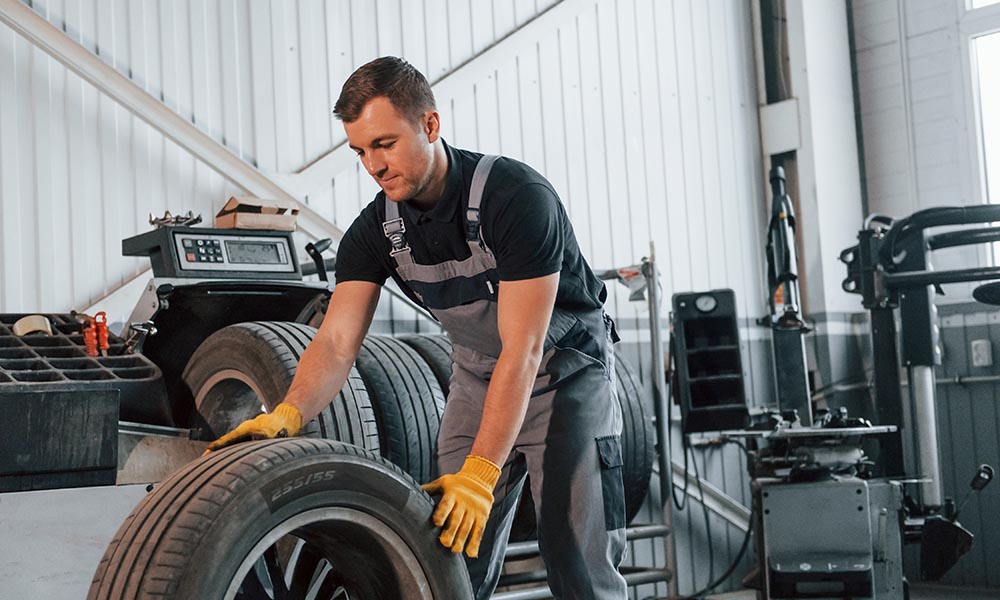
Tyres and wheels need more than just replacing when worn: a handful of services keep them safe, balanced and lasting as long as possible.
This guide explains the main tyre and wheel services, rotation, balancing, alignment, fitting and upgrades, what each does, and when you need it. Knowing what each service is for makes it much easier to keep your tyres performing and to understand what a workshop recommends.
Here is what we cover:
- The main tyre and wheel services
- Rotation and balancing
- Wheel alignment
- Fitting and upgrades
- When you need each service
What tyre and wheel services are there?
The main tyre and wheel services are tyre rotation, wheel balancing, wheel alignment, tyre fitting and replacement, and wheel upgrades, each addressing a different aspect of how your tyres wear, grip and perform.
These services are easy to lump together, but each does a distinct job. Rotation is about evening out wear across the four tyres, balancing is about a wheel spinning smoothly, alignment is about the angles the wheels sit at, and fitting is the physical replacement of worn tyres, while upgrades are about choosing better tyres or wheels. Together they cover the full care of your tyres beyond simply replacing them when bald, and a good tyre and wheel service in Brisbane can carry out any of them as needed.
Because they overlap in when they are done, they are often combined in a single visit, which is both convenient and sensible since several relate to one another. If you are unsure which your car needs, our Brisbane mechanics can advise based on how the tyres are wearing and how the car drives. The table below sums up the tyre and wheel services, what each does, and roughly when it is needed.
| Service | What it does | When |
| Rotation | Evens wear | ~10,000 km |
| Balancing | Removes vibration | With new tyres / if shaking |
| Alignment | Corrects geometry | Pulling / new tyres |
| Fitting | New tyres on | When replacing |
| Upgrades | Better wheels/tyres | By choice |
What’s the difference between them?
Each targets wear, balance or geometry. Rotation evens out tyre wear, balancing keeps a wheel spinning smoothly without vibration, alignment corrects the angles the wheels sit at, and fitting replaces worn tyres, so each service addresses a separate aspect of keeping your tyres in good order.
Do I need them all?
At different times, yes. You will need each of these services at some point, but not all at once, since they apply at different intervals and triggers, so a workshop matches the services to how your tyres are wearing and how the car is driving rather than doing everything every visit.
What do rotation and balancing do?
Rotation moves tyres between positions to even out wear and extend their life, while balancing corrects tiny weight differences in a wheel and tyre so it spins smoothly without causing vibration at speed.
These two are often confused, but they do very different things. Rotation is about wear, since the front and rear tyres wear at different rates, so moving them between positions evens that out and helps the whole set last longer, and our guide to how often to rotate your tyres covers the interval in detail. Balancing, by contrast, has nothing to do with wear and everything to do with smoothness, because even a small imbalance in a wheel and tyre sets up a vibration you feel at speed.
Balancing is done by adding small weights to the wheel to offset any heavy spots, so the wheel spins true. It is standard when fitting new tyres, since a fresh tyre and wheel need balancing together, and it is also the fix when you feel a vibration through the steering at a particular speed. Rotation and wheel balancing therefore work together as part of routine tyre care, one protecting tyre life and the other protecting a smooth, vibration-free drive.
What does rotation achieve?
Even wear, longer tyre life. By moving the tyres between positions, rotation evens out the wear that would otherwise leave the harder-working front tyres worn out well before the rear, so the whole set lasts longer and grips more evenly, which saves money and improves safety.
What does balancing fix?
Vibration from an unbalanced wheel. Balancing corrects tiny weight differences in a wheel and tyre by adding small offsetting weights, so it spins smoothly, which removes the vibration you feel through the steering at speed when a wheel is out of balance, such as after fitting a new tyre.
What does wheel alignment do?
Wheel alignment adjusts the angles of the wheels to the manufacturer’s specification, which stops the car pulling to one side, prevents uneven tyre wear, and keeps the steering straight and predictable.
Alignment is about geometry, specifically the angles at which the wheels meet the road, which the manufacturer sets to precise specifications for good handling and even wear. Over time, hitting kerbs and potholes or general wear can knock those angles out, and when they drift the car may pull to one side, the steering may sit off-centre, or the tyres may start wearing unevenly. Because correct geometry is closely tied to safe, even tyre wear, our guide to tyre safety fundamentals is worth reading alongside understanding alignment.
Correcting the alignment brings the angles back to specification, which restores straight, predictable steering and stops the uneven wear that would otherwise shorten tyre life. It is particularly worth doing when fitting new tyres, since driving a fresh set on incorrect alignment simply wears them unevenly from the start, undoing the value of new rubber. Wheel alignment is therefore both a handling and a cost matter, protecting the tyres as well as the drive.
In Brisbane, kerbs, potholes and rough patches of road are a common way for alignment to drift, so it is worth having it checked if you have had a firm knock or start to notice the steering pulling or sitting off-centre, since catching it early saves the tyres from wearing unevenly in the meantime.
When do I need an alignment?
If the car pulls or after new tyres. An alignment is due if the car pulls to one side, the steering sits off-centre, or the tyres are wearing unevenly, and it is also recommended whenever you fit new tyres so the fresh set is not worn unevenly by incorrect geometry from the outset.
Does alignment save tyres?
Yes, it prevents uneven wear. Because incorrect wheel angles make tyres wear unevenly and prematurely, correcting the alignment protects the tyres from that wear, which extends their life and gets more kilometres from the set, so alignment saves money as well as improving how the car drives.
When do you need each tyre and wheel service?
You need rotation roughly every 10,000 kilometres, balancing when fitting new tyres or if you feel vibration, alignment if the car pulls or wears tyres unevenly, and fitting or upgrades when replacing worn or damaged tyres.
Knowing the triggers for each makes it easy to keep on top of them. Rotation runs to a rough interval, so tying it to your servicing keeps it regular, and having it done alongside your general car servicing means it is not forgotten. Balancing is triggered by fitting new tyres or by feeling a vibration, alignment by pulling or uneven wear or fitting new tyres, and fitting by tyres reaching the end of their life through wear or damage.
Upgrades sit slightly apart, since they are a matter of choice rather than a fixed trigger, coming into play when you replace tyres and want to move to a better tyre or a different wheel. When you are choosing new tyres, our guide to the questions to ask when buying tyres helps you get the right set at a fair price. Because several of these tyre services Brisbane drivers need often coincide, having them done together in one visit is usually the most efficient approach.
How do I know it’s time?
Wear, vibration or pulling are the cues. Uneven or advanced tyre wear points to rotation, alignment or replacement, a vibration at speed points to balancing, and the car pulling to one side points to alignment, so the way the tyres wear and the car drives tells you which service is due.
Can these be done together?
Yes, often in one visit. Because rotation, balancing, alignment and fitting frequently apply at the same time, such as when new tyres go on, they are commonly carried out together in a single visit, which is efficient and ensures the tyres and wheels all work well as a set.
Conclusion
Rotation, balancing and alignment each protect your tyres and safety in different ways, and timing them right keeps your tyres lasting and your car driving true. Because several often apply together, having them done in one visit is the efficient way to keep everything working as a set. When your tyres need attention, Car One Automotive can carry out the right services for your car.
Frequently Asked Questions
What tyre and wheel services are there?
Tyre rotation, wheel balancing, wheel alignment, tyre fitting and replacement, and wheel upgrades. Each addresses a different aspect of how your tyres wear, grip and perform, from evening out wear and removing vibration to correcting the wheel angles and choosing better tyres or wheels when you replace them.
What’s the difference between balancing and alignment?
Balancing corrects tiny weight differences in a wheel and tyre by adding small weights so it spins smoothly without vibration, while alignment adjusts the angles the wheels sit at so the car tracks straight and wears its tyres evenly. One is about smoothness, the other about geometry and even wear.
How often should I rotate my tyres?
Roughly every 10,000 kilometres, to even out wear and extend the life of the set, as the front and rear tyres on most cars wear at different rates. Tying rotation to your servicing schedule is the easiest way to keep it regular rather than forgetting it between visits.
When do I need a wheel alignment?
If the car pulls to one side, the steering sits off-centre, or the tyres are wearing unevenly, which suggest the wheel angles have drifted out of specification. It is also recommended whenever you fit new tyres, so the fresh set is not worn unevenly by incorrect alignment from the start.
Can tyre and wheel services be done in one visit?
Yes. Rotation, balancing, alignment and fitting can often be carried out together, since they frequently apply at the same time, such as when new tyres are fitted. Doing them in one visit is efficient and ensures the tyres and wheels all work well together as a balanced, aligned set.