Kingsford Smith Drive stop-start traffic eats brake pads. Northside commuters wear through them far faster than the service schedule expects.
This guide gives drivers around Hendra QLD 4011 the real brake pad replacement cost for 2026 and the warning signs that call for a brake inspection. It also explains the wear limits that decide pads versus rotors, and where to book same-day work on the northside.
Here is what you will learn:
- Fitted prices (table)
- Warning signs
- When pads need replacing, and when rotors do
- Where to book
How much do brake repairs cost near Hendra?
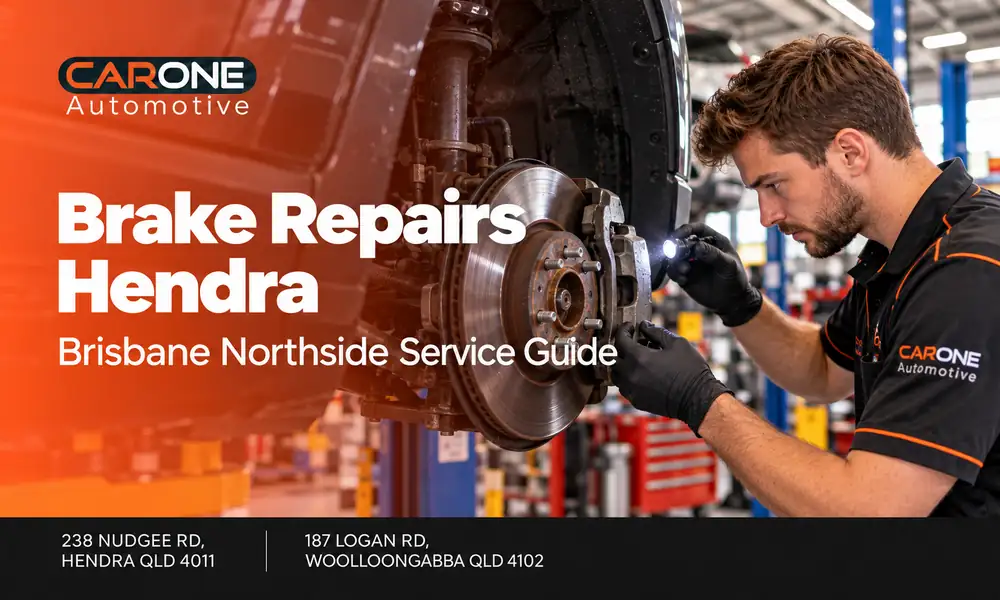
Brake pads near Hendra cost $250 to $450 per axle fitted in 2026, with machined rotors taking an axle to $400 to $700 and new rotors to $500 to $900.
Pricing is quoted per axle because pads are always replaced as a matched set across the front or rear. Brake rotors are the biggest variable in any quote. Many can be machined smooth if they are above minimum thickness, while worn or warped rotors must be replaced.
The table below shows typical fitted brake prices and job times on the northside in 2026.
| Job | Typical fitted (2026) | Time |
| Pads (per axle) | $250 to $450 | 1 to 2 hours |
| Pads + machined rotors | $400 to $700 per axle | 2 to 3 hours |
| Pads + new rotors | $500 to $900 per axle | 2 to 3 hours |
| Brake fluid flush | $90 to $150 | ~1 hour |
Rear brakes wear differently from the front, and some cars with electronic park brakes need a scan tool to retract the pistons safely. Our guide to rear brake pad costs in Brisbane explains why rear jobs are priced differently and which models need that extra step during a routine pad change on the northside.
These prices sit within broader Queensland benchmarks, where brake inspections and repairs are treated as a core workshop category. The RACQ guide to car service and repairs lists brake work among the everyday repair services motorists rely on, which gives you a useful reference point when comparing quotes from different workshops.
When comparing brake pad replacement cost between workshops, check that each quote includes rotor measurement and a road test. A cheap quote that skips those steps is not really cheaper. Performance and European cars with larger brakes sit above these ranges, so ask for a model-specific quote.
A proper brake job also includes cleaning and lubricating the caliper slides, checking the hoses and bedding in the new pads on a road test. Skipping those steps is why some budget pad changes squeal or wear unevenly within months.
What are the warning signs?
Squealing on light braking, grinding, longer stopping distances, pulling to one side and a pulsing pedal are the signs to book a brake inspection now.
Squealing brakes usually mean the built-in wear indicators are touching the rotor, which is the pads asking for attention. Grinding is more serious, because it often means metal is scraping metal. If you hear grinding, stop driving and book in immediately, because every extra kilometre damages the rotors.
A pulsing pedal usually points to uneven rotor surfaces, while pulling to one side can mean a sticking caliper or contaminated pads. Most brake warning signs build gradually, so drivers tend to get used to them. Our guide to brake warning signs to act on explains each symptom in more detail, including which ones mean you should stop driving and which can wait a few days.
A brake warning light on the dash can mean low fluid, worn pads on cars with electronic sensors, or an engaged park brake. Low fluid often points to worn pads or a leak, so the light should never be ignored.
At the Hendra workshop, commuters from Clayfield QLD 4011 who drive Kingsford Smith Drive daily often arrive with front pads at their limit by around 40,000 km. Highway drivers covering the same distance usually have plenty of pad left.
When do pads (and rotors) actually need replacing?
Pads are due when friction material nears 3 mm; rotors only when below minimum thickness, warped or scored, and a workshop measures both before quoting.
New brake pads usually start with around 10 to 12 mm of friction material. Every rotor has a minimum thickness stamped on it by the manufacturer, and a technician measures it with a micrometer before recommending machining or replacement. Rotors that are too thin cannot be machined safely.
Pad life varies widely with driving style and vehicle weight. Heavy SUVs, towing and hilly routes shorten it, while gentle highway driving can stretch front pads well past 60,000 km. Rear pads usually last longer than the fronts, because the front axle does most of the braking.
Knowing when to act saves money, because pads replaced on time rarely take the rotors with them. Our detailed article on when to replace brake pads explains typical pad life for different driving styles, what the measurements mean and how costs change when replacement is left too late.
A workshop should never tell you pads or rotors need replacing without measuring them first. Ask for the readings, and be wary of any quote for new rotors that does not include a thickness figure.
Where can northside drivers get brakes done?
Drivers in Hendra, Nundah, Clayfield and Albion can get a brake inspection and same-day pad replacement minutes from home, while southside drivers have the Woolloongabba option.
Most pad-only jobs are finished within one to two hours, so a same-day repair is realistic for commuters from Nundah QLD 4012 or Albion QLD 4010. Book in the morning, and the car is usually ready well before the afternoon peak.
Trade utes and vans from the nearby industrial areas carry heavy loads that wear brakes faster than private cars. For those vehicles, adding a brake check to every service is a simple way to avoid downtime.
The table below shows typical off-peak drive times to the Hendra workshop from nearby suburbs.
| From suburb | Drive time (off-peak) | Route note |
| Ascot QLD 4007 | ~4 minutes | Via Racecourse Rd |
| Clayfield QLD 4011 | ~4 minutes | Via Sandgate Rd |
| Hamilton QLD 4007 | ~5 minutes | Via Kingsford Smith Dr |
| Nundah QLD 4012 | ~6 minutes | Via Sandgate Rd |
Checking directions, trading hours and recent reviews first helps you plan a brake job neatly around the working day. You can find the Hendra workshop on Google for the route from Hendra, Clayfield or Nundah, along with current opening hours and feedback from other northside drivers who have had brakes done.
Drivers who live or work south of the river may find a southside workshop more convenient for regular brake checks. Our guide to brake pad replacement in Woolloongabba covers the same pricing and warning signs for southside drivers, with typical drive times from the suburbs surrounding the Gabba precinct.
The website also has a dedicated page with parking details, booking options and the full list of northside services on offer. Visit the Hendra workshop location to see the address and suburbs covered, so you can plan a brake inspection that fits neatly around work or the school run.
Healthy brakes are about more than avoiding noise. Worn pads and glazed rotors add metres to your stopping distance, which matters most in the sudden stops of peak-hour traffic. A brake inspection at every service keeps that safety margin where it should be.
Conclusion
Brakes are the most important safety system on your car, and they rarely fail without warning. Squealing, grinding, a pulsing pedal or the car pulling to one side all point to the same next step: a brake inspection before the problem grows.
Caught early, brakes are a straightforward same-day job at around $250 to $450 per axle for pads. Left until they grind, they often need new rotors as well, which pushes the bill toward $900 per axle and sometimes includes calipers.
Always ask for measured readings, a matched set across the axle and a road test before you approve any work. For honest northside brake work close to home, Car One Automotive handles it at Hendra, with most pad jobs completed the same day.
Frequently Asked Questions
How much are brake pads on the northside?
Brake pads typically cost $250 to $450 per axle fitted in 2026. If the rotors also need attention, machined rotors take the total to $400 to $700 per axle, while new rotors bring it to $500 to $900 per axle.
Why do my pads wear so fast?
Stop-start commuting is the usual cause. Kingsford Smith Drive traffic wears pads far faster than highway driving, so city cars on the northside often need new front pads at around 40,000 km rather than much later in their service life.
Is squealing always pads?
Not always. Squealing usually comes from the pad wear indicators, but glazed pads and brake dust can squeal too. A proper brake inspection measures the remaining pad material, which settles the question and tells you whether replacement is needed yet.
Do brakes need to be done in pairs?
Yes, brakes should always be done in pairs per axle. Mismatched friction material across the front or rear unbalances braking, which can make the car pull to one side. Both wheels on the same axle should always receive matching pads.
What’s a brake fluid flush for?
Brake fluid absorbs moisture over time, which lowers its boiling point and weakens braking under heavy use. A brake fluid flush costs $90 to $150 and is usually recommended every two years to keep the brake pedal firm and responsive.